By Bridget Stice, UF/IFAS Extension Polk

Meatless Monday campaigns urge the public to skip meat one day a week to “improve health and protect the planet”. While reducing excessive consumption of any food can be beneficial, blanket campaigns like Meatless Mondays often present incomplete or exaggerated claims.
When closely examined, the data show that responsibly raised meat, especially in the U.S., can be part of a healthy and environmentally sustainable food system. This document offers a science-based response to Meatless Monday arguments.
U.S. Meat Production Is Among the Most Environmentally Efficient in the World
Many Meatless Monday campaigns cite global statistics about livestock’s carbon footprint—like the oft-repeated claim that livestock is responsible for 14.5% of global GHG emissions. However, these figures include emissions from deforestation and inefficient systems in developing countries. In the U.S., beef production accounts for only about 3.7% of total GHG emissions, thanks to decades of efficiency improvements. (Capper)

Furthermore, unlike CO₂ from fossil fuels, methane from cattle is biogenic—part of a natural cycle that breaks down in ~12 years and does not accumulate indefinitely. (Allen et al.)
Grazing Livestock Can Support Environmental Goals
Well-managed grazing systems not only avoid deforestation in the U.S., but also contribute to soil health, carbon sequestration, biodiversity, and fire risk reduction. Research shows that practices such as rotational grazing can significantly increase soil carbon storage and potentially offset the majority of beef’s emissions. (Stanley et al.)
Grazing can also help preserve native grasslands and prevent land conversion to crops or development—two major drivers of biodiversity loss.
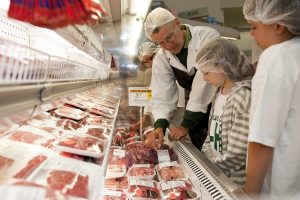
Meat Provides Essential, Bioavailable Nutrients
Meat is a dense source of critical nutrients such as heme iron, vitamin B12, zinc, high-quality protein, and omega-3 fatty acids. Many of these are harder to obtain or absorb from plant-based foods, particularly for vulnerable populations (children, elderly, pregnant women). (Melina et al.)
Studies show that poorly planned vegetarian diets can lead to deficiencies in B12, iron, and omega-3s, which may impact cognitive development, energy levels, and long-term health. (Clemente-Suárez et al.)
Reducing U.S. Meat Consumption May Have Limited Global Impact
Even a significant cut in American beef consumption would yield minimal global climate benefits because:
- The U.S. already produces beef efficiently, with low emissions per lb.
- Most U.S. beef is not linked to deforestation.
- The U.S. accounts for a small fraction of global beef emissions.
Cutting meat in the U.S. could paradoxically result in less efficient producers elsewhere filling the gap, worsening overall impacts—this is known as carbon leakage. (Searchinger et al.)
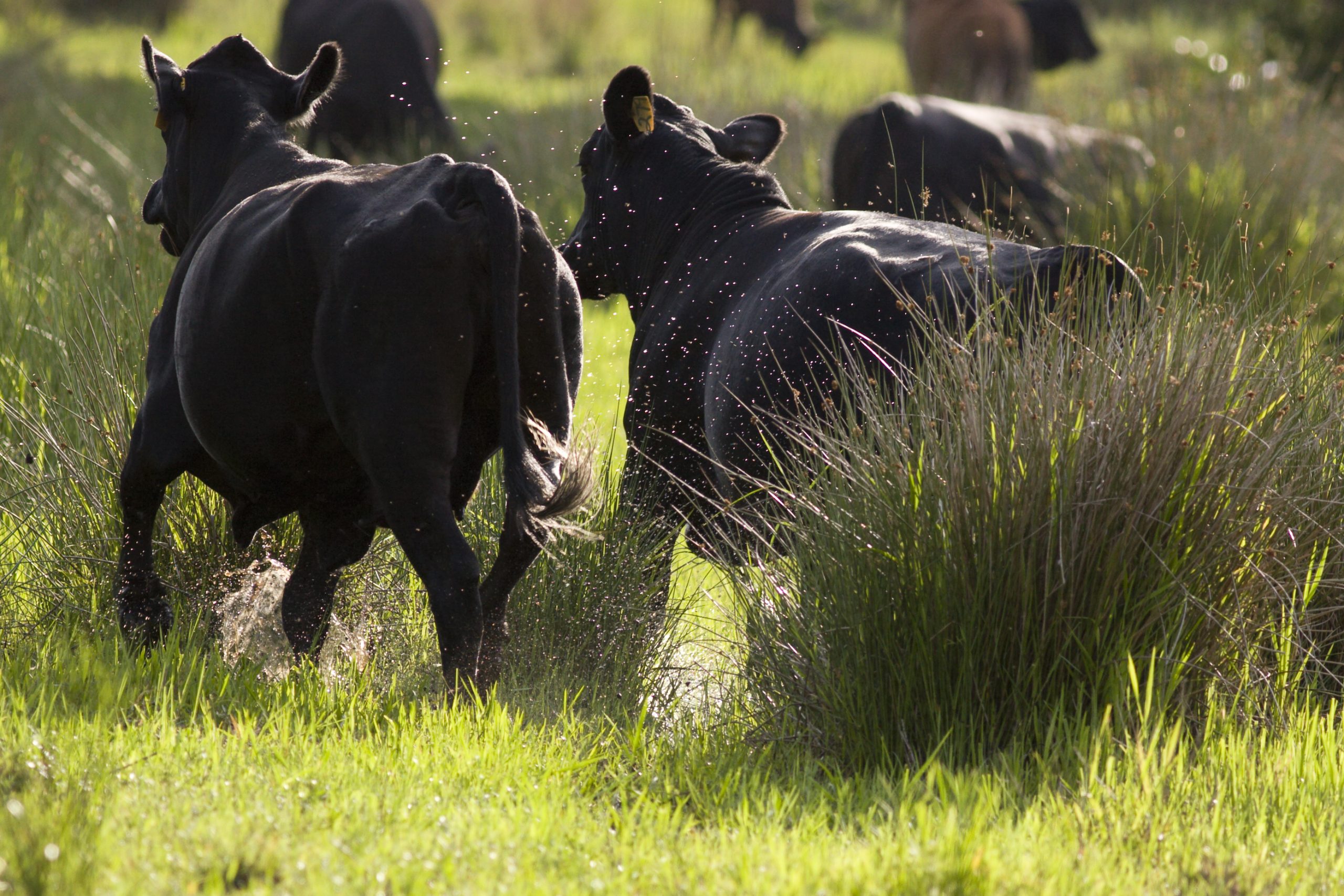
Economic and Cultural Impacts Are Overlooked
Campaigns like Meatless Mondays often neglect the importance of livestock to rural economies, cultural traditions, and food security. In the U.S., beef production supports thousands of family-owned ranches that steward rangelands and contribute to local economies.
Well-managed grazing also helps preserve open spaces from suburban sprawl, a growing threat to ecosystems and farmland, especially in the State of Florida.
Conclusion
Meatless Monday campaigns promote a simplified and often misleading narrative about the role of meat in environmental and human health. These campaigns overlook the scientific reality that U.S. meat production—particularly beef—is among the most efficient and environmentally responsible in the world. They also fail to account for the essential nutrients meat provides, many of which are difficult to obtain from plant-based sources alone. Broad dietary directives that advocate reducing meat consumption, without considering regional production practices, nutritional needs, or ecological management, risk causing more harm than good. Sound public guidance should be rooted in evidence, not ideology, and should recognize that meat, when responsibly produced, is a vital component of sustainable and healthy diets.
Works Cited
Allen, Myles R., et al. “A Solution to the Misrepresentations of CO2-Equivalent Emissions of Short-Lived Climate Pollutants under Ambitious Mitigation.”
Npj Climate and Atmospheric Science, vol. 1, no. 1, 4 June 2018, https://doi.org/10.1038/s41612-018-0026-8.
Capper, J. L. “The Environmental Impact of Beef Production in the United States: 1977 Compared with 2007.” Journal of Animal Science, vol. 89, no. 12,
1 Dec. 2011, pp. 4249–4261, https://doi.org/10.2527/jas.2010-3784.
Clemente-Suárez, Vicente Javier, et al. “Impact of Vegan and Vegetarian Diets on Neurological Health: A Critical Review.” Nutrients, vol. 17, no. 5, 28 Feb.
2025, p. 884, https://doi.org/10.3390/nu17050884.
Melina, Vesanto, et al. “Position of the Academy of Nutrition and Dietetics: Vegetarian Diets.” Journal of the Academy of Nutrition and Dietetics, vol. 116,
no. 12, 2016, pp. 1970–1980, www.ncbi.nlm.nih.gov/pubmed/27886704/ , https://doi.org/10.1016/j.jand.2016.09.025.
Searchinger, Tim, et al. Creating a Sustainable Food Future: A Menu of Solutions to Feed Nearly 10 Billion People by 2050. World Resources Institute
(WRI), July 2019.
Stanley, Paige L., et al. “Impacts of Soil Carbon Sequestration on Life Cycle Greenhouse Gas Emissions in Midwestern USA Beef Finishing Systems.”
Agricultural Systems, vol. 162, no. 162, May 2018, pp. 249–258, https://doi.org/10.1016/j.agsy.2018.02.003.
 1
1