Category: Pests & Disease

Downy mildew confirmed on South FL purple velvet plants


August 6, 2015

Downy mildew, a disease known to damage dozens of plant species in Florida, has now been found on purple velvet plants in South Florida, UF/IFAS scientists say. Purple velvet plants are popularly used for foliage and cut flowers, said Aaron ... READ MORE

Category: Agriculture, Crops, Horticulture, Pests & Disease, Pests & Disease, UF/IFAS, UF/IFAS Extension
Tags: Downy Mildew, Gynura Aurantiaca, Homestead, Miami, Miami-Dade, Mildew, Nursery Pest, Ornamental, Pest, Peste, Plant Nursery, South Florida, UF, Velvet

Controlling Summer Weeds


August 5, 2015

Les Harrison is the UF/IFAS Wakulla County Extension Director As parents ready their children for the new school year, nature is already preparing for next spring by sending out mass quantities of seeds for the coming year's growing season. ... READ MORE

Category: Home Landscapes, Pests & Disease
Tags: Community, Control, Environment, Environmentally Friendly, Extension, Florida, Garden, General Information, Grow, Growing, Herbicide, Horticulture, Invasive, Landscape, Lawn & Garden, Les Harrison, Master Gardener, Natural Resources, Natural Wakulla, Pest, Pest Management, Plant, Plants, Pollinate, Seed, Seeds, UF-IFAS, Uncategorized, Wakulla, Wakulla CED, Wakulla County, Wakulla County Extension, Wakulla Extension, Weed
Figure 1. Adult (A) female and (B) male Lutzomyia longipalpis (Lutz and Neiva), a sand fly. Credit: Cristina Ferro, Instituto Nacional de Salud, Colombia

A Sand Fly Lutzomyia longipalpis (Lutz and Neiva) (Insecta: Diptera: Psychodidae: Phlebotominae)


July 31, 2015

The true sand flies are densely covered with setae, have long slender legs, and broad and pointed wings that are held erect at rest. Several phlebotomine species are vectors of the protozoan parasites in the genus Leishmania, that are the causal ... READ MORE

Category: Health & Nutrition, Home Landscapes, Natural Resources, Pests & Disease, Work & Life
Tags: Entomology And Nematology Department, Family: Psychodidae (sand Flies), Featured Creatures Collection, Leishmaniasis, Maria C. Carrasquilla, Phillip E. Kaufman
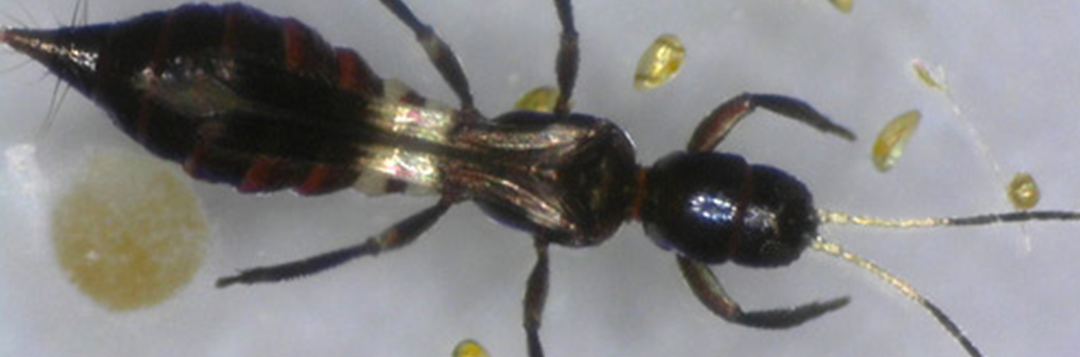
Figure 1. Female vespiform thrips showing constricted waist and white band. Credit: Runqian Mao, University of Florida

Vespiform Thrips Franklinothrips vespiformis Crawford (Insecta: Thysanoptera: Aeolothripidae)


July 31, 2015

Franklinothrips vespiformis Crawford is a predatory thrips with a pantropical distribution. The distinctive red, humped-back larvae and fast-moving ant-like adults are predaceous on small arthropods. In addition to being easily mistaken for ... READ MORE

Category: Agriculture, Home Landscapes, Pests & Disease, Pests & Disease
Tags: Beneficial Insects, Entomology And Nematology Department, Featured Creatures Collection, Runqian Mao, Steven P. Arthurs, Thysanoptera, Yingfang Xiao
Figure 1. Adult female black scales, Saissetia oleae (Olivier) on cultivated olive (Olea europaea L.). Credit: Lyle Buss, University of Florida

Black Scale Saissetia oleae (Olivier, 1791) (Insecta: Hemiptera: Coccoidea: Coccidae)


July 31, 2015

The black scale is an important pest of citrus and olive trees. Originally from South Africa, this scale is now distributed worldwide. In Florida, black scale is found on citrus, cultivated olive, avocado, and many popular landscape plants. ... READ MORE

Category: Agriculture, Home Landscapes, Pests & Disease, Pests & Disease
Tags: Citrus Pests, Coccoidea (scales), Entomology And Nematology Department, Featured Creatures Collection, Jennifer Gillett-Kaufman, Morgan A. Byron, Olive Pests, Sandra A. Allan
Figure 1. Dorsal view of an adult black turpentine beetle, Dendroctonus terebrans (Olivier). Its large size, trapezoidal pronotum, and rounded declivity distinguish it from all other bark beetles infesting pines in the southern United States. Credit: Adam Black and Jiri Hulcr, University of Florida

Black Turpentine Beetle, Dendroctonus terebrans (Olivier) (Insecta: Coleoptera: Curculionidae: Scolytinae)


July 31, 2015

Black turpentine beetles bore into the inner bark of stressed or injured pines, where they breed and feed on phloem tissue. Adults are strongly attracted to volatile pine odors and readily breed in fresh stumps. In typical forests, infestations ... READ MORE

Category: Agriculture, Forests, Home Landscapes, Natural Resources, Pests & Disease, Pests & Disease
Tags: Albert E. Mayfield, Bark Beetles, Curculionidae, Entomology And Nematology Department, Featured Creatures Collection, Jiri Hulcr, John L. Foltz
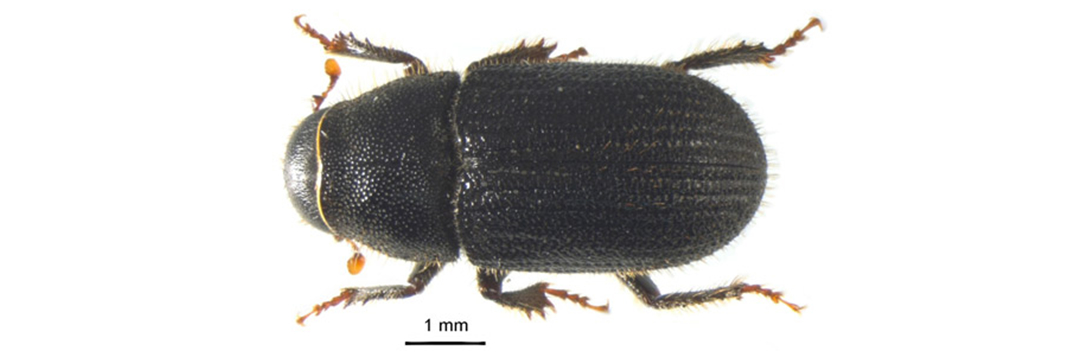
Figure 1. Adult female Xyleborus affinis. Credit: Jiri Hulcr, UF/IFAS

An ambrosia beetle Xyleborus affinis Eichhoff, 1868 (Insecta: Coleoptera: Curculionidae: Scolytinae)


July 31, 2015

Xyleborus affinis is one of the most widespread and common ambrosia beetles in the world. It is also very common in Florida. Like other ambrosia beetles, it bores tunnels into the xylem of weakened, cut or injured trees and farms gardens of ... READ MORE

Category: Agriculture, Forests, Home Landscapes, Natural Resources, Pests & Disease, Pests & Disease
Tags: Ambrosia Beetles, Andrea Lucky, Curculionidae, Entomology And Nematology Department, Featured Creatures Collection, Jiri Hulcr, Lanette Sobel
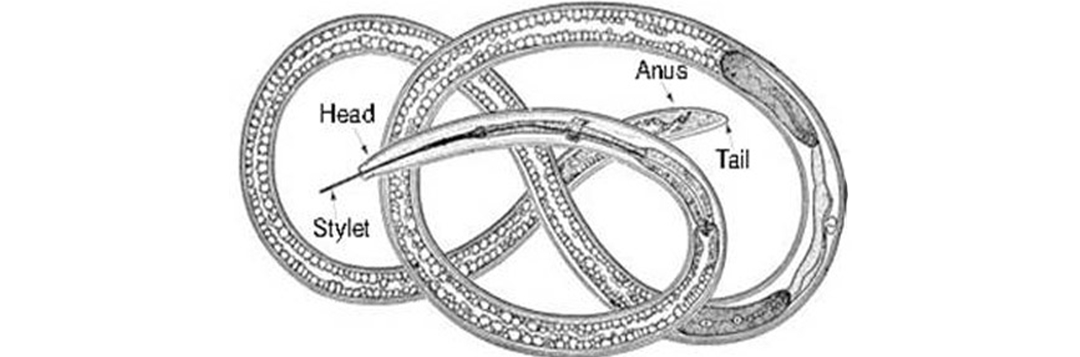
Figure 9. Schematic diagram showing detailed morphological features of a dagger nematode, Xiphinema spp.

Dagger Nematode Xiphinema spp. (Cobb, 1913) Inglis, 1983 (Nematoda: Enoplea: Dorylaimia: Dorylaimina: Xiphinematinae)


July 31, 2015

Dagger nematodes parasitize plants. They cause economic damage and death of host crops through feeding on the roots and by spreading viral mosaic and wilting diseases, but field studies have shown that some control measures targeting reduction ... READ MORE

Category: Agriculture, Home Landscapes, Pests & Disease, Pests & Disease
Tags: Entomology And Nematology Department, Featured Creatures Collection, Nematoda, Tesfamarian Mengistu, William K. Heve, William T. Crow

Subscribe For More Great Content

IFAS Blogs Categories