What Are Sandspurs?
Where in the world are all these little spurs coming from? Although it’s often considered a nuisance, this annual grass that commonly grows in sandy, undisturbed areas throughout much of the United States, does have some positive uses. According to a 1961 paper titled “Seeds Stored by Prairie Deer Mice,” authors Walter E. Howard and Francis C. Evans found Deer mice had sandspur seed in their collection of food. Some birds like the song bird, Pyrrhuloxia, eat the seeds. Also, it is the larval food for several branded skippers and most of the satyr butterflies.
Sandspur plants have multiple stems from the base that form a mat by spreading along the ground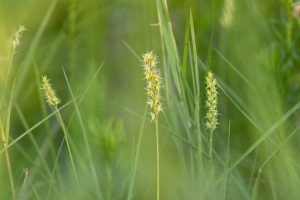 and sometimes rooting at the nodes. Starting in June through November the flowers stalks appear with spiny bur-like flower clusters. Each one of the individual flowers form burs all around itself. They are tiny and short in length, very sharp, with a curved hook on the tip end (similar to a fish hook). So when it attaches to an animal’s fur or human’s pant legs it’s hooked on tightly. Mother nature wanted to help this little plant spread generously. There are many varieties of this species that are native not only to Florida, but also to several other states.
Best Way to Rid Your Lawn/Pasture of This Sticky Nuisance
The first line of defense to manage sandspurs is to keep your lawn, or the area you desire, healthy, fertilize appropriately, and irrigate. That competition will help reduce the germination rate of sandspurs. Then a pre emergent herbicide is recommended in early spring (late February to March) and in summer apply post emergent herbicide. This rotation of applications may take 2 seasons or more to completely eliminate the grass. Hand pulling and disposing of seed heads in plastic bags helps reduce population also. Use leather gloves when dealing with any spiny or sharp grass blade plants to protect your hands and arms from injury. For more information go to : https://edis.ifas.ufl.edu/publication/AG373
 1
1