World Ocean Day is today. It was created to advocate for and inspire people to take action every day, not just today.
This year’s theme for World Ocean Day is Reimagine. The idea behind this year’s theme is to invite people to change the way they understand and care for the ocean. You might perceive the ocean as a distant, mysterious place not connected to you. However, that is not the case. Regardless of where you live on Earth, you are connected to the ocean. In fact, our existence is closely tied to the ocean.
Here are a few facts that demonstrate that:
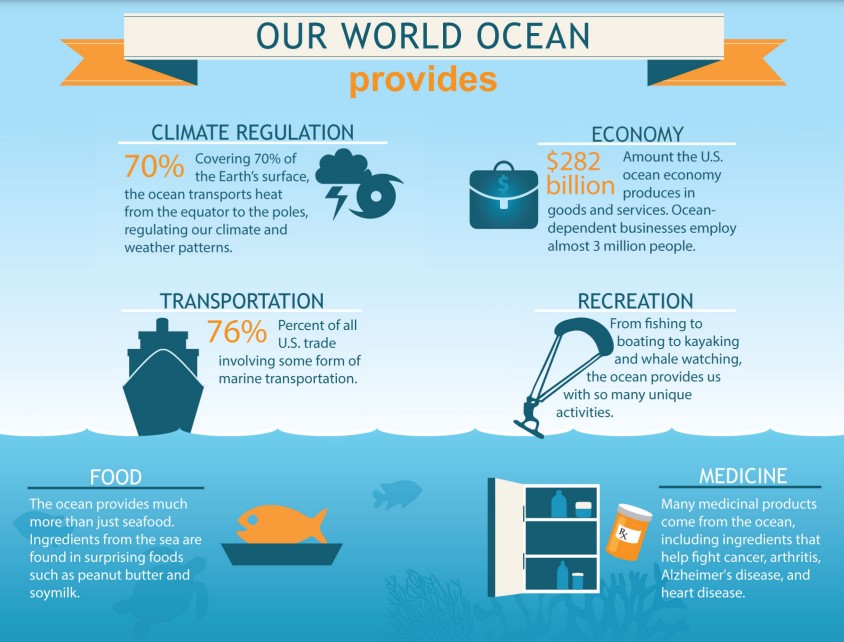
- Oxygen production – the ocean produces about 50% of the Earth’s oxygen.
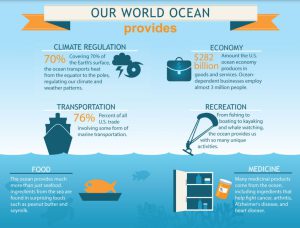
- Climate regulation – the ocean regulates our climate by transporting heat from the equator to the poles. Also, the ocean absorbs about 31% of the Carbon Dioxide emissions released into the atmosphere, acting as a carbon sink.
- Food production – billions of people depend on the ocean for food.
- Medicines – chemicals from marine organisms are used in treating human diseases such as cancer, arthritis, and heart disease.
- Economic Benefits – The ocean supports economic activities like fishing, tourism, and transportation.
- High cultural and recreational value – The cultures and identities of many communities around the world are interconnected with the ocean.
Education Opportunities
One of the best ways to reconnect and care for the ocean today, tomorrow, and every day is through education. Learning about the ocean and its ecosystems will help you become a better steward and make it easier to talk to others about the ocean’s importance. Here are a few educational programs that will help you with this.
Florida Friendly Angler: A free, online, do-at-your-own-pace educational program designed for any angler who wants to learn more about sustainable fishing and boating practices while interacting with Florida’s aquatic environments.
Ocean Literacy Guide: A handbook for increasing ocean literacy. This guide will help you teach, learn, and communicate about the ocean by describing the seven most important ideas, or essential principles, about the ocean.
Deep Ocean Education Project website: This site provides a one-stop resource hub for the public, educators, and students searching for deep-sea educational materials.
Florida Master Naturalist Program – Coastal Systems Course: This course provides instructions on the general ecology, habitats, vegetation types, wildlife, and conservation issues of coastal systems in Florida.
Sea Grant Bridge – Ocean Science Education: A website that serves as a clearinghouse for a variety of educational content, including multimedia, downloadable lesson plans, information about marine careers, internships, and summer activities for students, and professional development opportunities.
I hope these resources are helpful. The best way to reconnect and reimagine is by learning. And remember, we depend on our ocean, and our ocean needs our help. Happy 2026 World Ocean Day.
 19
19