Let’s Ex.plore what we’ve been up to!
We’ve been busy at our UF/IFAS Sarasota County extension campus located in Twin Lakes Park off Clark Rd. We’ve added an edible garden demo area featuring different garden beds of varied heights and materials. We’ve added a couple self-watering containers and most recently we assembled for display two different models of vertical towers growing vegetables. We’ve added a message board so we can share information about edible gardening so folks can glean knowledge after hours, too. Growing in our garden beds are some of the crops that we shared to some of the local school gardens. Mirroring the crops growing helps us anticipate questions they may have and share an experience with the school garden teachers and volunteers- even when we aren’t in the same space together.
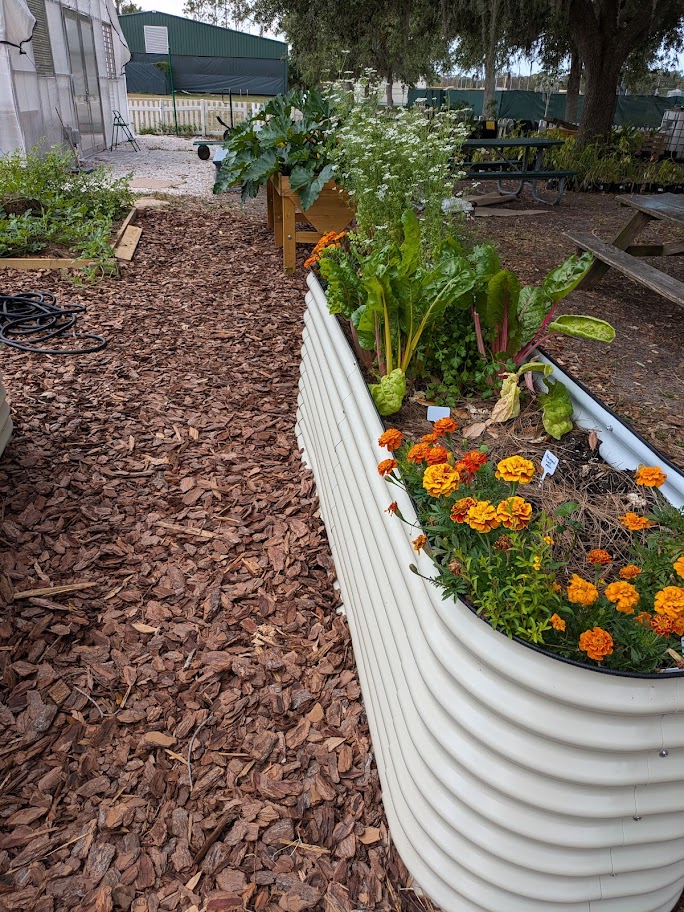
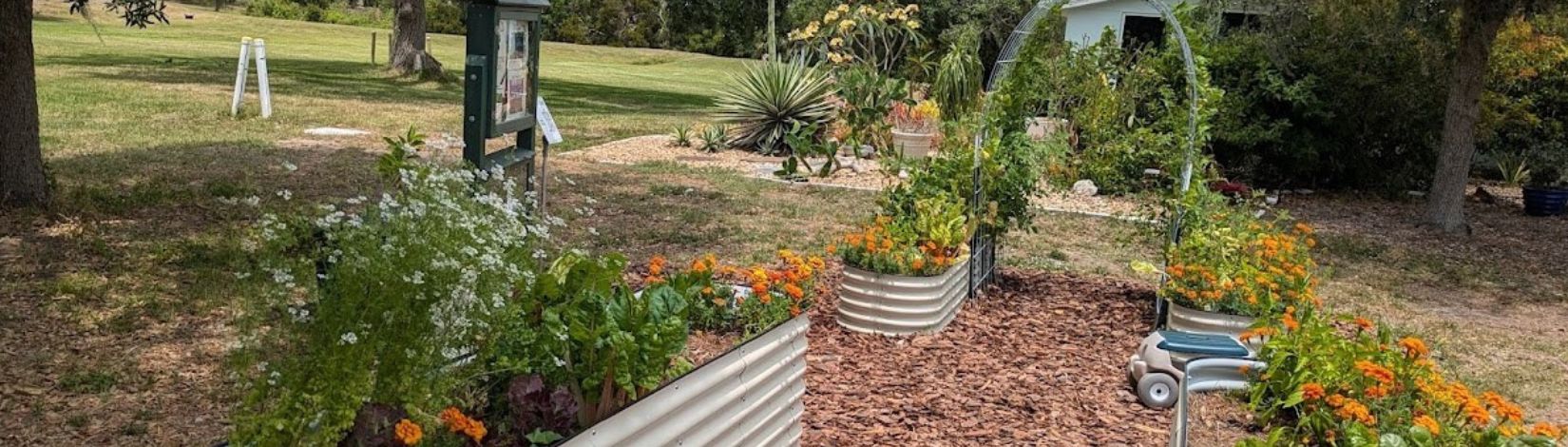
Some of the raised beds in the edible demo garden of the educational outreach gardens.
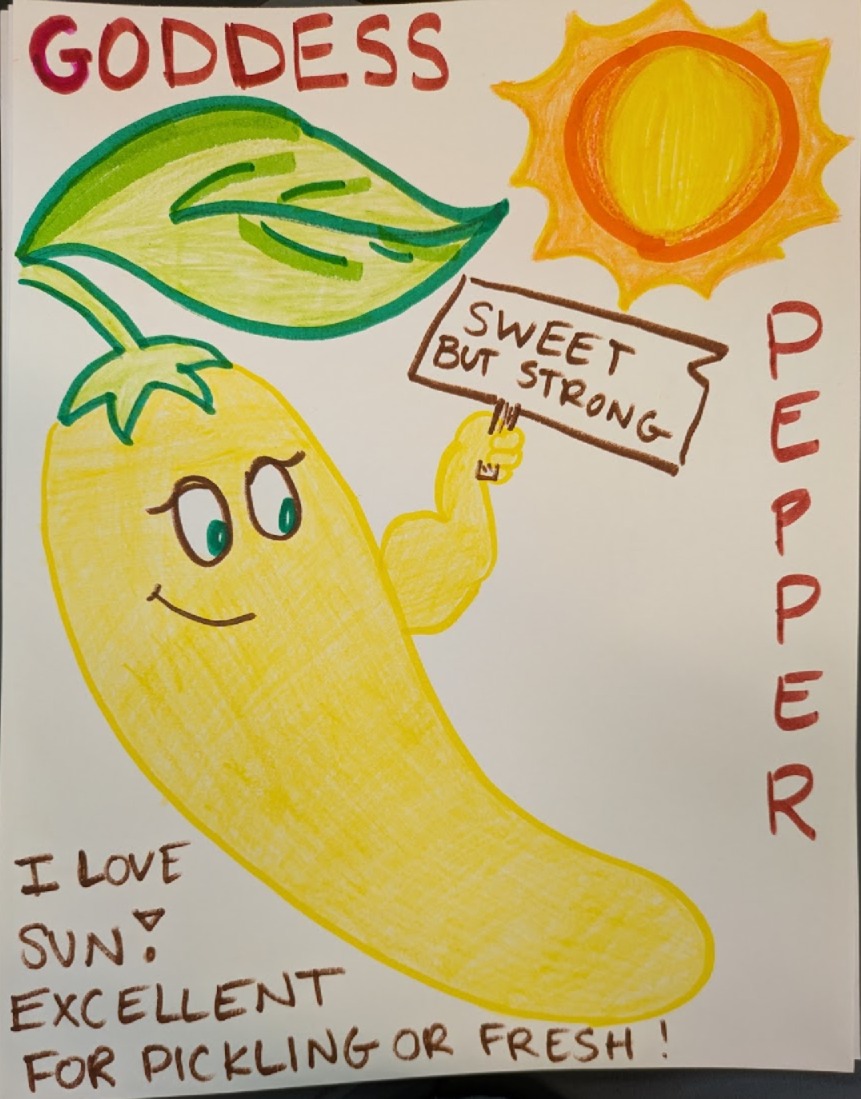
Recently we enjoyed getting together with teachers and volunteers for our Water and Wings school garden workshop. Participants gained knowledge on micro-irrigation, integrated pest management, and the crops they’d be growing this season. The latter they did in real-time as the teachers and volunteers became the students crafting the educational garden signs that decorated our edible garden display for the recent ribbon cutting for the greenhouse portion of the edible outreach gardens. This edible gardening display area enables hands on education on our campus -like when we have school garden workshops. So if a teacher wants to practice gardening before they have a whole class of students surrounding them in their school garden, we had the place to practice and dig right in. So, we did! Earlier this year- one of our extension visitors was exploring the edible demo area, so I popped out to say hello. Our chat led to visiting their site -a non-profit and pantry located at an Englewood church. Since then, their director’s been working on steps to adding an edible garden to her pantry site so the pantry patrons can have more access to fresh food, which is often limited.
Speaking about access to fresh food. Did you know our extension facilitates for SEVEN community gardens in our county? How? Honestly- it wouldn’t happen without dedicated volunteer leaders at each community garden. The community gardens are allotment style- so when people join as a member- they gain access to a plot to grow veg in. In return they steward the garden by providing maintenance and upkeep for the garden at large. Gardeners plant and grow at their own expense so they have opportunity to put fresh food on their tables at home. This is one reason the gardens are typically locked with access for garden members only. BUT what is a community garden without community? Each year we endeavor to offer tours, workshops, and education at our community gardens. When we do – we open our gates and invite you to ex.plore the garden with us. Those visiting opportunities are posted to our Eventbrite page. Check it often or subscribe to the class blast newsletter to get updates right to your inbox!
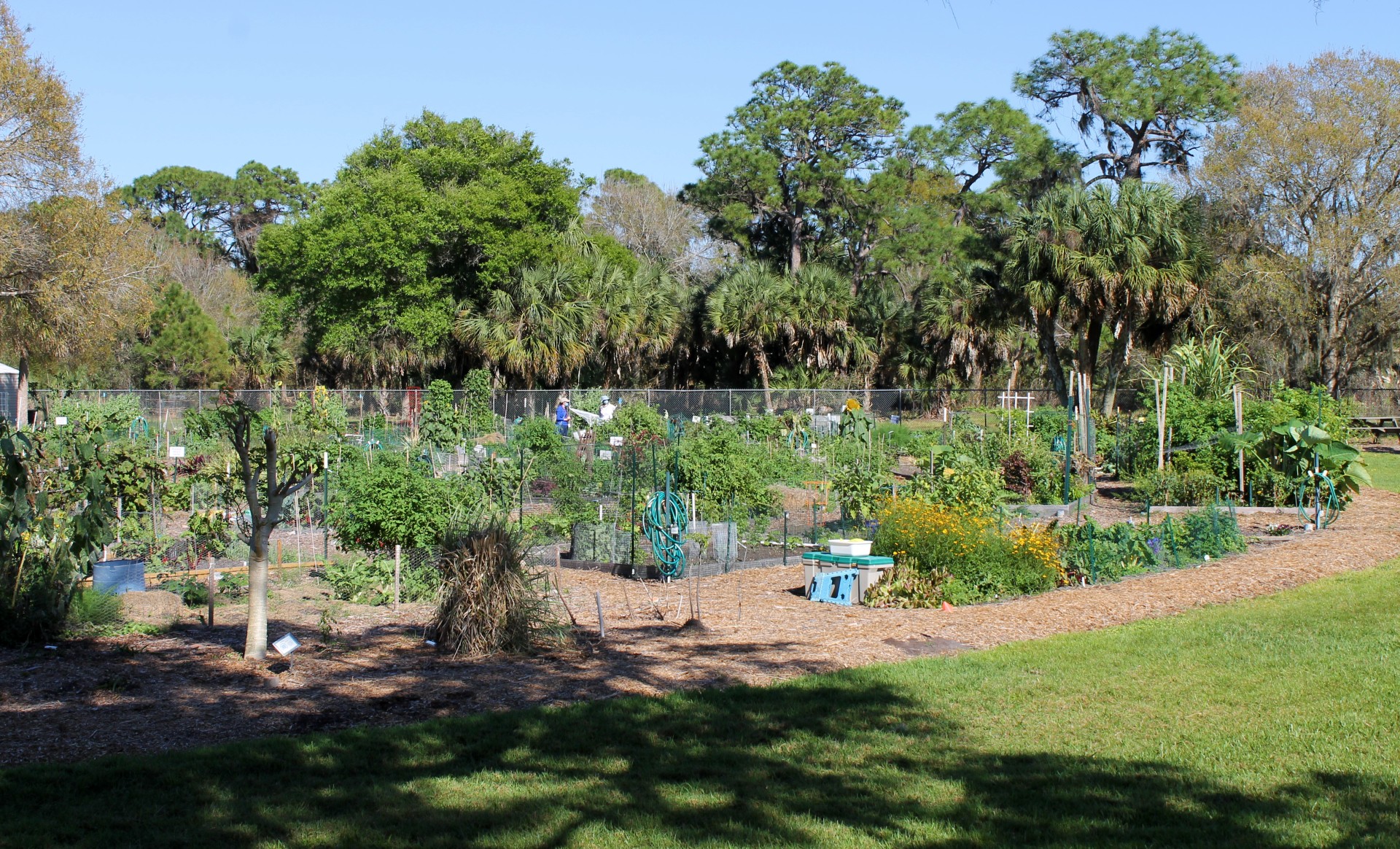
For Ex.plore we enjoyed two educational events at Culverhouse Community Garden – in January and in April. We themed our topics to suit the seasons, too. Early in the year one of the garden members and master gardener volunteer, Helena, shared about seasonal planting, a resource to use for pest/disease ID, and discussed companion planting, too. We visited different plots in the garden to gain some inspiration. Did you know master gardener volunteers are excellent at research? She found resources new to me and I am happy to share them with you, too. As you ex.plore edible gardening remember to reach out to your county extension master gardener volunteers if you have questions. For those in Sarasota County preferring email, plantclinic@scgov.net is a great way to touch base with your local master gardener volunteers.
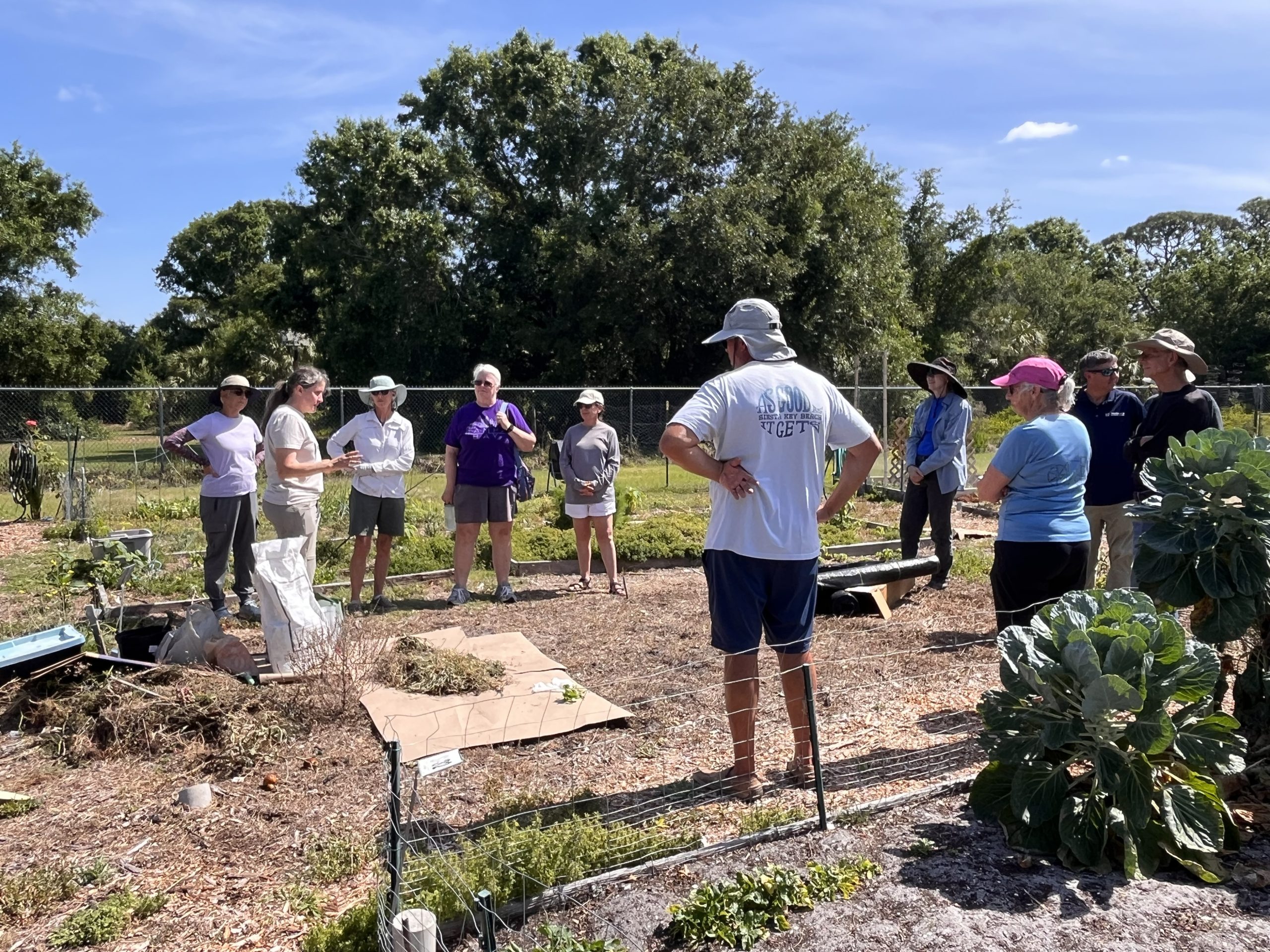
Enjoying some shade in the garden while sharing some seed supply of summer crops like luffa and also handouts, too.At our April Ex.plore event we talked about summer preparation for our gardens. Disturbed soil often sprouts something, and if left bare and unplanted – it frequently sprouts weeds. Covering that bare soil with something else robs the weeds of the space and sunlight to grow so it can help reduce the need for future weeding. Why do weeds matter? When it comes to vegetable gardening its important to note that some weeds can host pests and plant disease- keeping these active in the area to be vectored or transmitted to someone’s fresh plantings in late summer, early fall. Also, when pulling weeds- it’s hard not to lose valuable soil in the process, and that’s like flushing money down the drain. So we talked about ways to reduce weed issues by covering the soil with something to reduce weeds. What method people choose to implement often relates to their goal- so we showed different methods of covering- and talked about pros/cons so folks could decide what method or approach may suit their goals and resources. Ex. Covering with plastic sheeting or cardboard, or sheet composting aka lasagna gardening, or cover cropping with sunn hemp or cowpea, or growing edible crops over summer like luffa or sweet potato. At the end we shared some seeds to accompany the reference material. Garden volunteer leaders and some garden members shared insights and learned from each other as did some of the members of the public that also attended.
Let’s Ex.plore what’s coming up
We are underway into the best time window for vegetable gardening some of the more commonly used vegetables. In our area people often grow early fall into late spring- opposite of our northern neighbors. This means you’ll see more education related to edible gardening, community garden tours, and more as we move deeper into the growing season. Here’s a sneak peak of what may be coming up… the addition of some small-scale examples of hydroponic edible gardening elements to our edible garden demo area at our extension office. This will allow opportunity to offer hands on practice for some of our volunteers and provide education for our community stakeholders interested in those topics.
We’ll have some limited seating for some hands-on educational workshops about seed starting, too! Also, our One Seed program for the 2025-2026 season has launched! We are featuring an herb trio in this “Breaking the Rules” edition of One Seed. Our first class was well-received, and more One Seed classes will be coming to a library near you soon. We anticipate partnering with our local libraries to offer some hands-on youth education and activities about edible gardening this summer, and we are excited! Did you know that the best ways to ex.plore our class and event listings is our Eventbrite page, and in case you forget where to find it, if you subscribe to the class blast newsletter you can receive a convenient update right to your inbox.
AND we are in the works for an edible gardening multi-class event coming up in January. Stay tuned! Remember you can follow us on Instagram, Facebook, and enjoy our blogs to stay looped in to what’s happening with extension. Also, there are additional Ex.plore events like ecowalks, paddling, and even a nature at night event, too.
How to Ex.plore on your own schedule
If interested in edible gardening in particular- you are in luck! We have a free online educational catalog about edible gardening and it tackles topics like seasonality, soil, container gardening, and digs into bugs, too. There is a variety of formats to suit your interest as there are recorded webinars, blogs, and resource sheets to explore and refer back to, at your leisure.
To ex.plore a bit about community gardens and demo gardens, a bit of their history, where they are located in our community, and how to support them- take a virtual jaunt through our story maps. Please remember that the community gardens are open to the public only during our educational events or scheduled group tours. This respects the space and safety of the garden and its stewards and you, too. To learn how to become a member, please check out our page. If you have a group that wants to schedule a visit to one of our community gardens, please let us know by emailing us sarasota@ifas.ufl.edu
Did you know you can stroll through our extension campus educational outreach gardens, or demonstration gardens. Our campus grounds are open to exploration during park hours. There are a lot of plants, trees, and features on our grounds and we’ve added more signage and short videos so folks can glean more from their visits even when not part of a scheduled tour. After all- there are a lot of health benefits from being in nature so we hope you’ll enjoy some of them while visiting our campus. The vertical garden towers are on our back patio to take advantage of lighting and flat surface, and the edible garden demo area is next to the greenhouse. The garden beds are of variable height so folks can get ideas of what they may like when creating gardens at their homes or places in their community like churches, schools, or even their workplaces. In addition to the edible garden beds and towers many fruit trees have been added to our extension campus and you can explore learning about different fruit trees in this blog series from our Florida Friendly Educator.
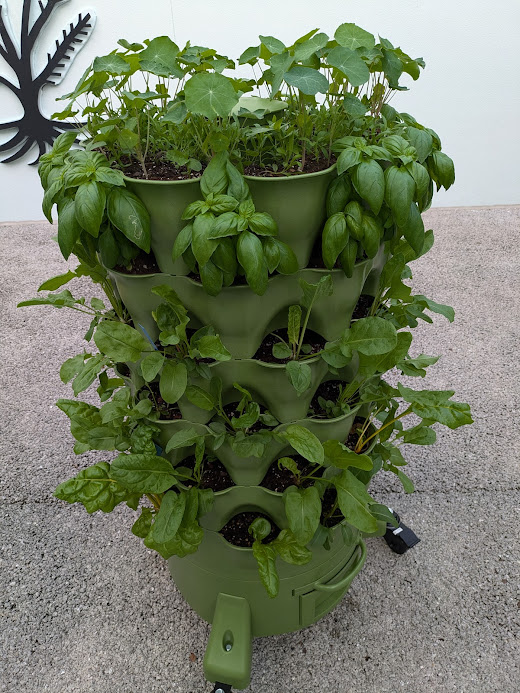
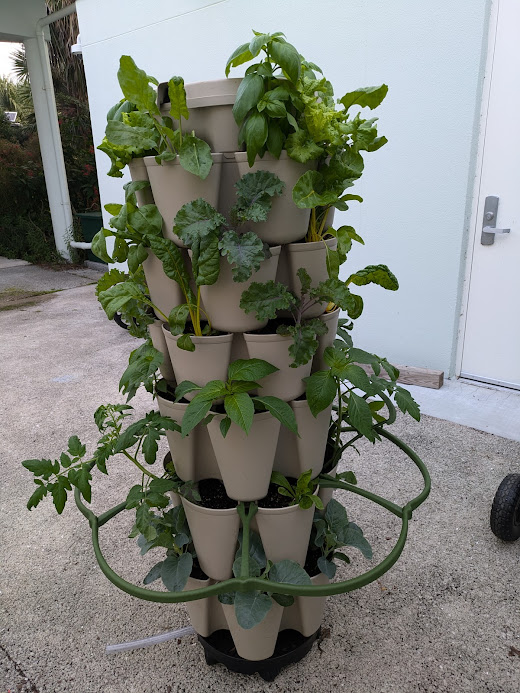
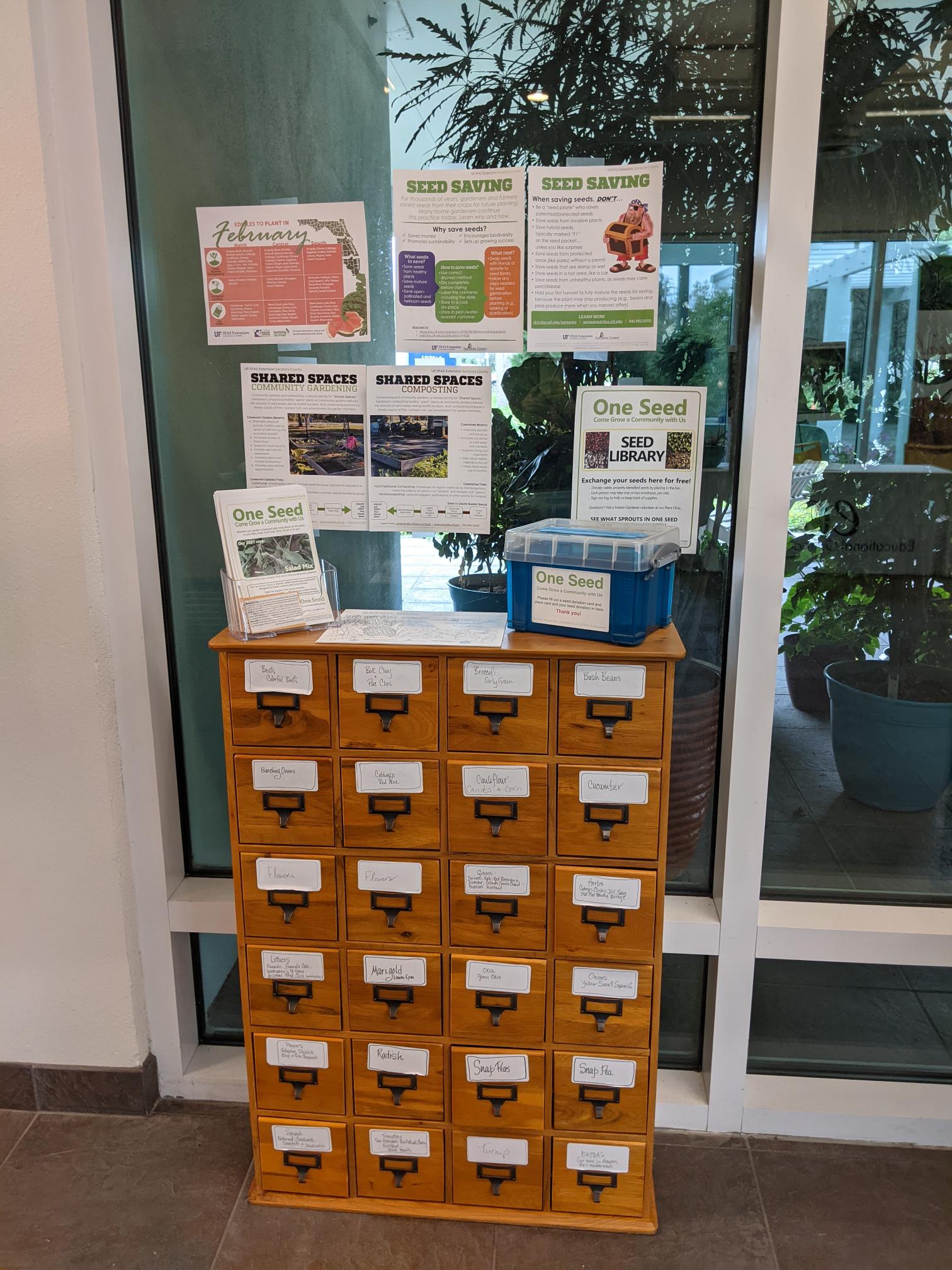
While you are at our extension campus exploring the educational outreach gardens stop into the office lobby during ‘work’ hours to browse the seed library. The seed library is inside our extension lobby (near the water fountain). Its available for browsing during our office hours, typically Monday through Friday 8-5- excluding holidays, etc. The seed library provides opportunity for folks to share seeds with others- it doesn’t have to be edible, but it can’t be invasive. So if you have seeds you aren’t using that you want to share out to the community, please feel free to bring them by- just mark what they are please. People are welcome to take a packet or two of seeds to grow in their garden, too. The seed library relies on seed donations so please feel free to call before heading our direction if you are wanting to know if the cabinet is empty before driving out. We don’t keep a running inventory so we can’t answer about what varieties or seeds are stocked though.
If you are seeking seeds closer to home and browsing edible gardening books at your local Sarasota County library- ask if they have One Seed packets available. Starting in mid-November they may be sharing our “Breaking the Rules” One Seed packets featuring an herb trio. We share these seed packets out when we teach the One Seed classes at the libraries, but you may be able to get a seed packet from a library display, too- so you can grow with One Seed even if you can’t attend a class. For those not attending the classes you can still explore growing the One Seed crop with us by reading and watching blogs and videos, and connect with us by sharing your feedback, too. Have you grown with One Seed before? How did it go? Email us at sarasota@ifas.ufl.edu and put One Seed in the subject line, please.
While we love ex.ploring our community with you and providing in-person education as much as possible, we also endeavor to be accessible to our community at large that may have varied schedules, interests, and needs. To stay looped in consider following us on social media, catching up on some recorded webinars, peruse some of our blogs, websites, and factsheets, and maybe lend an ear to our podcasts. A recent episode talked a bit about edible gardening, please give it a listen.
Thanks for ex.ploring with us!
Whether you prefer to connect through classes, touring our spaces, or viewing and commenting on our content- we thank you for ex.ploring edible gardening with extension. Feel free to check out this webinar and blog to ex.plore additional ways we support growing gardeners in our community!
 0
0