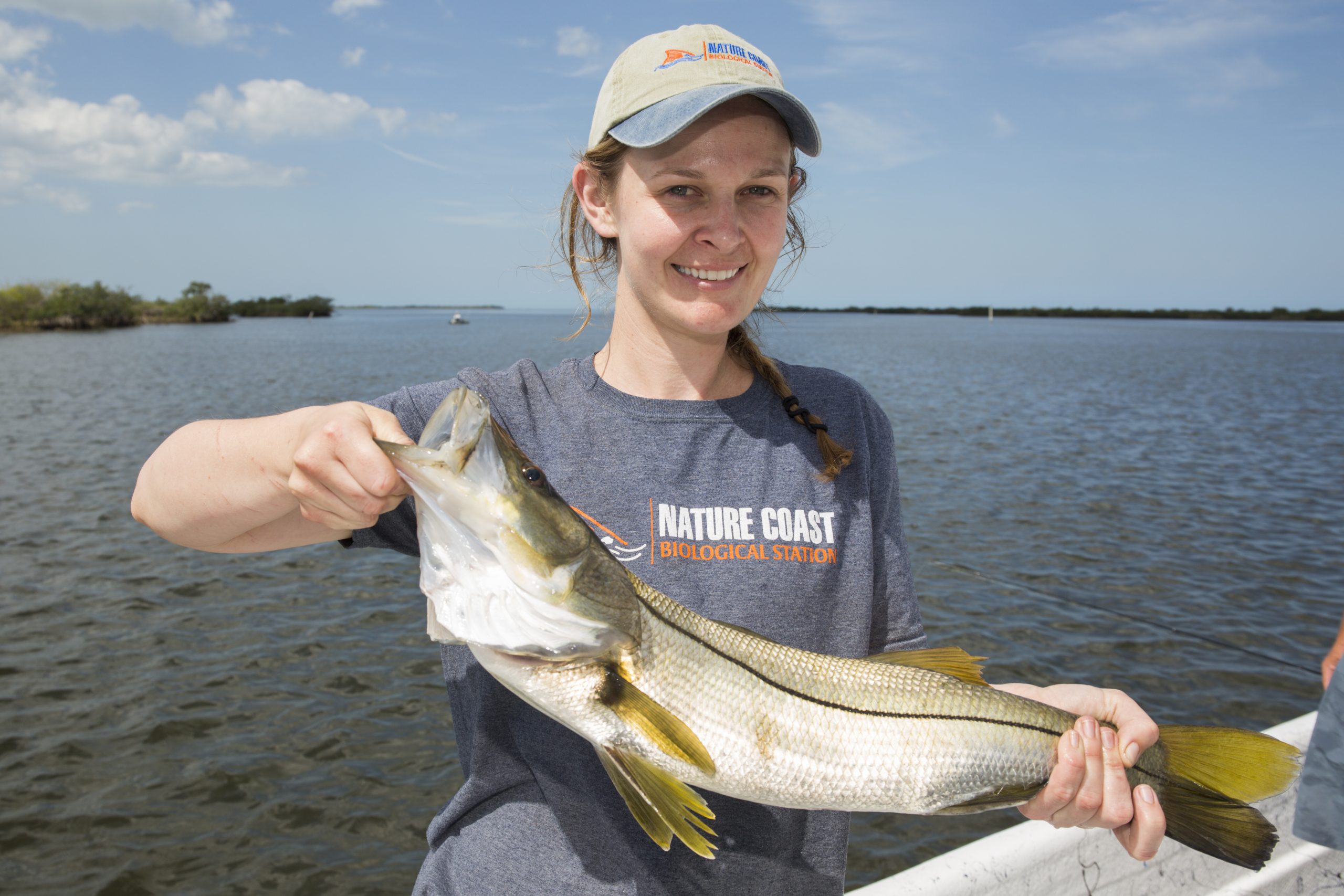
The common snook (Centropomus undecimalis) is a captivating species that inhabits a variety of coastal and estuarine environments. There are five species of snook in Florida, but the common snook, also known as robalo or linesider, is the largest, and just like its name suggests, the most common to be seen or fished. This blog delves into the intricate details of the common snook’s habitats, life cycle, and behaviors, painting a comprehensive picture of this popular sportfish and important predator within Florida’s near-shore, estuarine, and mangrove ecosystems.
Habitat and Distribution
Predominantly inhabiting tropical and subtropical waters of the western Atlantic, the common snook ranges from North Carolina to Brazil. Its presence extends throughout the Gulf and the Caribbean Sea. Thriving in estuaries, rivers, and nearshore waters, these fish are especially abundant along Florida’s Atlantic and Gulf coasts.
One of the most intriguing aspects of the common snook’s distribution is the genetic isolation between populations on opposite coasts of Florida. Atlantic and Gulf Coast populations exhibit different life history patterns, with Gulf Coast snook typically inhabiting a single estuary for their entire lives. In contrast, Atlantic snook are more migratory, often traveling between estuaries. Genetic studies have confirmed that these populations are reproductively isolated, meaning they do not interbreed, despite their proximity in habitat.
Life Stages and Habitat Preferences
Eggs and Larvae: Eggs and larvae are typically found in salty, high-energy environments near estuarine passes or river mouths. Newly hatched larvae spend about 2.5 weeks in high-salinity waters before being transported by currents to shallow-water nursery sites within the bays. This journey is crucial for their development and growth. The early stages of common snook are critical for their survival.
Young-of-the-year (YOY) and Juveniles: Small juvenile common snook prefer low-energy, shallow waters with abundant vegetation or seagrass, which provide essential nutrients and protection from predators. Key nursery habitats include quiet creeks, canals, and lagoons in riverine, mangrove, and saltmarsh habitats.
Research has shown that juvenile common snook undergo several ontogenetic habitat shifts as they grow. Initially, they reside in tidal ponds before moving to tidal creeks around 40 mm standard length. As they reach approximately 150 mm standard length, they transition to open estuarine shorelines, where they can tolerate higher dissolved oxygen levels and access more substantial food sources.
Adults: Adults have a diverse range of habitats, including shoreline areas with overhanging vegetation and areas with dense seagrass. They are commonly found near deeper passages and mouths of bays, particularly during spawning seasons. Adults also frequent freshwater rivers, where they take advantage of the abundant food resources and thermal refuges during colder periods.
Recent studies have revealed behavioral differences among adult common snook of the same populations, with segments of the population exhibiting different migration tactics. Some fish remain in rivers year-round, while others move seasonally, especially during spawning periods or in response to temperature changes.
Feeding Habits
Adult common snooks are opportunistic feeders; they adapt their diet based on the availability of prey in their environment. Larval snooks primarily feed on copepods, while small juveniles consume micro-crustaceans like copepods and mysids. As they grow, their diet transitions to include shrimp and small fish.
Adult snook are known to feed on a variety of prey, including fish, shrimp, and crabs. Their diet varies significantly depending on location: estuarine habitats host mostly small marine and brackish water fish and crustaceans, while riverine areas see more crayfish and large freshwater prey such as the brown hoplo and sunfishes. Cannibalism is also a documented behavior among common snook, particularly when juvenile and adult populations coexist in the same habitat during winter months.
Reproduction and Sex Life
The reproductive life history of common snook is complex and varies between Atlantic and Gulf coast populations. Spawning typically occurs between April and October, with peak activity during the summer months. Common snook are protandrous hermaphrodites, meaning they initially develop as males and later transition to females. This unique reproductive strategy has significant implications for population dynamics and genetic diversity.

Recent research has shed light on the variability of individual reproductive dynamics, revealing that not all common snook spawn annually. Some individuals, particularly smaller fish, may skip spawning, and this behavior can influence population growth and reproductive success.
Growth and Size
Common snook exhibits different growth patterns on the Atlantic and Gulf coasts of Florida. Atlantic coast snook generally attain larger sizes and are known to live longer than their Gulf coast counterparts. The maximum observed size for a common snook is approximately 45 inches (total length), with females typically reaching larger sizes than males.
The growth rates of common snook are influenced by factors such as habitat quality, food availability, and environmental conditions. Longitudinal studies have provided valuable insights into the growth patterns and longevity of this species, with some individuals living well more than 20 years.
Conservation and Management
Given the ecological and economic significance of common snook, effective conservation and management strategies are crucial. The genetic distinctiveness of Atlantic and Gulf coast populations underscores the importance of separate management plans to ensure the sustainability of each population.
Efforts to monitor and protect nursery habitats, regulate fishing practices, and mitigate the impacts of environmental stressors are essential for the long-term health of common snook populations. Advanced technologies, such as otolith microchemistry and genetic analysis, play a vital role in understanding the life history and migratory patterns of this species, enabling more informed conservation efforts.
Current Regulations
The recreational harvest season for snook starts Sept. 01 in all east coast (Southeast, Indian River Lagoon and Northeast) and most west coast (Panhandle, Big Bend, Tampa Bay and Sarasota Bay) management regions. This includes all Florida state and inland waters within each management region.
- The harvest season in the Panhandle, Big Bend, Tampa Bay, and Sarasota Bay management regions will remain open through Nov. 30.
- The harvest season in the Southeast, Indian River Lagoon, and Northeast management regions will remain open through Dec. 14.
The management regions are part of the Florida Fish and Wildlife Conservation Commission’s holistic approach for managing Florida’s most popular inshore fisheries. This approach uses seven metrics to evaluate the fishery by region, allowing the agency to be more responsive to local concerns. To learn more, visit MyFWC.com/Snook.
Sarasota Bay
Open season: March 1 through April 30, and Sept. 01 through Nov. 30
Closed season: Dec. 01 through end of February, and May 1 through Aug 31
Bag limit: One fish per person per day
Slot limit: 28–33 inches, total length.
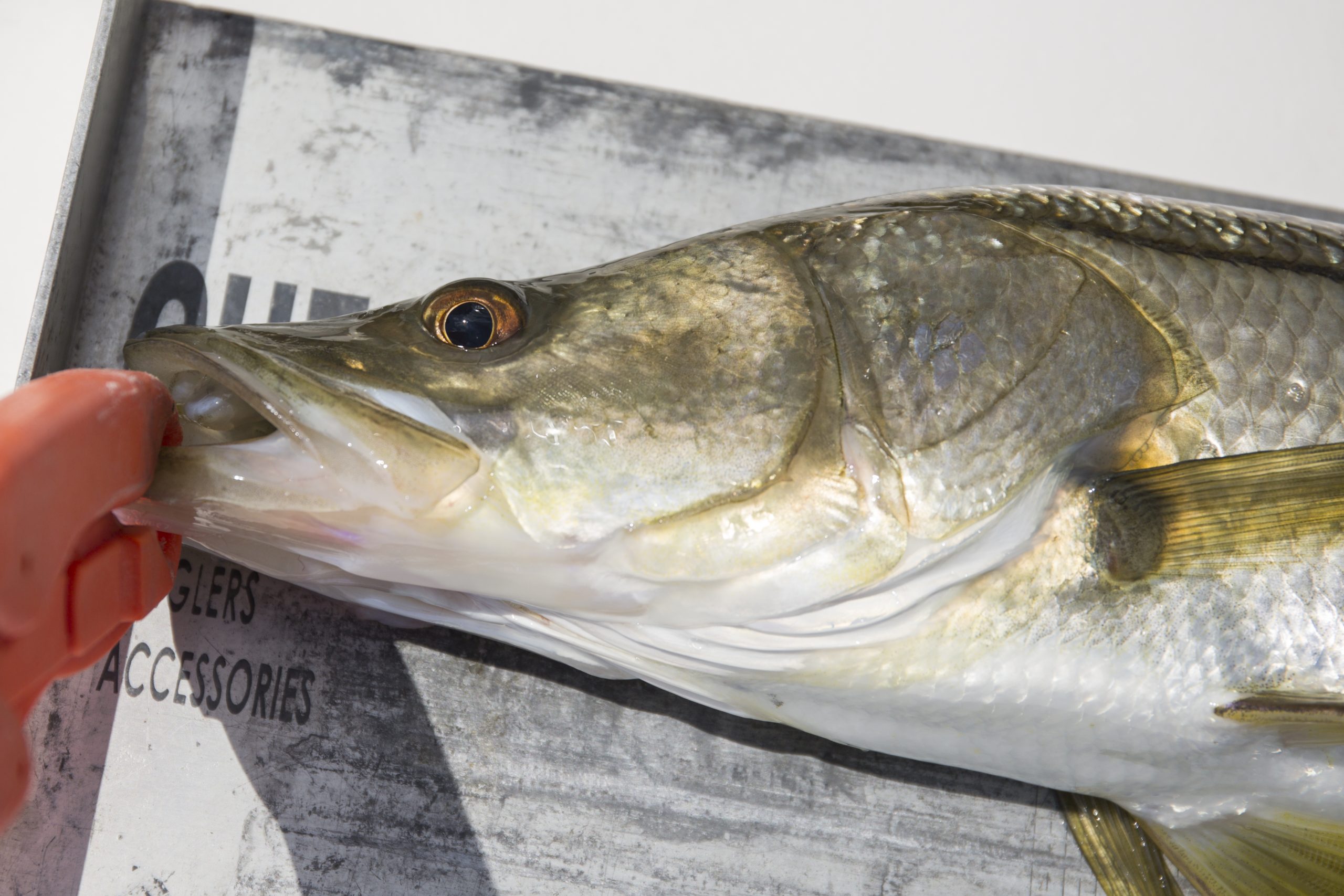
Total length is measured from the most forward point of the head, with the mouth closed, to the farthest tip of the tail, with the tail compressed or squeezed, while the fish is lying on its side.
Boundaries
The northern coastal boundary is State Road 64 in Manatee County, and the region extends south to 27°04.727’ north latitude, near the Venice Municipal Airport. Includes all waters of Palma Sola Bay, Phillippi Creek, Cow Pen Slough Canal, and Curry Creek. Does not include the waters of the Braden and Manatee rivers.
For more information on recreational snook regulations, visit MyFWC.com/Snook.
Conclusion
The common snook is a remarkable fish with a complex life cycle and diverse ecological roles. Its unique adaptations and behaviors make it a fascinating subject for study, while its economic importance highlights the need for conservation. By understanding the common snook’s ecology, we gain a deeper appreciation for marine ecosystems and the necessity of protecting these resources for future generations.
Sources:
- The 2020 Stock Assessment of common snook, Centropomus undecimalis by J. Munyandorero, A.A. Trotter, P.W. Stevens, and R.G. Muller. Fish and Wildife Conservation Commission
- Common snook regulations
- Common snook identification
During the preparation of this work, the author used ChatGPT to summarize some of the information used in the blog post. After using this tool/service, the author reviewed and edited the content, and takes full responsibility for the content of the public
 12
12