Ingredients
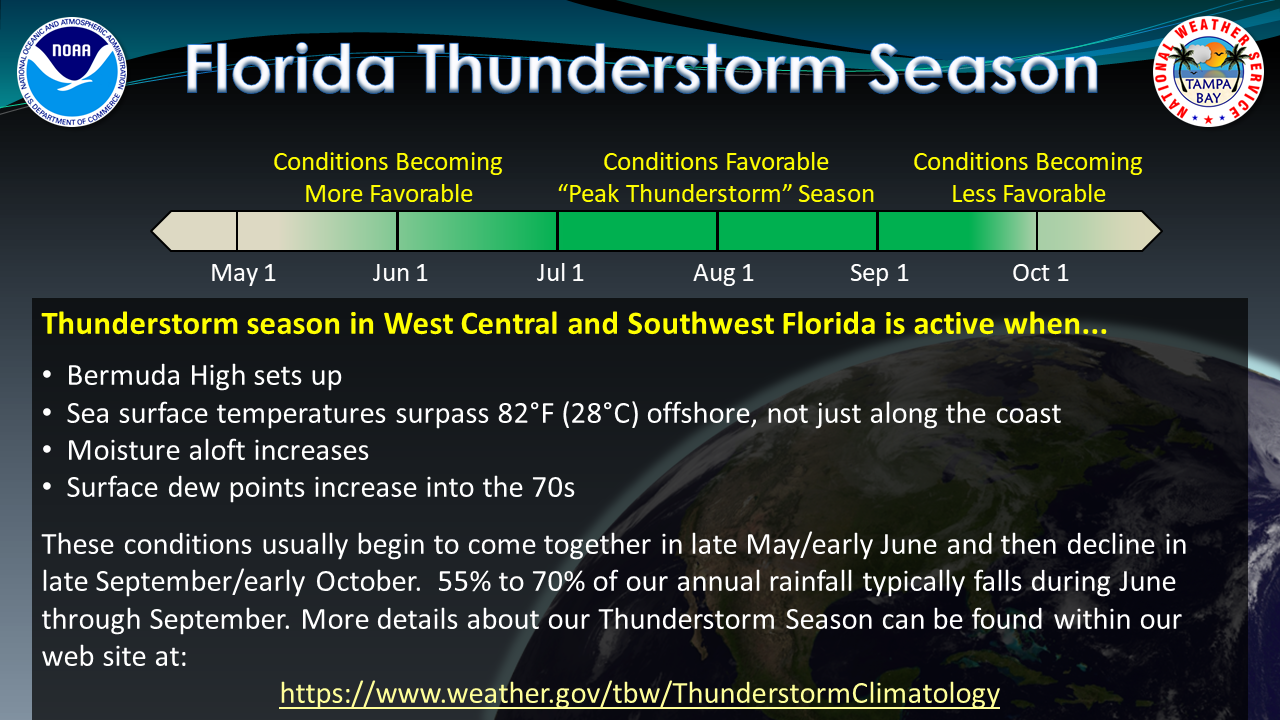
For rainy season to kick off, a few conditions need to be met. The sea surface temperature (SST) needs to reach a certain degree Fahrenheit, as does the daily dew point. A semi-high pressure system, called the Bermuda High, needs to be established. But what does that mean?
SST refers to the temperature of the water at the ocean’s surface. Warm water can lead to more evaporation, an action which adds moisture to the air, leading to rain and potentially fueling tropical storms and hurricanes. SSTs need to be over 82 F in order to influence rainfall patterns. Check out the daily SST here.
Dew point is the temperature or ‘point’ at which air becomes saturated with water vapor, leading to the formation of dew or fog. High dew points (70 F and above) indicate that there is a lot of moisture in the air, which can lead to the formation of clouds and eventually rain. Check the daily dewpoint.
The Bermuda High is a semi-permanent high-pressure system located over the western North Atlantic Ocean near Bermuda. It influences the movement of air masses, impacting weather patterns in the surrounding areas. When the Bermuda High is set up, it can have several effects on weather patterns:
- Steering Winds: The high-pressure system can act as a steering mechanism for air masses, influencing the direction in which weather systems move.
- Wind Patterns: The Bermuda High can create consistent wind patterns in its vicinity, affecting the flow of air masses and moisture in the atmosphere.
- Rainfall Patterns: The position and strength of the Bermuda High can impact rainfall patterns in surrounding areas, including how much moisture is brought in and where it is distributed.
The month leading up to this year’s rainy season made folks anxious to see rain, especially since we had been experiencing harsh drought conditions. Instead of checking the forecast every day hoping for some rain, make yourself familiar with these rainy season ingredients and keep tabs on sea surface temperature and dewpoint, to get a better picture of when next year’s rainy season may begin. This year we were right on time with the beginning of June bringing almost daily thunderstorms.
Rainy Season
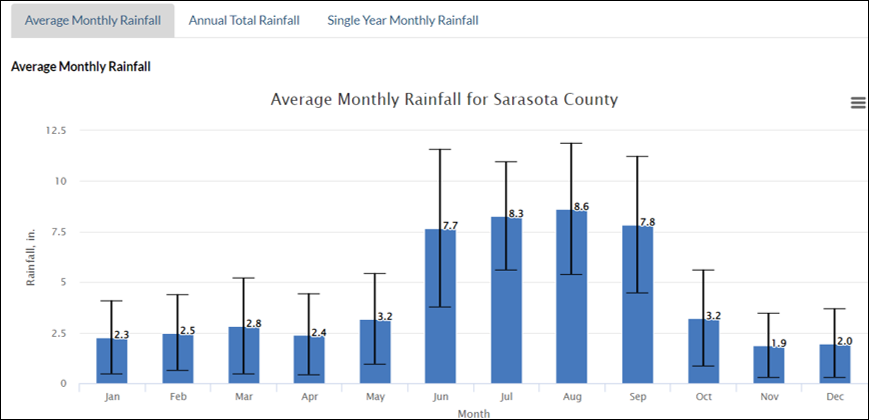
Florida’s rainy season varies per region. Sarasota County lies in the West Central/Southwest Florida region. Per the National Weather Service, Sarasota County’s rainy season begins on June 1 and ends after Sept. 30. That’s about 18 weeks or four months of rain. This is where we get about 60% of our rainfall for the entire year.
In 2024, Sarasota County received about approximately 70 inches of rain, thanks to an active the storm season (18 named storms, including 11 hurricanes, five of which were major hurricanes.) Compare that to 2023 when Sarasota received about 30 inches of rain, an amount that reflects the driest year on record. With an average rainfall of 52 inches, 2024 saw a nearly 2-foot increase, while 2023 showed an almost 2-foot deficit.
Phases
The rainy season is characterized by warm, humid conditions with frequent showers and thunderstorms. From late May to the end of September, the rainy season inundates us in phases.
- End of May through June: When severe storms are most likely to occur during the rain season. Hail, damaging winds and waterspouts are more frequently seen during this phase. Heavy rainfall and frequent lightning.
- July through early September: Peak rainy season with heavy rainfall, seasonal river flooding, and frequent lightning.
- Mid-September through October: Higher rainfall variability as the season winds down, but overlaps with the most active part of the hurricane season.
Planning ahead
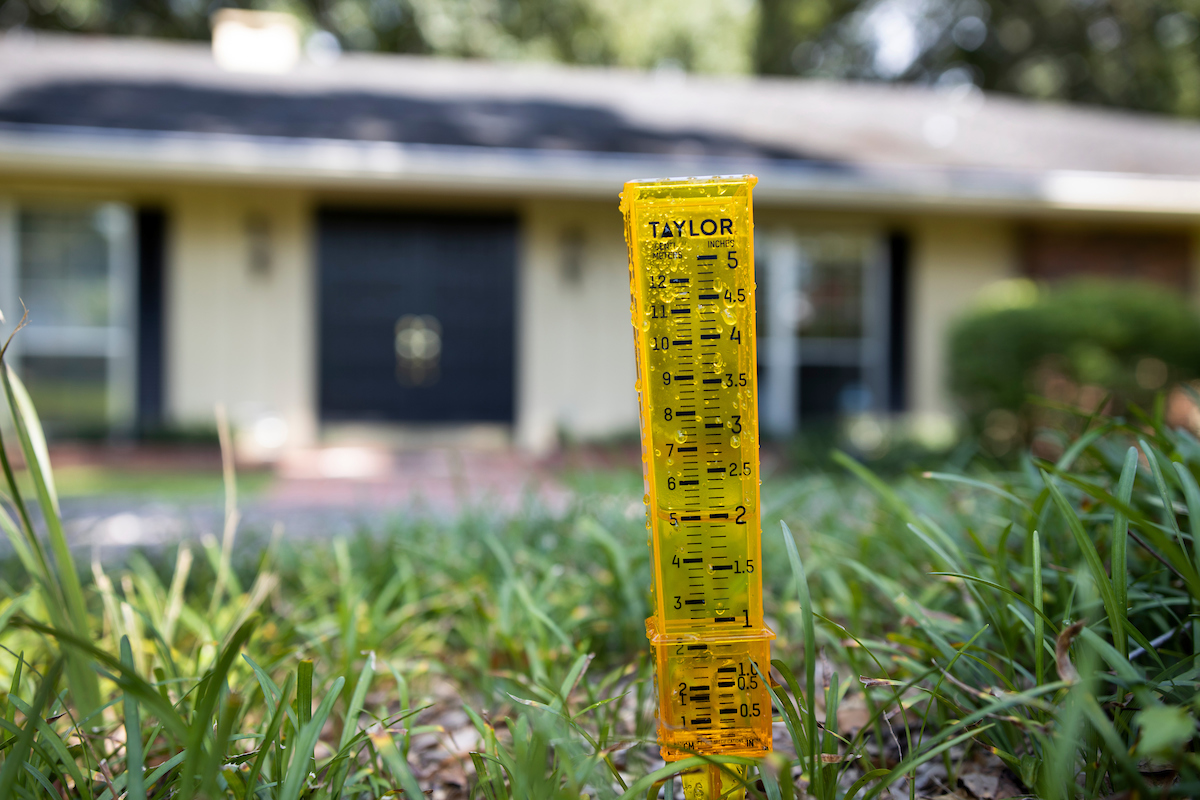
We monitor precipitation to help us plan events like weddings, fishing trips and picnics. It is also really important for knowing when to irrigate. Florida homeowners with automatic irrigation often use 50% of their monthly water consumption outdoors.
It is recommended to water your lawn with three-quarters of an inch of water per week. Sarasota County residents should also be aware of watering restrictions. For unincorporated Sarasota County, residents should only water once per week on their given day, being careful not to water from 10 a.m. to 4 p.m. Watering with less than three-quarters of an inch or more than once per week discourages roots from growing deep, and makes them more reliant on frequent waterings.
State and local laws require anyone with automatic irrigation system to have a working rain sensor. Rain sensors will trigger your irrigation system to turn off during rain events, but just as important is to turn off your irrigation controller 24 hours before and after rain. If your rain sensor dries out or malfunctions, manually turn off your system the way you would before/after rainfall.
In fact, if you receive three-quarters of an inch or more of rainfall, it is best to turn off your irrigation for that week. Watering on top of sufficient rainfall not only stresses your lawn and landscape due to overwatering, but it trains your plants roots to be shallow, and therefore drought intolerant. Other benefits to watering only when needed: reducing runoff pollution, conserving a limited resource (freshwater) and improving plant health.
Check out Sarasota County’s Near-Real Time Rain Fall Data
RainCheck
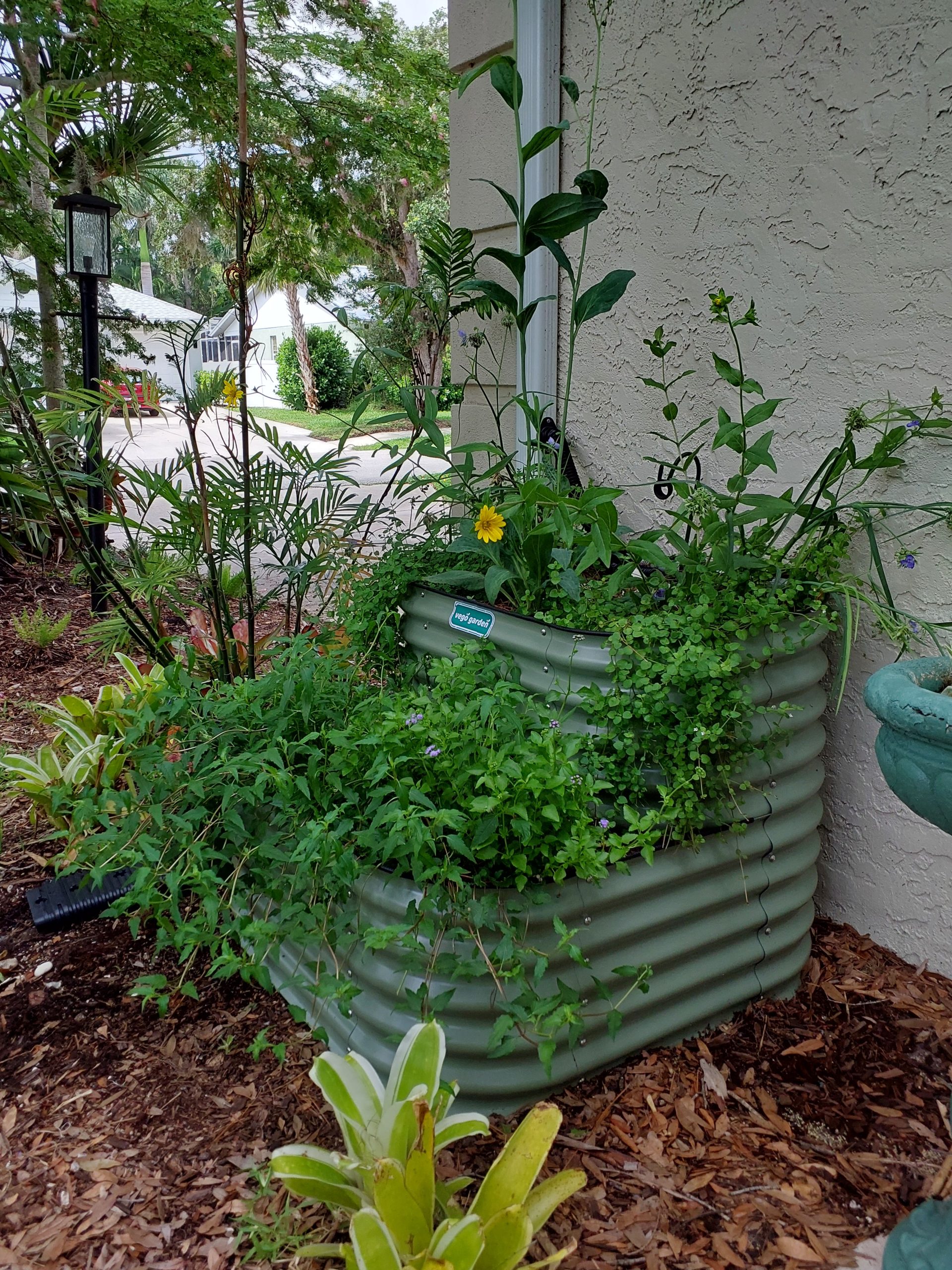
Sarasota County’s RainCheck rebate program offers a fun and rewarding way for homeowners to improve their landscapes while protecting local waterways. Eligible projects include rain gardens, bioswales, downspout planters and modified downspouts and replacing concrete or asphalt with permeable materials. To get started, homeowners must submit a pre-approval application before beginning any work—only new projects qualify! Once approved, you’ll have 120 days to complete your project and submit all documentation for reimbursement.
If you’re unsure where to start or want feedback on your proposal, reach out to the county’s Neighborhood Environmental Stewardship Team at 311 (941-861-5000 outside Sarasota County) or email raincheck@scgov.net. Team members are happy to help you make your project both beautiful and impactful!
Resources
- Weather Conditions for Sarasota/Bradenton (National Weather Service)
- Dew point statistics for West Central and SW Florida
- Sea Surface Temperature
- Monitoring Bermuda High
- Sarasota County Water Atlas
- Drought Monitor
- Sarasota County Flood Protection Level of Service
- Sign up for the county’s flood information alerts
- Flood and drainage guide (SWFWMD)
- Myakka River Gauge
- Tide predictions (Sarasota)
 3
3