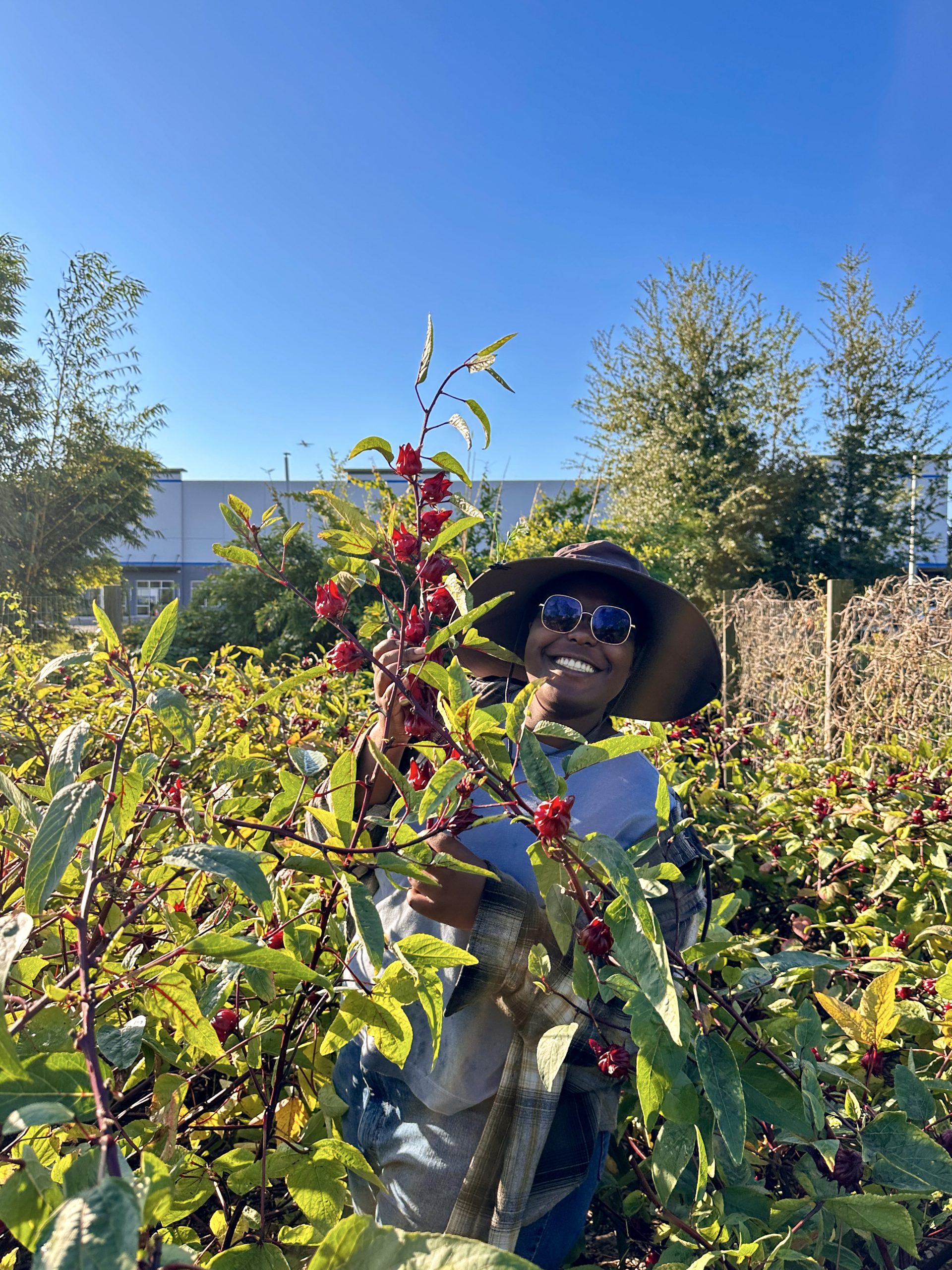
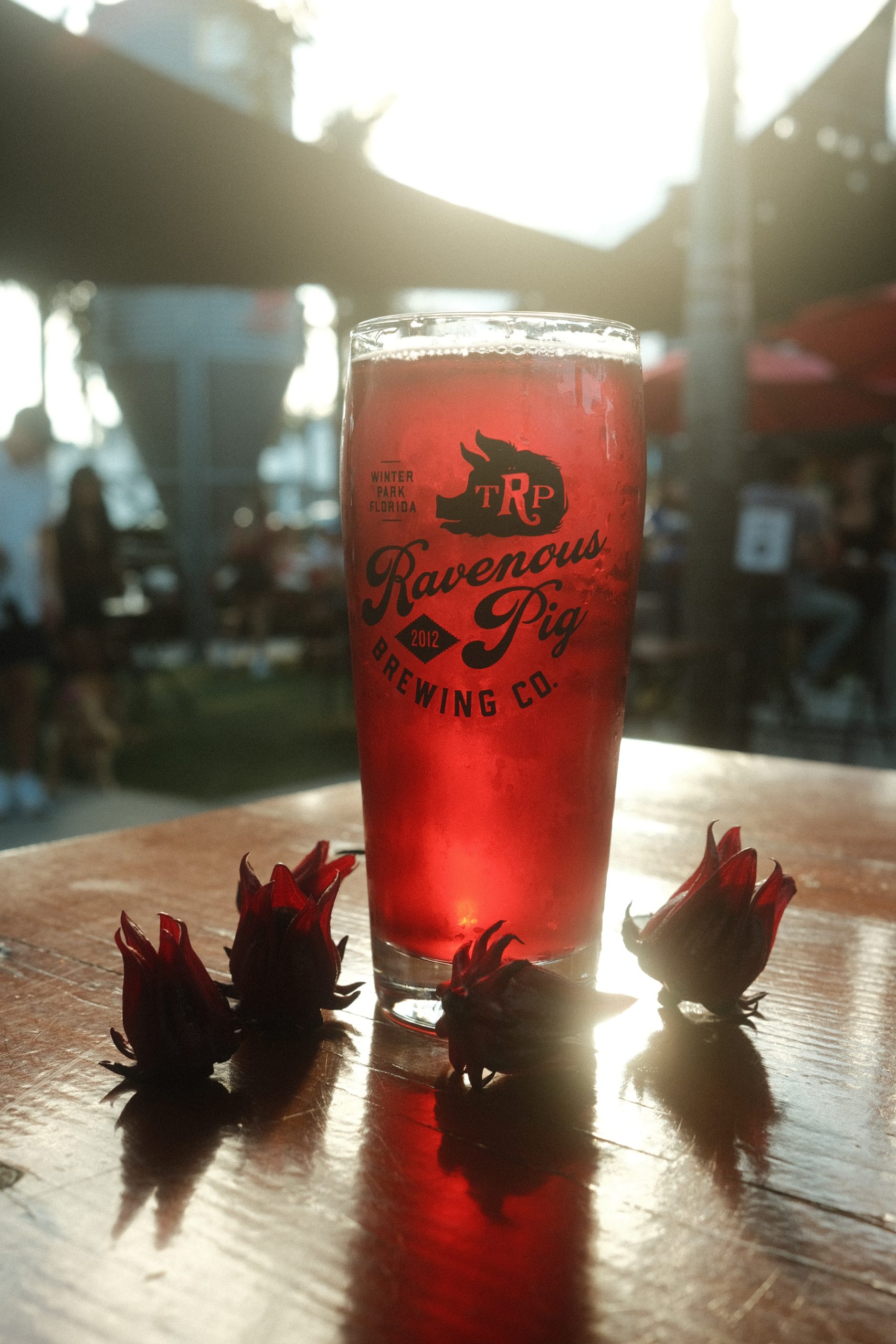
This season, our gardening team has been hard at work cultivating Hibiscus sabdariffa, commonly known as roselle, sorrel, or Florida cranberry, in our UF/IFAS Extension Orange County Exploration Gardens — and the results have been nothing short of spectacular! To date, we’ve harvested over 150 gallons of roselle, which have been enjoyed not only by our team, but also by program participants, visitors, and several local restaurants, bars, and CSAs (Community Supported Agriculture). Notably, The Ravenous Pig Brewing Co. crafted the delicious Roselle Ramble brew. In a wonderful full-circle partnership, $1 from every beer poured supports educational programs here in our Extension Gardens. We’re proud to see this versatile crop not only delight local palates but also foster community learning and sustainable gardening practices.

What Exactly Is Roselle and How Do I Grow It? Roselle (Hibiscus sabdariffa) is a tropical shrub native to West and Central Africa, recognizable by its lobed leaves and creamy hibiscus flowers that mature into bright red, fleshy calyces. In Central Florida’s warm, subtropical climate (USDA 10A), roselle does quite well. Most gardeners start roselle from seed, though it also roots easily from cuttings. Sow seeds in March or April—either in trays or directly in the ground—and expect germination within 5–10 days. Transplant seedlings into 1–3 gallon pots in May–June, then move them into the garden in August–September. Because mature plants can reach 5–7 feet tall and 3–5 feet wide, be sure to give them plenty of room. Provide full sun, well-drained soil, and consistent watering during dry stretches. Early pruning helps the plant branch out and produce more flowers, resulting in a better harvest.
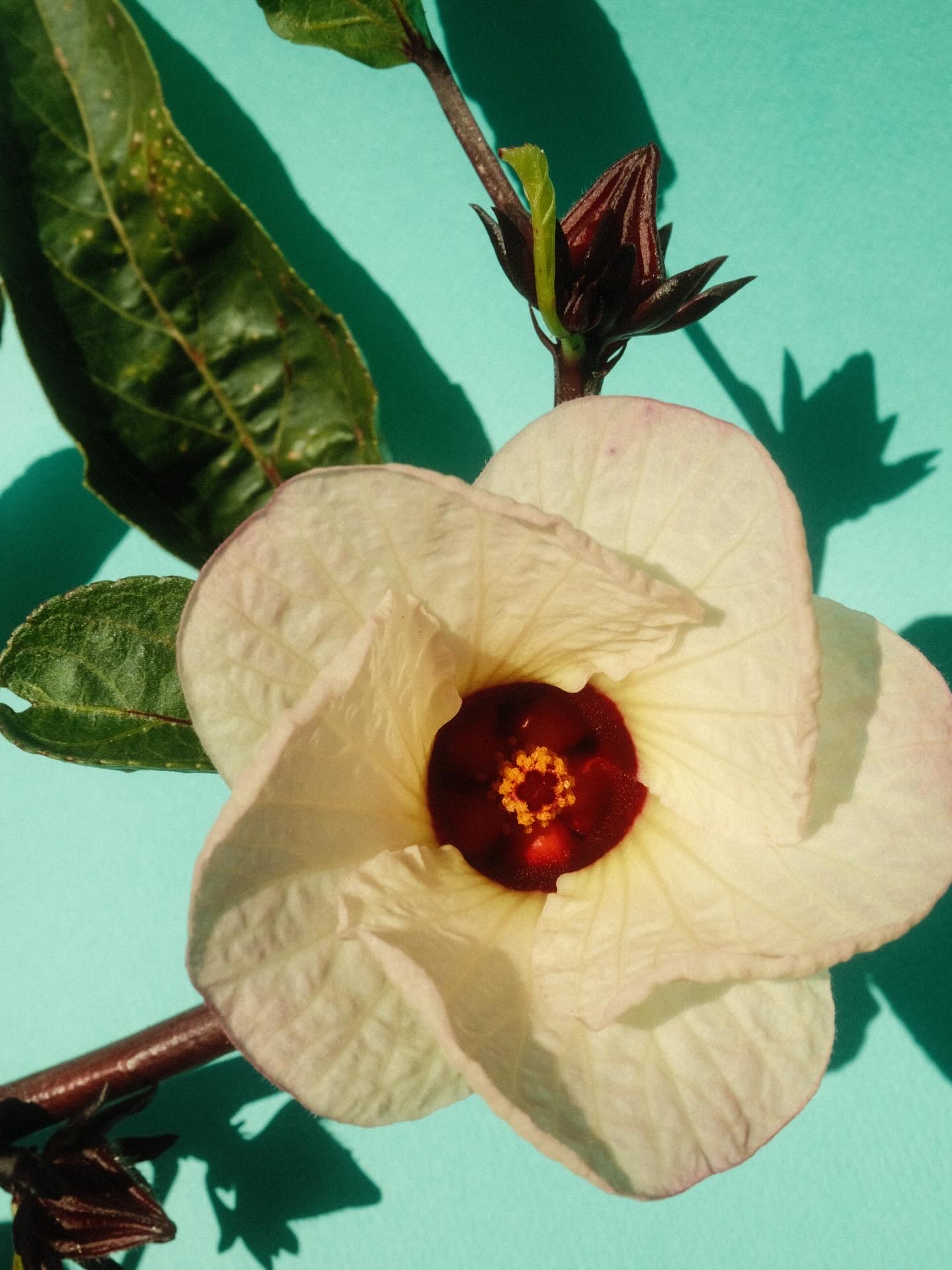
Okay, What’s Next? Roselle typically begins flowering in September–October, producing creamy white hibiscus blooms with a deep red center that pollinators love. Once the blooms drop, the calyces start to develop—the cup-like outer structure of the flower that swells and turns a rich crimson as the seed pod forms inside. This is the part that’s harvested and used. In Central Florida, calyces are generally ready to harvest from October–November and may continue into the new year. To harvest, simply pick the calyces and remove the seed pod. Because a single plant can produce up to 12 pounds of calyces in ideal conditions, even a small planting can yield a substantial bounty.
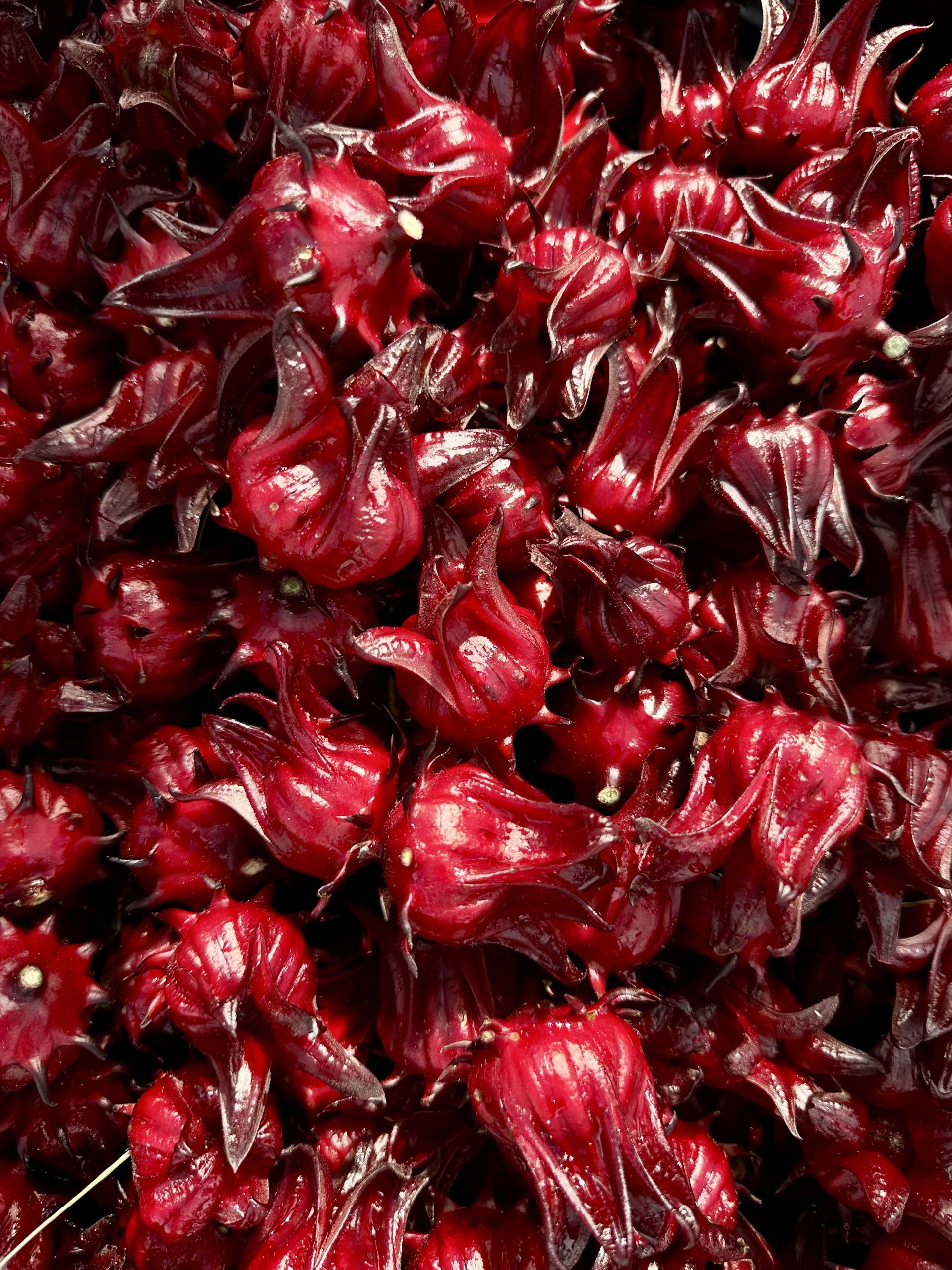
Uses of the Calyces and Health Benefits: Roselle calyces are bright red, tangy, and incredibly versatile. While they’re most commonly used for making herbal hibiscus tea, they’re also used to make jams, jellies, syrups, sauces, cordials, punches, and “Florida cranberry”–style holiday sauces. They can also be dried or frozen for long-term use.
Nutritionally, roselle is packed with polyphenols, anthocyanins, flavonoids, and organic acids. Research shows that roselle consumption can reduce systolic and diastolic blood pressure, improve antioxidant levels (including glutathione and SOD), lower total and LDL cholesterol, and decrease oxidative stress and inflammation—key contributors to many chronic diseases. Additional studies suggest benefits for lipid regulation, inflammatory markers such as C-reactive protein, and other metabolic health indicators. Altogether, enjoying roselle—whether as tea or extract—may support heart health, healthier blood pressure, improved cholesterol, and reduced oxidative stress.
Roselle is a beautiful, resilient, and highly rewarding plant that brings together cultural history, vibrant flavor, and remarkable health benefits—making it a standout choice for any Central Florida garden.
 5
5