Hurricane season is part of life in Florida, but the damage isn’t limited to roofs and windows. Trees, lawns and landscapes also can take a major hit that may lead to costly repairs.
After hurricanes Milton and Helene in 2024, residential losses topped $5 billion, with more than 287,000 claims tied to wind, flood and landscape destruction, according to the Florida Office of Insurance Regulation.
Michael Orfanedes is a commercial horticulture agent at the University of Florida Institute of Food and Agricultural Sciences (UF/IFAS). Based at UF/IFAS Extension Broward County, he reminds property owners that storm-ready means paying attention to what’s growing outside as much as what’s inside a home or business.
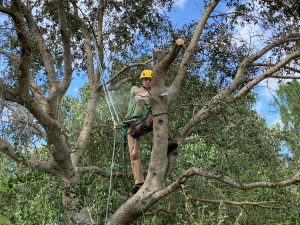
“Having properly trimmed trees in advance of storm season is one of the most proactive things a homeowner or property manager can do to reduce tree losses and storm damage to property,” he said.
To help homeowners and property managers take proactive steps, Orfanedes answers common and not-so-common landscape management questions providing long-term strategies for building storm resilience into your landscape.
Trim trouble before it strikes
Q: What are the top three landscaping mistakes homeowners make before a storm?
A: Failing to have trees trimmed correctly in advance of a storm.
Leaving the yard and patio items unsecured. Outdoor furniture, garden tools, potted plants and decorations can become projectiles if not brought inside or properly stored.
Forgetting to turn off the sprinkler system in advance of a storm. Oversaturated soil from irrigation can make your yard more vulnerable to flooding and increase the chances of a shrub or tree being uprooted.
Q: Before a storm, how can I reduce the risk of tree damage and flying debris?
A: Cracked or broken limbs should be removed. Trees with evidence of advanced trunk decay or a tree that is leaning severely should be evaluated by a certified arborist for possible removal.
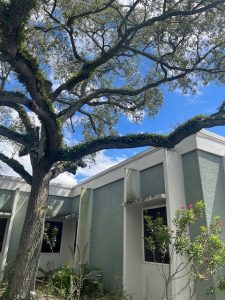
Limbs hanging over roof lines or close to buildings should be shortened. Always reduce branch length back to another lower limb. Do not top your tree by making indiscriminate stub cuts. Stub cuts typically cause decay. Sprouts attached to decaying wood are weakly attached. When those sprouts become large and weighty they may break apart. This practice is not only harmful to trees, but in many cases is a citable offense in some cities and counties by code enforcement that can lead to costly fines.
The ASK IFAS document “How to Minimize Wind Damage in the South Florida Landscape” provides science-backed tips on how to properly trim trees. Such trees should have a dominant central leader and strong branch attachments. UF/IFAS research shows that trees pruned in such a manner typically fare better in storms and have a much lower risk of serious damage than their unpruned or improperly pruned counterparts.”
Q: How can property owners tell if a tree is at risk of falling during a storm?
A: Look for trees that lean to one side or another — especially toward your home or other structures. Also check for trees with uneven or lopsided canopies, and those with large broken or decayed roots. These signs may indicate that the tree is unstable and more likely to fall during high winds.
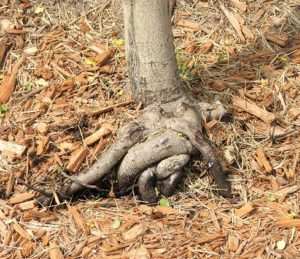
Also, look for trees with exposed roots that have been repeatedly damaged by lawn mowing or other activities. If damage looks extensive, such trees could be weakened or even unstable and at a higher risk of falling during strong wind events.
Trees with significant cracks or hollowed areas in the trunk or in major scaffold limbs should be evaluated for risk of failure.
Residents who need a professional risk assessment of their tree are encouraged to contact an arborist certified by the International Society of Arboriculture (ISA) who holds a Tree Risk Assessment Qualification credential. One can locate a certified arborist from ISA Trees Are Good.org. For more information, you can also reach out to your local UF/IFAS Extension Office.
Q: Is it safe to prune trees during hurricane season, or should it be done earlier?
A: Tree trimming can be done any time of the year in South Florida. However, it is best done in advance of storm season when working conditions are typically more favorable to outdoor work and prices may be lower. Trees can be pruned during storm season but should not be pruned right before a storm because there may not be adequate time to properly dispose of the fallen limbs and brush. Know that trimmed branches left outdoors during a storm can become dangerous projectiles.
Coastal Landscape Challenges
Q: What makes landscaping in coastal areas more vulnerable during hurricane season?
A: Storm surge and flooding with saline or brackish water following storm events or king tides can kill turf and many sensitive landscape plants.
Q: Are there specific coastal plants or trees that hold up better in hurricanes?
A: Those that are adapted to coastal conditions include the seagrape, beach sunflower, sea oats, cocoplum, yaupon holly and railroad vine are good choices. For more information check out the Salt-Tolerant Plants from the UF/IFAS Gardening Solutions website.
Q: What landscaping techniques help reduce erosion and flooding in coastal yards?
A: The most common barriers to consider include sea walls, landscape berms and durable seaside plantings of salt-tolerant plants.
Q: Can saltwater intrusion damage landscaping and how can it be mitigated?
A: Most certainly it can. If the property becomes inundated with salt or brackish water, it may be advisable to wait until the flood waters recede and then repeatedly irrigate the property to try and leach out the soluble salts that have accumulated in the soil.
###
Para accesar a este contenido en español, por favor utilice este enlace.
ABOUT UF/IFAS
The mission of the University of Florida Institute of Food and Agricultural Sciences (UF/IFAS) is to develop knowledge relevant to agricultural, human and natural resources and to make that knowledge available to sustain and enhance the quality of human life. With more than a dozen research facilities, 67 county Extension offices, and award-winning students and faculty in the UF College of Agricultural and Life Sciences, UF/IFAS brings science-based solutions to the state’s agricultural and natural resources industries, and all Florida residents.
 3
3

