Boasting more than 80 distinct ecosystems, Florida is a biodiversity hot spot. More than 4,000 animal species, in fact, are native to the Sunshine State.
As the weather continues to warm, a growing number of species are on the move, meaning interactions with humans are increasingly common. Through the UF/IFAS “Florida Critter of the Month” series, we’re highlighting native animals that wildlife watchers are likely to encounter and providing bite-sized guides about their behavior.
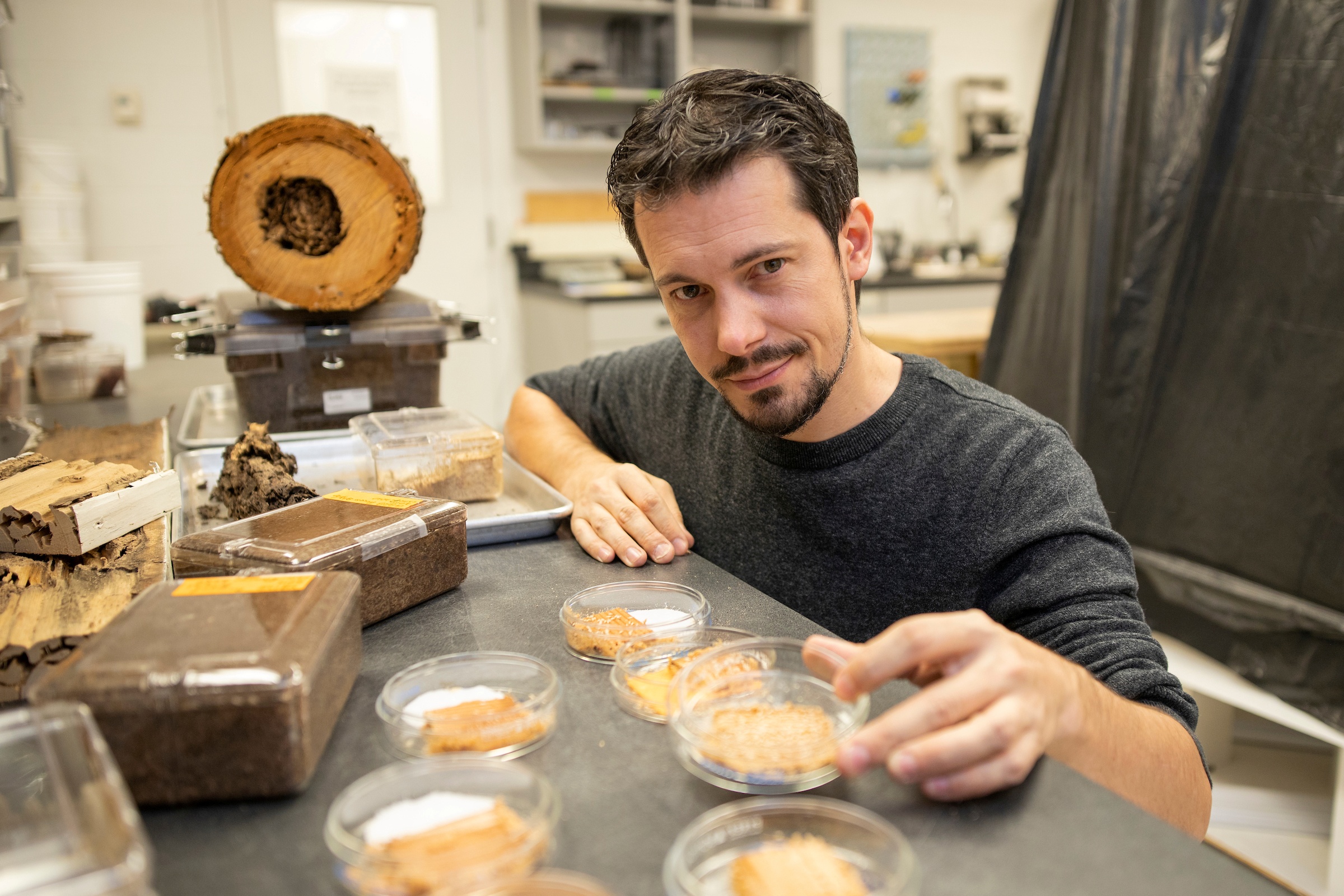
This month, the focus is a creepy-crawly critter: the termite. Thomas Chouvenc, UF/IFAS associate professor of urban entomology, provides some insight into Florida’s native population.
Q. How would you characterize Florida’s native termite population?
A. There are 20 species of termites in Florida, and 14 of them are native species. Six species are considered invasive. Only a handful of species are called “pests.” There are two distinct categories among the pests: drywood termites and subterranean termites. Drywood termite species make small colonies contained in a single piece of wood and do not require access to soil or moisture. Subterranean termites make large underground colonies with access to soil and moisture.
Q. When are native Florida termites most active?
A. In Florida, it is always termite season, as colonies continue to chew on wood year-round. However, most pest species engage in dispersal flights during springtime, which means that the winged termites will fly out of their colonies to find a potential mate and start new colonies. Specifically, Asian subterranean termite flights peak in March-April, Formosan subterranean termite flights peak in April-May and West Indian drywood termite flights peak in May-June.
Q. What type of behaviors do termites engage in during this time?
A. When mature colonies produce winged termites, they engage in synchronous flights among local colonies, which increases the chance for them to find a potential mate. They drop their wings shortly after their flight and look for a partner. Sex pheromones are involved for mate recognition. Once encountered, the pair find a new place to start the colony.
Q. How should homeowners react if they observe termites?
A. For subterranean termites, if only a few winged termites are found in the house, it is most likely that they flew from the outside and accidentally found their way inside. In most cases, this only indicates that the species is established in the neighborhood but is not currently infesting the structure. But this means that the structure is potentially at risk over time. For drywood termites, if a few winged termites are found, it is possible that they came from inside the structure, where colonies may have been established for several years. Inspection is recommended to determine if infestation is currently occurring.
Learn more about termites through the UF/IFAS Fort Lauderdale Research and Education Center.
###
ABOUT UF/IFAS
The mission of the University of Florida Institute of Food and Agricultural Sciences (UF/IFAS) is to develop knowledge relevant to agricultural, human and natural resources and to make that knowledge available to sustain and enhance the quality of human life. With more than a dozen research facilities, 67 county Extension offices, and award-winning students and faculty in the UF College of Agricultural and Life Sciences, UF/IFAS brings science-based solutions to the state’s agricultural and natural resources industries, and all Florida residents.
 0
0

