 Welcome back to Nutrition Stories, our series exploring hot topics in nutrition and dietetics. Today’s guest is Kamille Santos, a graduate of the UF Didactic Program in Dietetics (DPD) in the Food Science and Human Nutrition (FSHN) Department at the University of Florida. In this video, Kamille discusses how to achieve a nutritious, balanced diet while on a budget.
Kamille:
Imagine: you’ve built up an appetite and your stomach begins to rumble. Your fridge and pantry are in desperate need of a restock. You check your bank account only to discover that you have just ten dollars left. Suddenly, a full day of comforting and healthy meals seems out of reach.
 For many low-income individuals, this scenario is a daily reality. A limited income can make it challenging to meet nutrition needs, which puts this population at a higher risk for undernutrition.
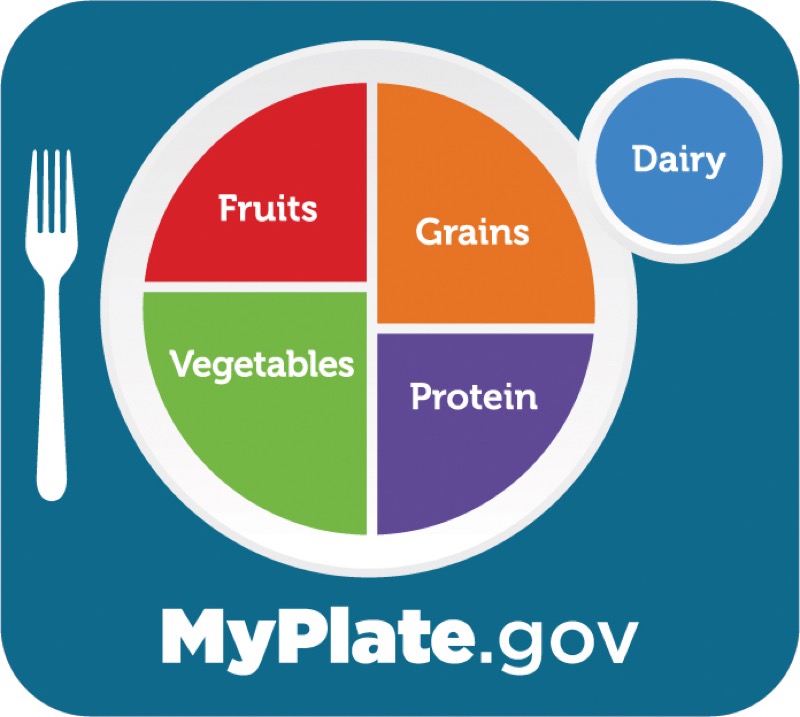
Fortunately, healthy eating on a budget is possible. The USDA MyPlate graphic can be helpful in visualizing a balanced meal, and the MyPlate website can offer information and recipes that fit your needs. Knowing how to put together a nutritious plate puts you one step closer to reaching your health goals. When shopping and cooking on a budget, creating a grocery list with your favorite foods, shopping for in-season produce, and choosing affordable alternatives–like canned and frozen produce–can stretch ten dollars even further. Crafting a simple plan of attack that incorporates your preferences and budget limitations can optimize your nutrition without breaking the bank!
Header: A depiction of the different packaging and processing of fresh fruit now available in US grocery stores. UF/IAFS photo: Thomas Wright.
Music by saavane: “Lounge Music”
References
- Alao R, Nur H, Fivian E, Shankar B, Kadiyala S, Harris-Fry H. Economic inequality in malnutrition: a global systematic review and metaanalysis. BMJ Global Health. 2021;6:1-12.
- United States Department of Agriculture. What is MyPlate? USDA.
https://www.myplate.gov/eat-healthy/what-is-myplate.Accessed March 17,2025 - Florida Department of Agriculture and Consumer Services. Crops in season. FDACS.
https://www.fdacs.gov/consumer-resources/buy-fresh-from-florida/crops-in-season.
Accessed March 17, 2025. - U.S Bureau of Labor Statistics. Average retail food and energy prices, U.S. city average and west region. BLS. Accessed April 14, 2025.
- Canva. Infographic on healthy eating plate and budget tips. Canva. https://www.canva.com.
Accessed April 17, 2025
Looking for more posts sharing stories about nutrition hot topics? Check out the rest of the UF/FSHN Nutrition Stories Series!
 1
1