 This article is the second in a series featuring the UF/FSHN Extension Programs. Read the other articles in the series to learn more about these essential community service programs. Today’s topic: seafood safety.
Research and teaching are the two essential pillars of exceptional universities. Yet for over 100 land-grant colleges and universities in the United States, a third pillar exists: Extension. This public service role is designed to combine pioneering research and outstanding teaching with community outreach, resulting in a powerful trifecta of generating and “extending” vital resources.
Extension offices offer science-based research in verbal, written, and electronic communications targeted for their specific audiences. The Food Science and Human Nutrition (FSHN) Department at the University of Florida specializes in Food Science (flavor chemistry, fermentation, food safety, sensory sciences, and industry outreach and product development) and Nutrition Sciences Extension programs. In this FSHN Extension feature, Dr. Razieh Farzad describes educating seafood producers about seafood safety and sustainability through trainings and education materials.
Tell us about your Extension program.
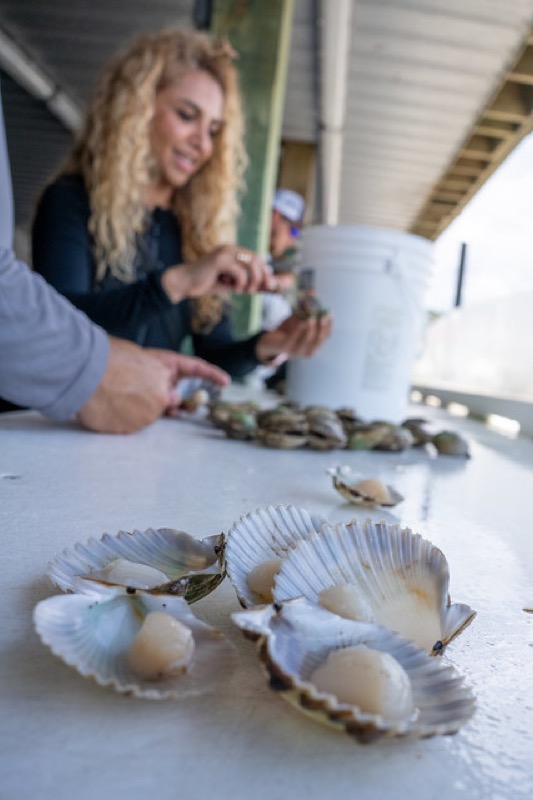
When I joined UF/IFAS in 2020, I set out to build an Extension program that directly supports Florida’s seafood industry through education, compliance training, and applied research. My focus is on making sure seafood producers and processors have the tools they need to meet regulatory requirements, protect public health, and remain competitive in a rapidly changing food system.
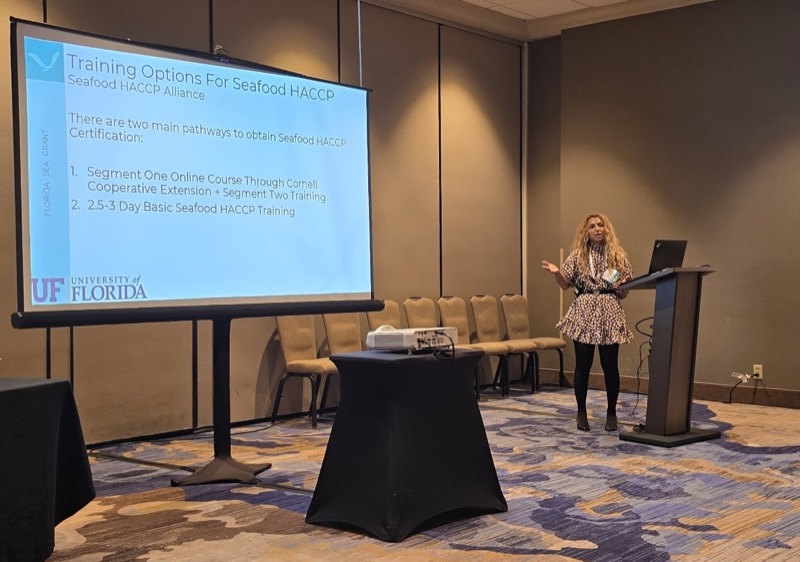
Through my role with UF/IFAS and Florida Sea Grant, I teach mandated seafood safety trainings, including Seafood HACCP, and develop educational resources that address emerging needs. Looking ahead, I will be part of the first national cohort of lead trainers for FDA’s Final Food Traceability Rule, helping the industry nationwide understand and implement this critical new regulation.
Whether through trainings, workshops, or outreach, my program is designed to ensure seafood in Florida is safe, high-quality, and sustainable, strengthening both the industry and the communities it supports.
What are some of the common challenges your community faces?
Seafood producers are resilient, but they face big challenges: navigating complex and changing regulations, maintaining consumer trust in the face of misinformation, adapting to environmental disruptions, and preparing for new technologies like artificial intelligence and cellular agriculture. Meeting these challenges ensures that seafood remains a trusted, nutritious, and sustainable choice for generations to come.
What support do you offer to address these challenges?
My program is designed to meet these challenges head-on. I provide HACCP trainings and plan reviews so processors can remain in compliance and keep their businesses open. In addition, I develop accessible resources—from multilingual factsheets to videos, webinars, and podcasts—that help Extension agents and industry partners serve their communities.
I also offer technical consultations to businesses across Florida and collaborate on outreach campaigns that strengthen seafood safety and industry resilience. Many times, I have the answer right away. When I don’t, I can lean on the strength of the Florida Sea Grant and national Sea Grant network. I am connected to seafood scientists and Extension specialists across the country, which means I can quickly track down the right expertise or resources.
What is the most challenging situation you’ve come across?
One of the most challenging situations was starting my position in the middle of the pandemic. With in-person engagement impossible, I had to completely rethink how to connect with seafood businesses. However, what felt like a major roadblock quickly turned into an opportunity—delivering programming and connecting online allowed me to reach broader audiences not only across Florida, but also nationally and even internationally, in ways I hadn’t expected.
What has been the most rewarding part of this work?
The most rewarding part of my work is the constant learning that comes from helping others. Many times, when I guide a business through HACCP certification, respond to a question, or walk someone through a new regulation, I come away with fresh insights myself. Each of those experiences reinforces how much trust people place in Extension, and how even small actions—like answering a phone call or clarifying a safety concern—can have ripple effects across an entire community. Seeing that impact, whether it’s a business staying open, jobs being retained, or confidence restored in Florida seafood, is what makes this work so meaningful.
What’s the best way for someone to get in touch to learn more?
I keep resources regularly updated through the Florida Sea Grant Seafood HACCP webpage, where you’ll always find the latest training opportunities and guidance. If you’d like to connect with me directly, you can email me at [rfarzad@ufl.edu] or call me at [352-294-3902]. I’m often on the road delivering programs, so please leave a voicemail if I don’t pick up. Your message will be sent to me by email, and I’ll be sure to reach out.
Extension Resources
UF/FSHN Extension Features
UF/FSHN Cooperative Extension and Extension Faculty
UF/IFAS Extension Teams and Programs
UF/IFAS Extension Services and Resources
Extension Institutions by State
USDA National Institute of Food and Agriculture Cooperative Extension
Learn more about FSHN’s renowned programs below.
Undergraduate Programs:
Dietetics
Food Science
Nutritional Sciences
Graduate Programs:
M.S. Dietetic Internship Program
M.S. Food Science and Human Nutrition
Ph.D. Food Science
Ph.D. Nutritional Sciences
 4
4