As fall begins, the holidays will soon be upon us. The holidays are a great time to focus on healthy eating. You can modify your favorite recipes to make them healthier yet still taste good. Simple substitutions can reduce fat, sodium, sugar, calories, and/or sodium. Knowing equivalent measurements can help yield a quality and standard product.




What is a recipe substitution or modification?
The process of replacing one item for another. One that is substituted for another for health reasons. The substitution of applesauce for oil is one way of reducing the fat in recipes. Some cookbooks have a long list of substitutions or replacements for ingredients or items you are running short on.
What is an equivalent measurement?
Basic cooking measurements can be confusing when you are trying to find the correct conversion or equivalent. You may not have the right measuring spoon or cup available to you. Tablespoons, teaspoons, cups or fluid ounces may be listed on a recipe. Knowing how to measure is part of learning to cook.
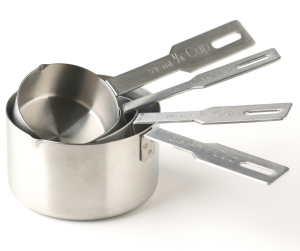
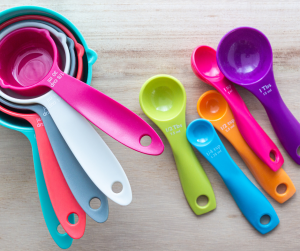
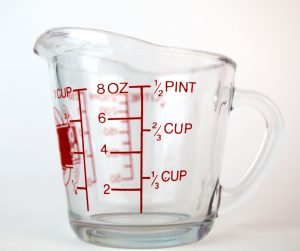
GENERAL MEASUREMENT EQUIVALENT EXAMPLES
It is important to know common measurement equivalents when you need them. It can be fun to quiz yourself and see if you know the common equivalents. Many cookbooks contain measurement equivalent tables.
- 3 teaspoons = 1 tablespoon
- 4 tablespoons = 1/4 cup
- 5 tablespoons + 1 teaspoon = 1/3 cup
- 16 tablespoons = 1 cup
- 2 cups = 1 pint
- 16 cups = 1 gallon
- 2 pints = 1 quart
- 4 quarts = 1 gallon
- 8 pints = 1 gallon
- 8 fluid ounces = 1 cup
- 16 fluid ounces = 2 cups
Cooking styles can impact your dietary intake too. Baking, broiling roasting and stewing can also make recipes healthier. If you are trying to eliminate fat and excess calories from your diet or have been told to follow a heart healthy diet, avoid frying foods.
Making ingredient substitutions and changes can help you manage diet related diseases like high blood pressure, diabetes, heart disease, constipation, and obesity.
When cooking and baking this holiday season, there are many reasons you may want to substitute ingredients for your favorite family recipes. Some may have special dietary requirements, allergies, chewing and swallowing problems, or budgetary restrictions. Whatever the reason to make a substitution, plan to be sure you have what you need on hand. Experimenting and testing substitutions can be costly if the product doesn’t turn out as expected. Test ahead instead of the day of the event you are cooking for, to avoid wasting ingredients and disappointment. Look for recipes that are lower in sugar, fat, sodium, and include whole grains.

What can you substitute?
Salt, sugar, fiber and fat are the main ingredients commonly substituted for a healthier diet. Be mindful of allergies too. Whatever your goal – stick to it. Your health matters.
SALT
Salt flavors food and is used as a preservative. People with high blood pressure often need to limit their sodium intake. You can substitute herbs and spices for sodium. You can also make your own herb blend at home to use as a substitute for salt. https://edis.ifas.ufl.edu/publication/fy1209
- Choose low sodium versions of food products to reduce salt intake.
- Use fresh and dried herbs and spices instead of salt.
- Instead of regular canned vegetables, choose the low sodium or no added salt canned or frozen vegetables.
- Rinse canned vegetables to reduce some of the sodium content.
- Purchase low sodium soups, sauces and gravies, when available.
- Read labels closely to determine sodium content.
- Read this Family and Consumer Sciences blog on sodium intake and blood pressure for more information: https://blogs.ifas.ufl.edu/browardco/2019/11/13/sodium-intake-and-blood-pressure/
SUGAR
Too much sugar can lead to extra pounds. Sugar contains empty calories and flavor. People with diabetes, those trying to control their weight and/or eat healthier strive to limit concentrated carbohydrates or sugar intake.
- Instead of regular jelly and jam, choose low sugar versions.
- Choose unsweetened juice rather than sweetened juice.
- Choos 100% applesauce rather than sweetened versions.
- Avoid sweetened sugary cereals and choose healthier high fiber options.
- Rethink your beverage choices and what you drink every day. https://blogs.ifas.ufl.edu/browardco/2024/05/08/re-think-your-beverage-choices/
FIBER
Adequate amounts of dietary fiber lead to a healthy gut. Fiber adds bulk to the diet.
- Use whole wheat flour instead of white flour.
- Purchase whole wheat pasta over regular.
- Choose brown rice instead of refined white rice.
- Instead of sugar sweetened cereals choose oatmeal, bran cereal of 100% whole grain cereals.
- Read this Family and Consumer Sciences blog on dietary fiber for more information: https://blogs.ifas.ufl.edu/browardco/2023/07/05/dietary-fiber/
FATS
Fats provide flavor to food and are calorie dense. Some fats are healthier than others. Limiting fat in your daily diet can help to manage heart disease.
- Substitute applesauce for oil.
- Use low fat dairy products like skim milk, low fat yogurt, low fat cheese and low-fat sour cream, to lower fat and calorie intake.
- Choose plant-based fat over animal fats.
- Plant based fats: olive oil, corn oil, canola oil, and/or avocado oil
- Animal fats: lard, butter, and/or bacon grease
- Use vegetable spray instead of butter and use a non-stick pan.
- Instead of regular ground beef, choose 90% lean ground turkey
- Use two egg whites, instead of one whole egg.
- Instead of heavy cream use fat free milk or canned evaporated milk.
- Read this Family and Consumer Sciences healthier fats blog for more information: https://blogs.ifas.ufl.edu/browardco/2023/06/06/eat-foods-with-healthier-fats/
- Read this Family and Consumer Sciences blog on saturated fats for more information: https://blogs.ifas.ufl.edu/browardco/2023/06/02/all-about-saturated-fat/
- Read this Family and Consumer Sciences blog on controlling cholesterol for more information: https://blogs.ifas.ufl.edu/browardco/2023/06/01/control-your-cholesterol/
OTHER SUBSTITUTIONS
Here is an informative publication on ingredient substitutions. https://www.ndsu.edu/agriculture/extension/publications/ingredient-substitutions You may need to try and adjust recipe substitutions a few times, to get the product outcome you are looking for. NOTE: Sometimes substitutions may make a flavor and texture change, that is not desirable. Other times it works out perfectly!
For this holiday season, how about?
- Skip the handful of cheese cubes with crackers and have fresh vegetables and hummus as an appetizer instead.
- A baked apple with cinnamon instead of apple pie for dessert.
- A plain baked sweet potato instead of sweet potato casserole with a lot of butter and marshmallows. Enjoy the flavor of the sweet potato alone.
- Skip the whipped cream or ice cream on top of pumpkin pie or other desserts.
- In your favorite holiday dressing, limit the added salt, fat and substitute spices such as rosemary, sage, etc.
- Focus on making ½ of your plate fruits and vegetables. These foods contain beneficial fiber for your digestion. https://blogs.ifas.ufl.edu/browardco/2022/03/01/follow-the-rainbow-for-good-health-during-nutrition-month/
- Go lean with protein. Remove (trim off) and don’t eat all the visible fat and skin.
- Skip the sauces and gravy, which can be high in fat and salt.
- Portion control and portion size matter. Be mindful. https://blogs.ifas.ufl.edu/browardco/2023/01/13/portion-control-matters-portion-size-matters/
- Go for a nice leisurely (calorie burning) walk after a nice family meal. Stay active for better health. https://blogs.ifas.ufl.edu/browardco/2023/06/01/stay-active-for-better-health/
- Make your holidays bright. https://blogs.ifas.ufl.edu/browardco/2022/12/20/make-your-holidays-bright/

Conclusion
MyPlate, the US Dietary Guidelines and nutrient fact labels are tools to help us eat healthier. Substitute ingredients for healthier options and know your measurement equivalents.
- Make wise food and beverage choices.
- Shop smart.
- Read labels carefully.
- Measure accurately.
- Know your substitutions and use healthier alternatives.
Happy and healthy holidays to you and your family!
Brenda Marty Jimenez, MHM, RDN, LDN, FAND is a Registered and Licensed Dietitian with a Master of Science in Human Resource Management. Her professional areas include disease prevention, nutrition, wellness promotion, and food safety. She is a UF/IFAS Extension Agent IV in Broward County, Florida.
An equal opportunity institution.
 9
9