Technology is part of everyday life for young people. By the time children reach middle school, many already own or borrow a phone or tablet for communication, learning, or entertainment. Parents often wonder how much is too much, and schools are working hard to balance educational use with minimizing distractions. Let’s work together to foster healthy habits for our young people by understanding what the research says about device use and what our Taylor County schools expect during the day.
What the Research Tells Us
Studies across the U.S. and internationally highlight some consistent themes:
- Phones in class hurt learning. Schools that restricted phone use saw improved test scores, with the
 greatest gains among struggling students.
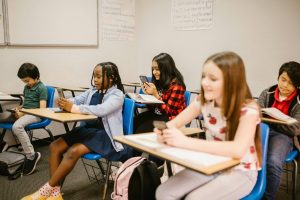
 - Even silent phones distract. Experiments show that just having a phone nearby can pull attention away from learning.
- Too much recreational screen time can affect grades. Research links heavy gaming, social media, and non-academic phone use with lower academic performance.
- Teachers notice the impact. More than 7 in 10 U.S. high school teachers say cellphone distraction is a major classroom challenge.
 greatest gains among struggling students.
The American Academy of Pediatrics doesn’t give a “one-size-fits-all” daily screen time number for older children. Instead, they recommend that families create a Family Media Plan to set healthy expectations for screen-free times, sleep routines, and schoolwork.
Taylor County Schools: Device Rules
Each Taylor County school sets expectations for student use of personal devices during the day:
- Taylor County High School
Students may have devices on campus but may not use them during class unless directed by a teacher. Earbuds are not allowed in classrooms or hallways, and only district-issued devices may be used for instruction. - Taylor County Primary School
Personal devices may not be used during school hours. Phones and tablets must remain powered off and silenced, and parent contact should go through the office. - Steinhatchee School
Students are encouraged to leave phones at home. If a phone is necessary, it must stay off and out of sight at all times. Violations may result in confiscation, and a parent will be required to pick up the device.
Across all campuses, the message is clear: personal devices should not disrupt the learning environment.
Helping Kids Build Healthy Tech Habits
 Parents play an important role in helping children balance screen time. Here are a few strategies:
- Create screen-free zones and times. Keep devices away from the dinner table, bedrooms at night, and during family conversations.
- Protect sleep. Encourage kids to park phones outside their bedrooms overnight and use a traditional alarm clock instead.
- Match school rules at home. Encourage kids to keep personal devices in a backpack during homework time, just like at school.
- Talk it out. Ask your child which apps distract them most and brainstorm ways to manage notifications or time limits.
- Model healthy use. Kids learn from adults. Show them how you put your phone away at meals and meetings.
Bottom Line
Technology is part of life, but how it’s managed makes all the difference. For children 10 and up, the best approach is balance: clear rules at home, healthy routines that protect attention and sleep, and respect for school policies that keep classrooms focused on learning.
With support from both schools and families, kids can use tablets and phones responsibly and grow the skills they need for the future.
References & Resources
- American Academy of Pediatrics: Family Media Plan
- Taylor County High School Student Handbook (2025–26), Electronic Devices Policy
- Taylor County Primary School Parent/Student Handbook (2025–26)
- Steinhatchee School Parent/Student Handbook (2025–26)
- Beland, L., & Murphy, R. (2016). Ill Communication: Technology, Distraction & Student Performance. London School of Economics.
- Ward, A. F., et al. (2017). Brain Drain: The Mere Presence of One’s Own Smartphone Reduces Available Cognitive Capacity. Journal of the Association for Consumer Research.
- Pew Research Center (2024). Teachers, Technology & Classroom Distractions.
 1
1