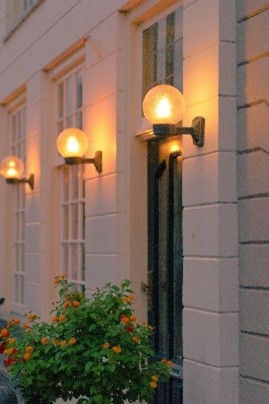
Have you ever gone outside at night and wished you could see more stars? In the United States, 99% of the public cannot experience a natural night sky because of light pollution (Dark Sky, 2016). Light pollution is caused by inefficient outdoor lighting and the glow that escapes from indoor lighting at night.
There is no doubt that artificial lighting has brought a wide variety of benefits to human lives, but light pollution is a growing issue that impacts both human health and wildlife. However, there are steps you can take to reduce light pollution and save money on your electric bill, without having to compromise comfort and safety.
What is Responsible Outdoor Lighting?
Dark Sky and Florida Fish and Wildlife Conservation Commission (FWC) have identified outdoor lighting best practices to ensure responsible usage and benefit humans and wildlife alike!
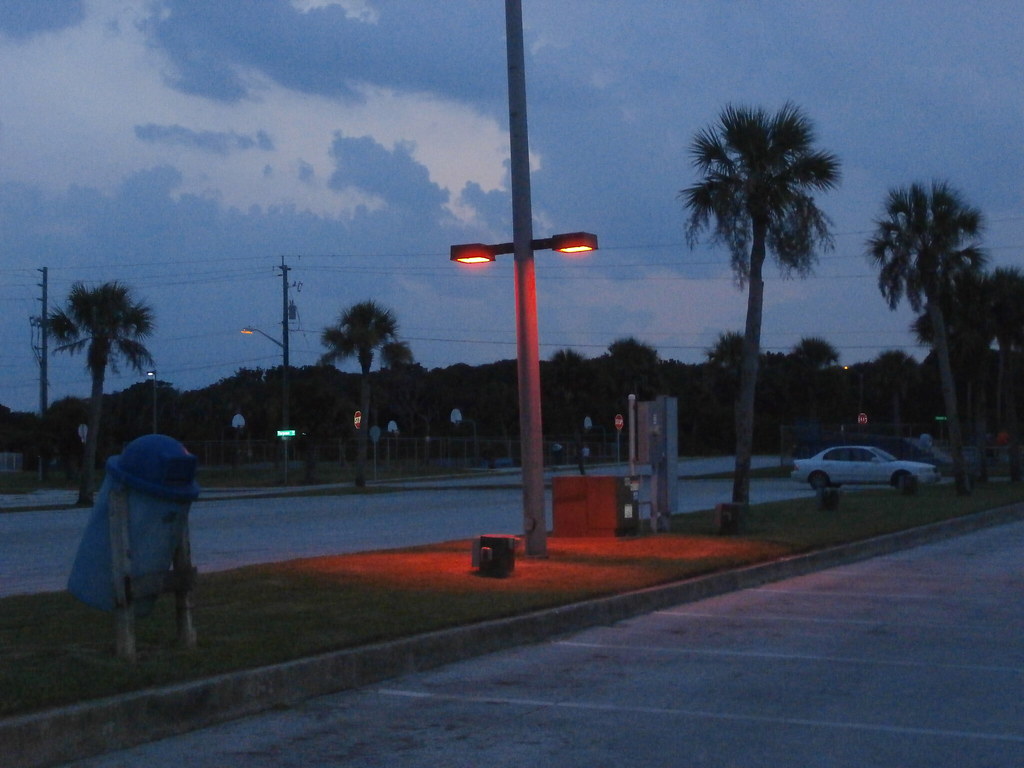
- Useful. Only place outdoor lights where they are specifically needed.
- Controlled. Use timers and motion sensors to reduce unnecessary outdoor light pollution, as well as lower your electricity bill.
- Low. Install outdoor lights as close to the ground as possible to provide focused illumination and avoid casting a glow into the sky.
- Long. Choose long wavelength lights such as amber and orange LEDs. These are less disruptive to wildlife and human eyes.
- Shielded. Use light fixtures with shielded bulbs and lamps, so that they are not visible from above and do not cast a horizontal glow.
View the FWC’s certified wildlife lighting options.
Benefits of Responsible Outdoor Lighting
Wildlife Friendly

Similarly to humans, Earth’s natural light cycles greatly impact the behavior and biological functions of many animal species. Wildlife are adapted to these cycles of light and dark and have evolved to survive efficiently during different parts of these cycles.
Did you know that most mammal species worldwide are nocturnal (Bennie et al., 2014)? The darkness of our night skies and the often-cooler night temperatures offer a variety of benefits for nocturnal wildlife, such as an escape from heat, protection from predators, reduced competition with other species, and more!
While the myths and stories we grow up with describe the darkness of night as something scary, for many species of wildlife, darkness is survival. New data shows that our night skies are becoming brighter at a rate of 9.6% per year (Scorzafava, 2023). This can have far reaching impacts on the health of our local wildlife populations in the following ways:
-
- Disrupting circadian rhythm. The circadian rhythm is cued by light, and regulates sleep-wake cycles, the release of physiologically important hormones, and other important bodily functions such as reproduction.
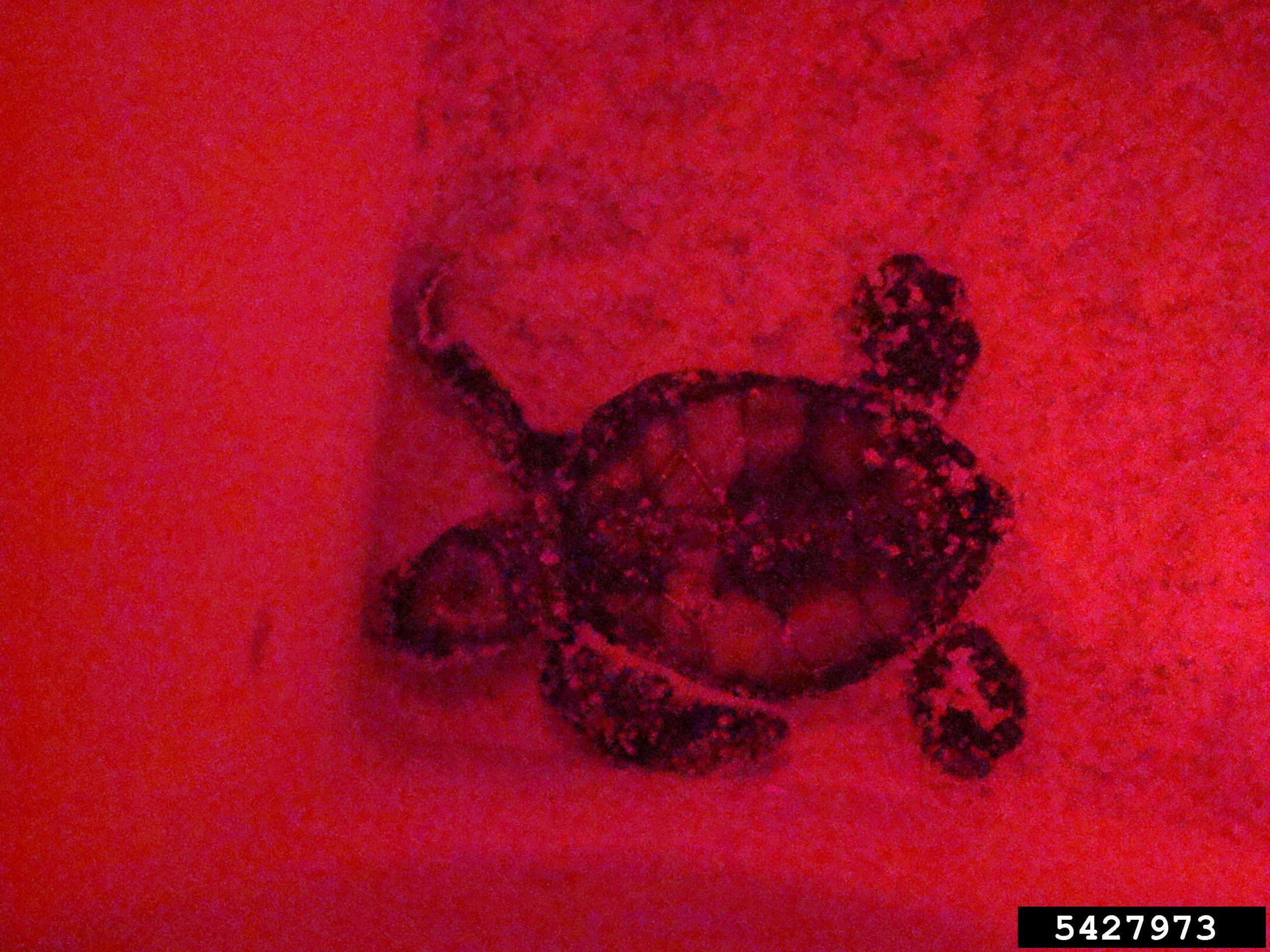
- Attracting wildlife. Outdoor lighting can draw in a variety of wildlife and insects such as sea turtles, frogs, and moths (FWC, n.d.). Animals that are attracted to lighting can become disoriented and stray from movement and migration patterns, which may result in exhaustion and mortality (FWC, n.d.). Disoriented wildlife may also die from collisions with light fixtures and buildings.
- Increasing vulnerability to predation. Without the cover of darkness, prey animals are more visible to predators.
- Habitat loss. Animals may abandon suitable habitats that become too illuminated (FWC, n.d.). Habitat loss is one of the leading causes of wildlife population decline.
Don’t forget to keep blinds and curtains closed when using indoor lighting at night! Click to read more on how light pollution affects wildlife across the country and right here in Florida.
Money Saving
By installing motion sensor lights and only using outdoor lighting as needed, you can reduce your monthly electricity bill. Approximately 6% of electricity consumption in U.S. homes is from lighting (EIA, 2024). It is estimated that wasted outdoor lighting totals $3.3 billion annually in electricity costs (Dark Sky, 2023). By turning off outdoor lights when not needed, you can cut down on your electricity bill that will result in big savings over the course of a year.
Safety and Security
Rather than having a light on all the time, a motion sensor light brings much more attention to someone approaching and may deter unwanted visitors from your house. A light coming on unexpectedly is very noticeable in the dark as opposed to a consistent light. Lights can also create pockets of shadow that can allow someone to approach undetected.
Lower Carbon Impact
Not only do outdoor lights contribute to light pollution, but they also contribute to greenhouse gas emissions. Unnecessary outdoor lighting in the United States releases 21 million tons of carbon dioxide each year (Dark Sky, 2023). By keeping lights shielded and on motion-sensors, you can reduce your carbon footprint.
Less Pests
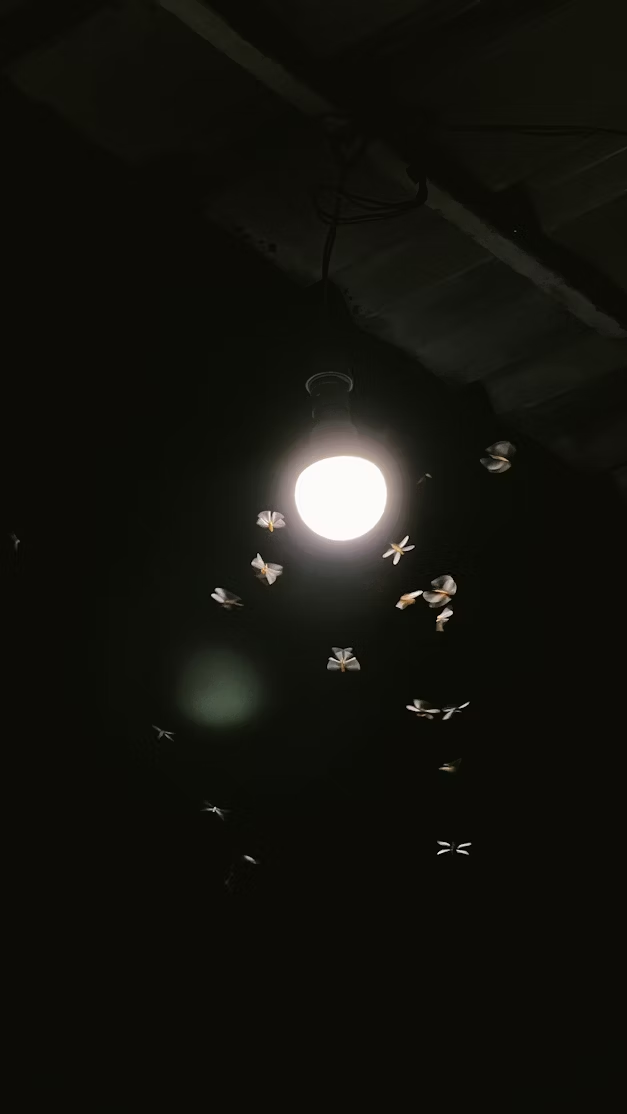
Insects are attracted to certain wavelengths of light, with a preference for 300 to 420 nanometers (nm). The shorter the wavelength, the more attractive the light! Less wildlife-friendly bulbs, such as incandescent, compact fluorescent (CFL), halogen, and high intensity discharge (HIDs) bulbs, emit short, high-energy wavelengths of light. They also put out more heat, which further attracts insects. The best choice of bulb includes wavelengths over 550 nm with a correlated color temperature less than 3600 Kelvin (K), and labeled “warm or ultra warm white.”
Learn More
Sarasota County UF/IFAS Extension and Sustainability has many opportunities to learn about energy efficiency, protecting nocturnal wildlife, and reducing unwanted pests. Attend an Energy Upgrade Workshop, explore Nature at Night, or take a CITE insect class.
Sources
Bennie, J. J., Duffy, J. P., Inger, R., & Gaston, K. J. (2014). Biogeography of time partitioning in mammals. Proceedings of the National Academy of Sciences of the United States of America, 111(38), 13727–13732. https://doi.org/10.1073/pnas.1216063110
DarkSky. (2016, June 10). 80% of World Population Lives Under Skyglow, New Study Finds. DarkSky. https://darksky.org/news/80-of-world-population-lives-under-skyglow-new-study-finds/
DarkSky. (2023, October 17). Light pollution wastes energy and money and damages the climate. DarkSky. https://darksky.org/resources/what-is-light-pollution/effects/energy-climate/#:~:text=Wasting%20energy%20has%20huge%20economic,light%20into%20the%20night%20sky
Florida Fish and Wildlife Conservation Commission. (n.d.). About Lighting Pollution. My FWC. https://myfwc.com/conservation/you-conserve/lighting/pollution/
Scorzafava, L. (2023, January 19). New study highlights the need for urgent action to reverse runaway light pollution. Dark Sky. https://darksky.org/news/new-study-highlights-the-need-for-urgent-action-to-reverse-runaway-light-pollution/
U.S. Energy Information Administration. (2024, March 14). FAQs. https://www.eia.gov/tools/faqs/faq.php?id=99&t=3
 3
3