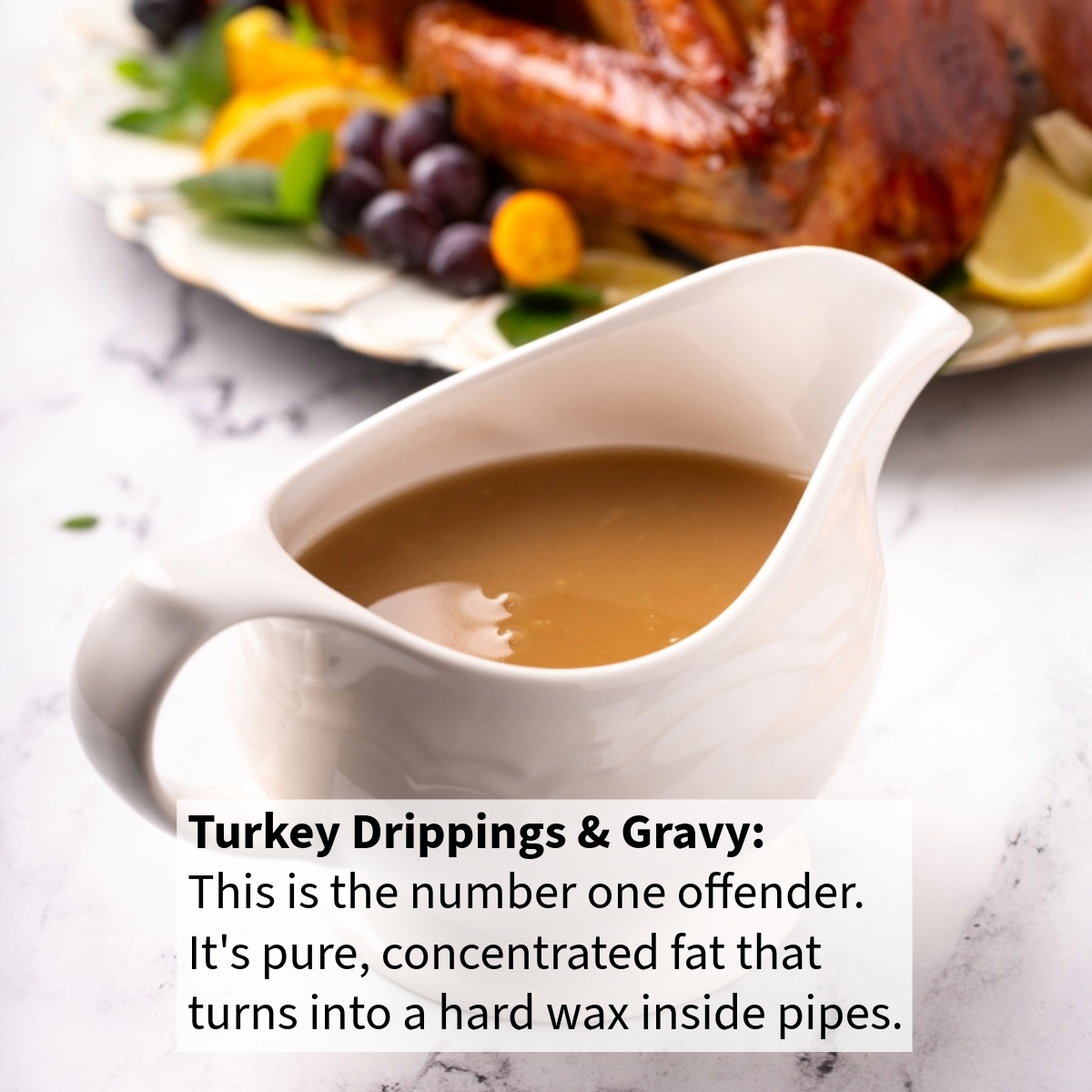
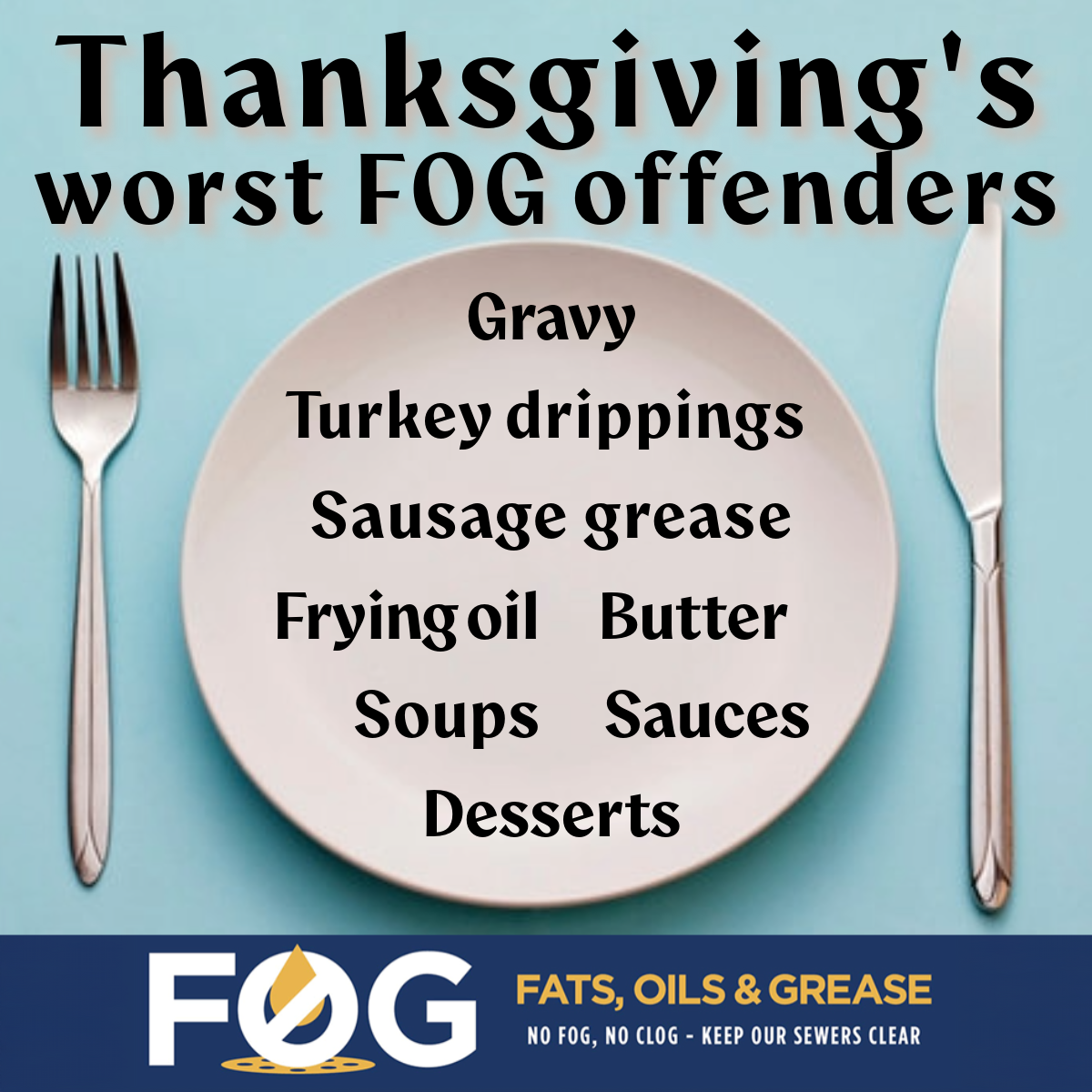
The same delicious fats, oils, and grease that make Thanksgiving dishes so rich and flavorful also pose a hidden threat to your home’s plumbing and the community’s sewer lines. When washed down the drain, these seemingly harmless substances—found in everything from turkey drippings and gravy to buttery sides, to “healthy” salad dressings—pose a real risk to your plumbing and the environment. As fats, oils, and grease travel through pipes, they eventually cool and solidify into thick, stubborn masses that create severe clogs. It is for this exact reason that plumbing companies across the United States consistently report the day after Thanksgiving as one of the busiest, most call-heavy days of the entire year. Unfortunately, your local plumber likely does not offer a Black Friday deal.
Sanitary Sewer Overflows (SSOs)
While a blocked pipe is an inconvenience for a single household, the problem escalates significantly when it affects the entire community’s wastewater system. Widespread blockages can lead to sanitary sewer overflows (SSOs), where raw sewage is forced out into the environment, threatening public health and contaminating local waterways. The scale of this issue is significant, with the U.S. Environmental Protection Agency estimating that between 23,000 and 75,000 such overflows occurring each year. Although blockages are a primary cause, SSOs can also be triggered by other issues like line breaks, power failures, and structural defects in the sewer system.
Thanksgiving
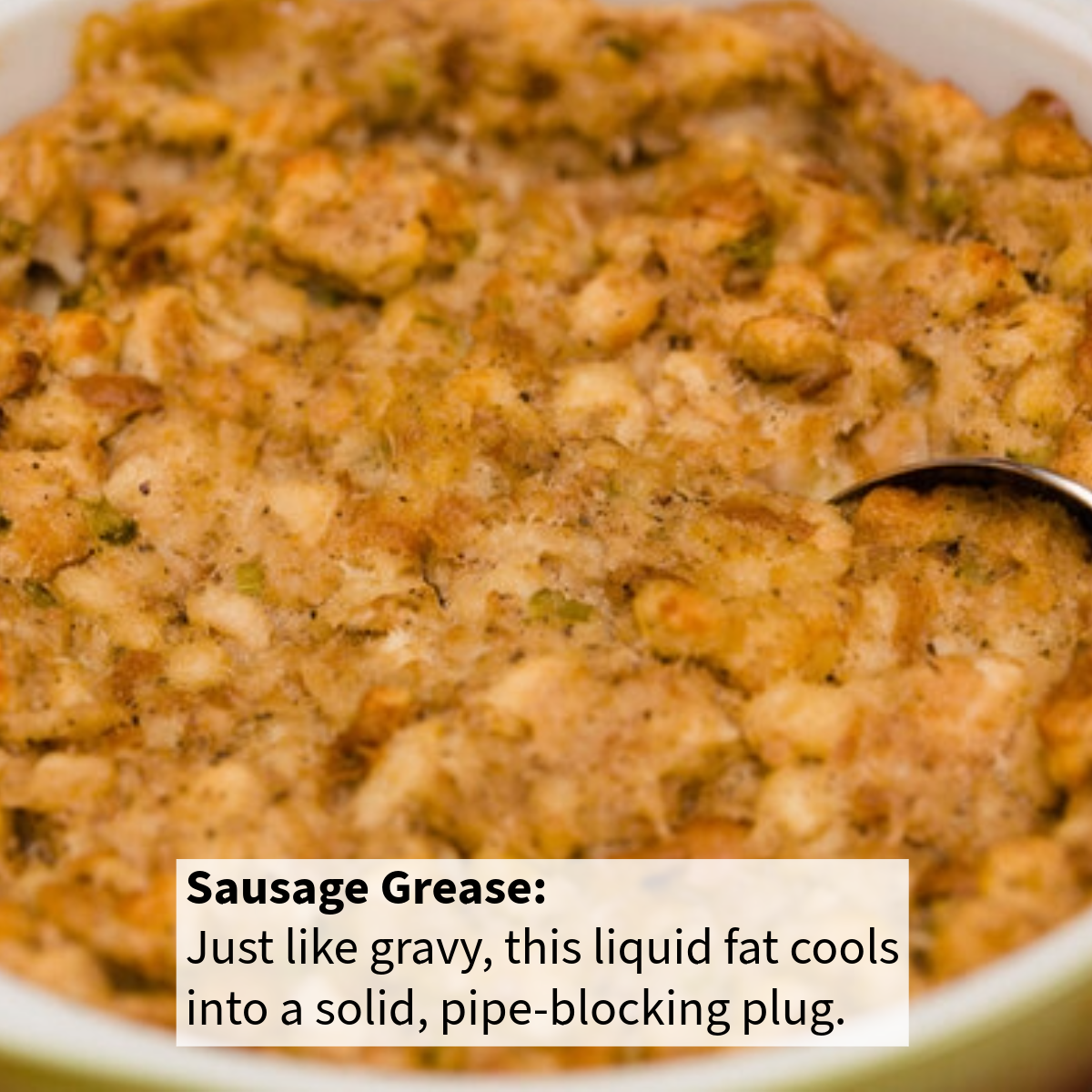
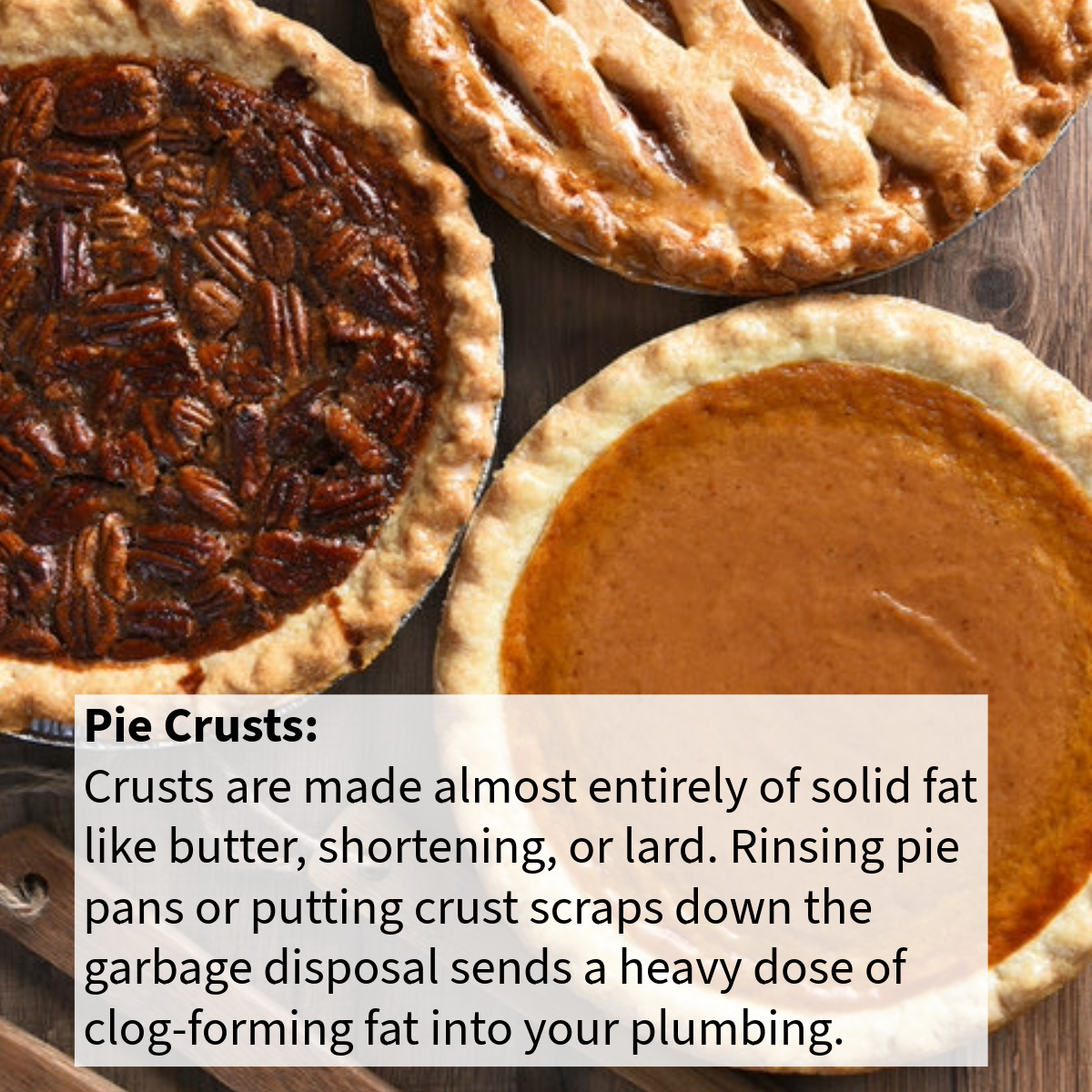
While a deep-fried turkey is a popular holiday indulgence, it leaves a significant challenge in its wake: the disposal of several gallons of used cooking oil. However, the fryer is far from the only source of fats, oils, and grease (FOGs) on the Thanksgiving table. Think of the butter-laden mashed potatoes, the rich turkey gravy, oily marinades, creamy dressings, and even the shortening in pie crusts.
When these seemingly harmless liquids are washed down the drain, they cool and solidify, coating the inside of pipes. This sticky residue can then trap other debris, quickly building up to form stubborn clogs. In municipal sewer systems, this process can lead to the formation of massive “fatbergs”—congealed masses of FOG, wet wipes, and other waste that can grow to be the size of a car and cause catastrophic blockages. The good news is that with a few simple tricks, you can be part of the solution!

Tips
This year, avoid the FOG clog by following these basic principles:
Instead of pouring fats, oils, and grease down the drain…
-
SCRAPE IT – Scrape food waste from your plates into the trash, not down the drain.
-
CONTAIN IT –Pour cooled FOG into old food containers like tin cans or glass jars. Never pour FOG down the drain.
-
TRASH IT – Wipe the FOG from pots and pans prior to washing them. Trash your wipes and cooled FOG containers when full.
Resources
- Sanitary Sewer Overflows – Environmental Protection Agency
- Fats, Oils and Grease (FOG) Program – Sarasota County
 0
0