Eastern Screech Owl: Our Smallest Florida Owl
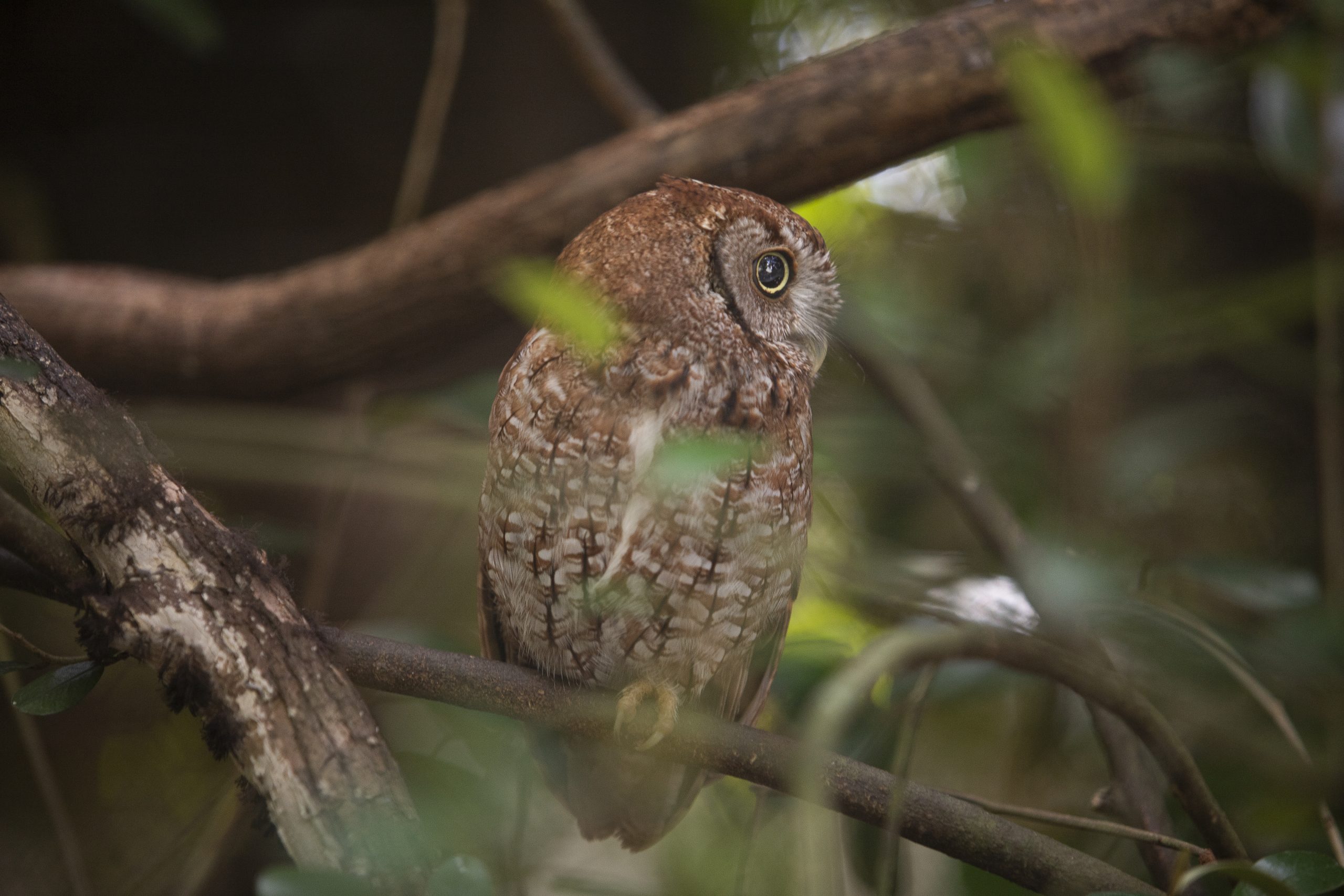
Eastern Screech Owls are one of five native owl species found in Florida. They are our smallest owl, being only about 6-10 inches tall, with a wingspan of 18-24 inches. They are short and stocky, with red (rufous) or gray coloring, yellow eyes and yellowish beaks, and ear tufts. They are mostly active at night, but can be seen at dusk, dawn, or during the day. They have a very unusual call that sounds (to me) more like a horse than an owl! Listen to their call here.
Where they live
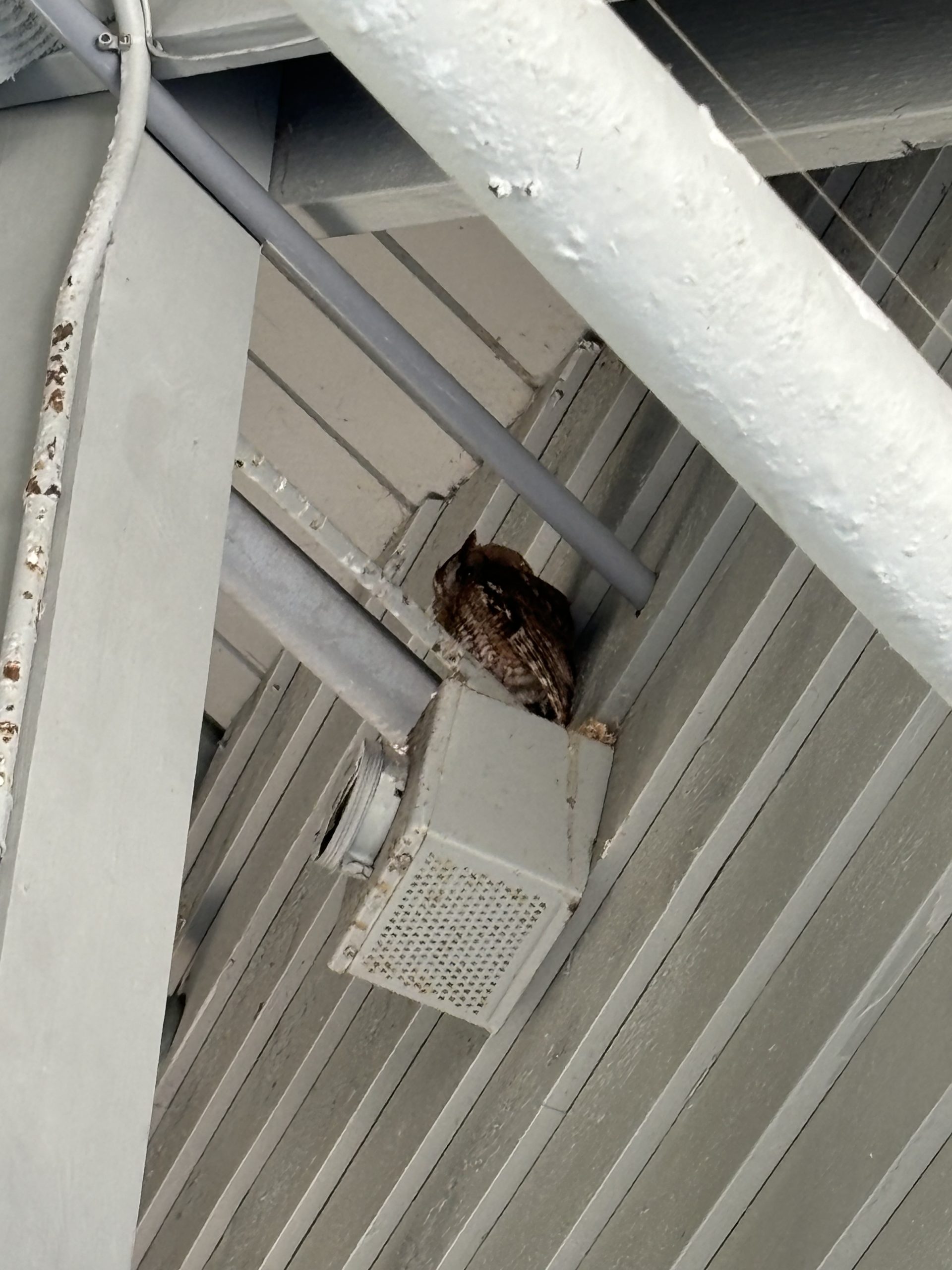
Eastern Screech Owls are often found in agricultural areas, but are comfortable living in residential areas and neighborhood parks with trees. They are cavity nesters, but do not excavate their own nest, instead using holes abandoned by woodpeckers or squirrels or other cavities. The cavity opening is generally 3 inches in diameter. Eastern Screech Owls are one of the species of owls that will also nest in human-made boxes.
More About Them
Screech Owls mate for life, but males occasionally might mate with two females. Nesting begins in February or March. Females do not build a nest, but lays eggs in the cavity which they sometimes will add a few leaves or branches to. They will have one brood of 2-6 white eggs per year. Males will feed the female and nestlings. After about a month eggs hatch, and the nestlings will fledge about another month later. Fledglings continue to depend on their parents for another 8-10 weeks. These small owls will eat small mammals (such as rodents, rabbits, and bats), birds, worms, insects, fish, frogs, and lizards. Screech Owls can be preyed upon by larger owls and raptors, snakes, and medium-sized mammals, such as raccoons, opossums, and skunks.
How You Can Help
- Provide habitat by planting native trees, allow snags (dead trees) to remain standing when safe, and provide nesting boxes.
- Reduce use of pesticides and rodenticides, which decrease their prey and may cause secondary poisoning.
- Reduce light pollution at night.
- Keep cats indoors, as outdoor cats kill billions of birds in the U.S. each year.
Screech Owl Box Build
- Check out some of these resources for plans on how to build your own Screech-Owl box.
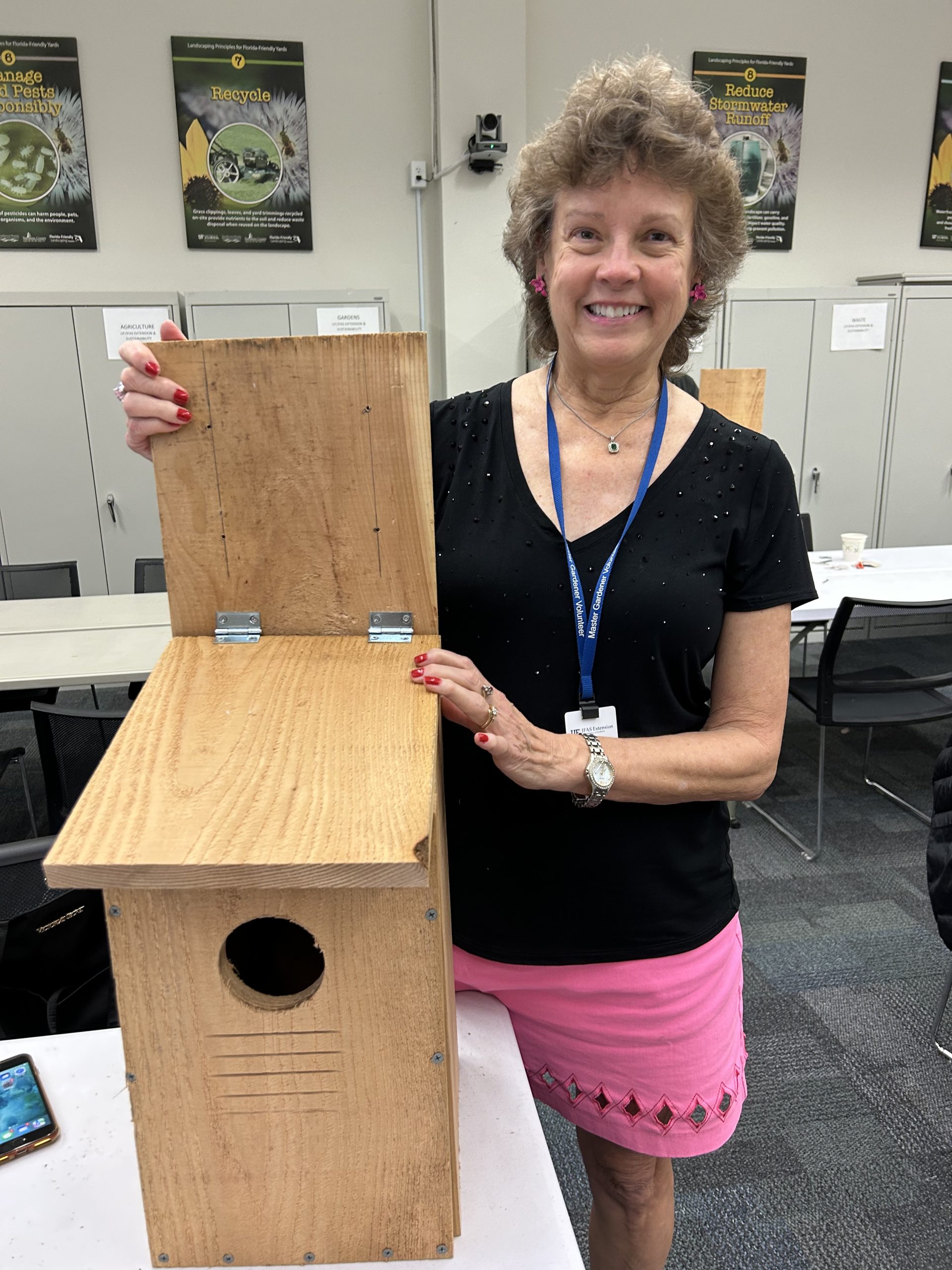
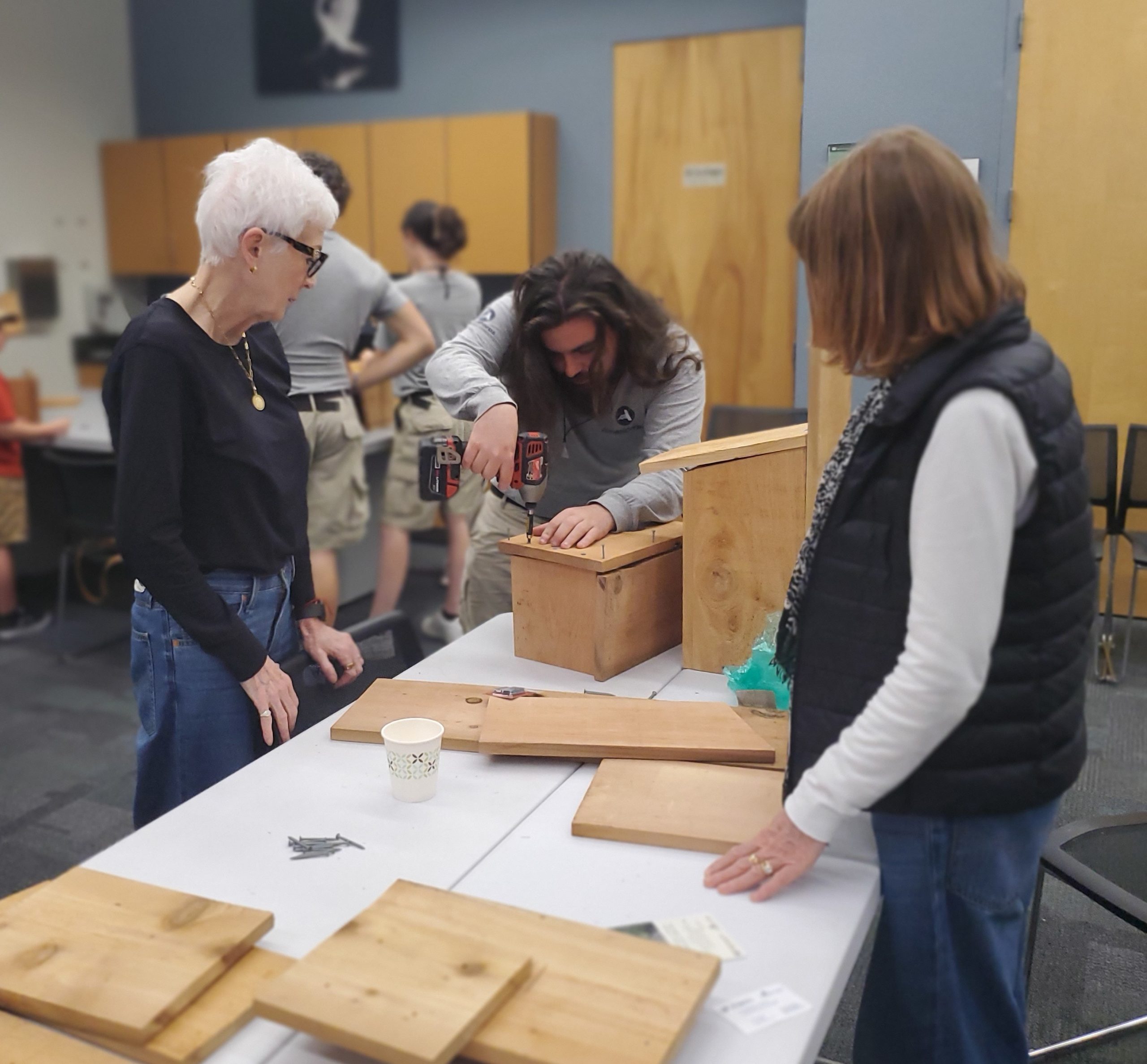
- Or join one of our DIY classes where we supply the pre-cut materials, tools needed, and assist you with the build. Check here for upcoming classes.

Sarasota County residents build their own Screech Owl boxes at UF/IFAS Extension Sarasota County with assistance from AmeriCorps volunteers with Sarasota County Parks - If you choose to purchase a pre-made box online, make sure you compare them to the recommended plans in the resources above for better likelihood that your box will become inhabited.
Screech Owl Box Installation
Correct box installation is just as, if not more, important as correct construction to increasing the likelihood of an owl choosing your box to inhabit. There is no guarantee that an owl will choose your box, or how long it will take to become inhabited, but here are some tips on preferred installation methods:
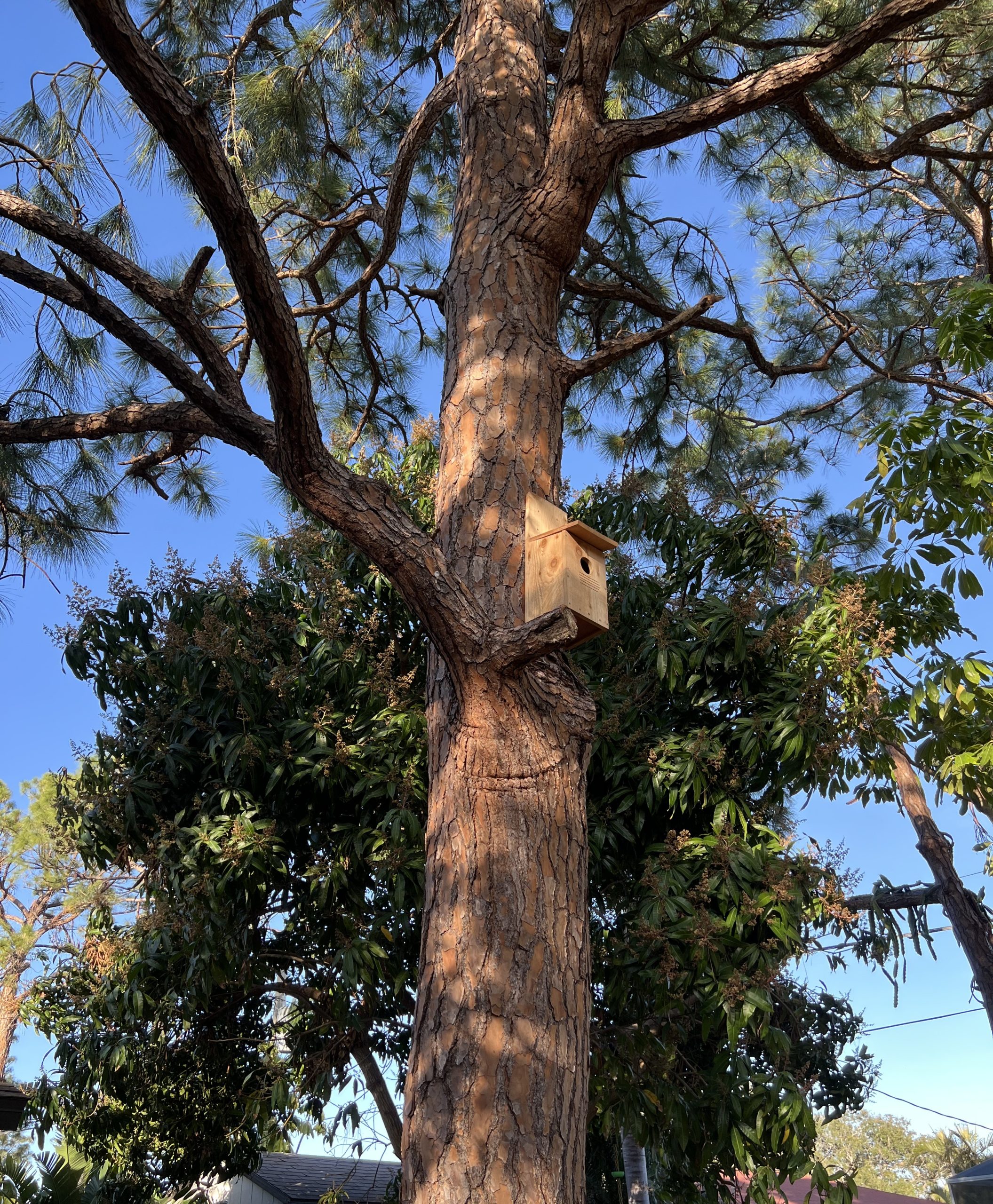
- Mount securely on a tree trunk (preferably) as wide as the box, or on a post or building.
- Mount about 10 feet above the ground.
- Best to have a roosting branch nearby.
- Face entry hole away from strong winds, usually facing south or east with some available shade.
- You can add a small amount of wood chips, saw dust, hay, or leaves to bottom of box, but it is not necessary.
Screech Owl box installed by workshop participant. - If you have enough room, installing multiple boxes will increase opportunities for mating. Boxes should be about 100 feet apart from each other to allow enough territory for each owl or pair of owls.
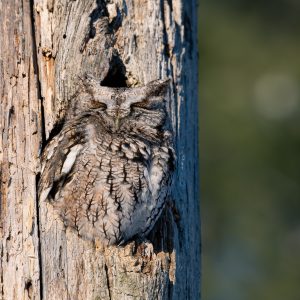
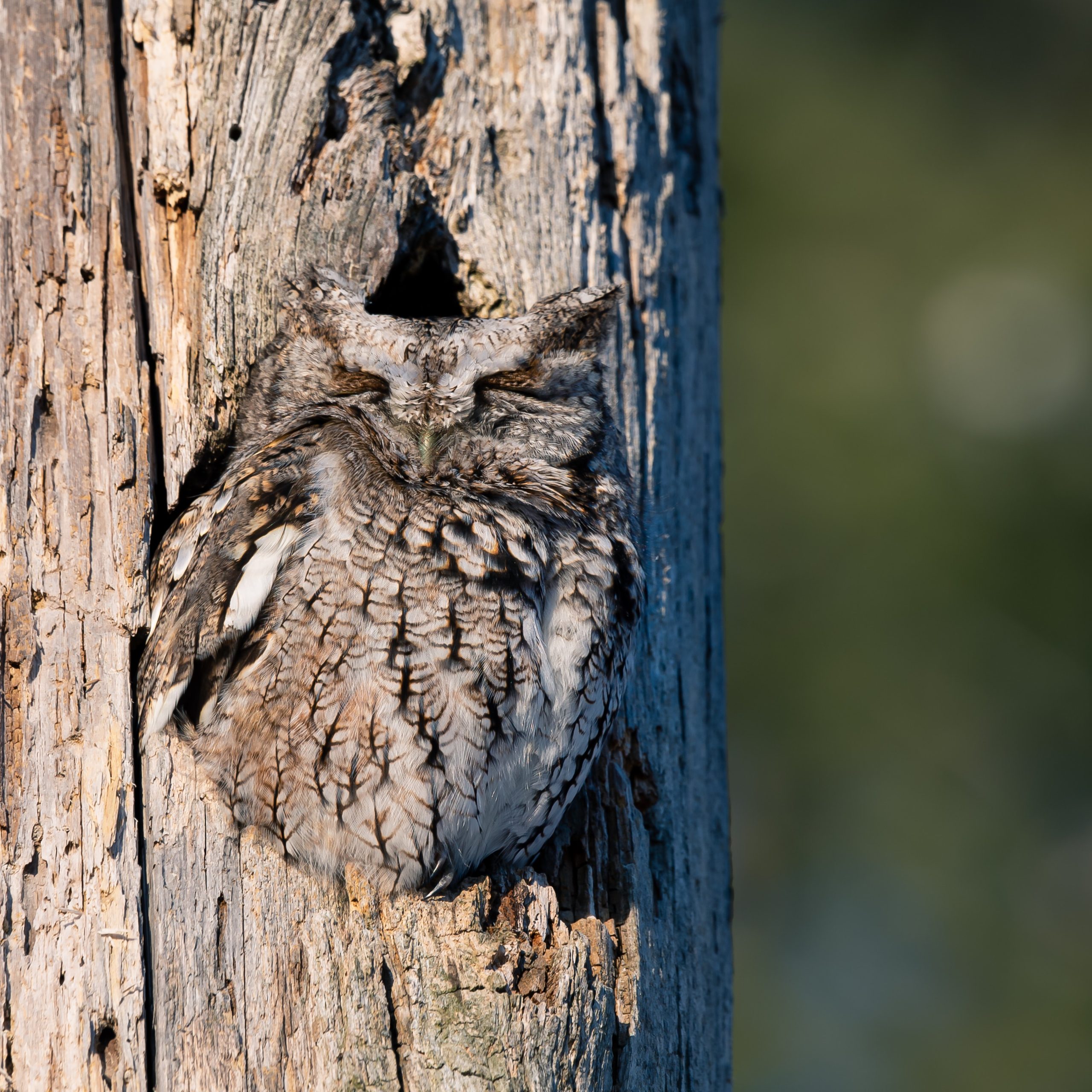
Eastern Screech Owl, gray morph. Credit: Pete Nuij, Unsplash
Learn More About Owls
- Watch our Wild Sarasota webinar on Florida owls, and many more species, at our Florida Wildlife webpage.
- Enjoy information about a variety of bird species at Cornell Lab of Ornithology’s All About Birds website.
- Don’t forget to visit our local Sarasota Audubon Society and Venice Area Audubon Society.
Read all our Wild Sarasota blogs HERE
 2
2