Did you know that the first pollinators were beetles? Shifting the perspective from butterflies to beetles, this blog will focus on beetles as pollinators. Beetles are known to be the first pollinators, dating back to the early cretaceous period (145-66 million years ago). Beetles are amongst the most diverse order of insects including around 400,000 described species making them important and plentiful pollinators.
Beetle pollination occurs secondarily to their feeding, which looks different than most pollinators who aim to eat nectar, when a beetle is attempting to feed on the flower they eat the stem, petals, or pollen itself. During feeding the beetle accidentally picks up pollen in its hairs along the way. Setae, small hairs that cover most of a beetles body, collect pollen. The pollen is carried to other flowers and dropped as the beetle begins to feed on its next meal.
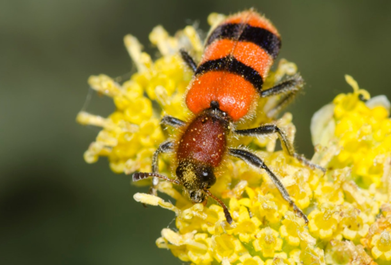
Beetle Pollination
Beetles are especially important for pollinating more ancient plant species such as magnolias and spicebush. These ancient flowering plants evolved before bees leaving beetles to do the pollination. Larger flowers like magnolias have a bowl shape to their petals as seen in the image below. This provides a “landing pad” for beetles to land on when feeding and collecting pollen. Magnolia petals are thicker than most flowers to withstand the biting and chewing of the beetles attempting to feed. This ensures that the magnolia will get fertilized without losing all its foliage.
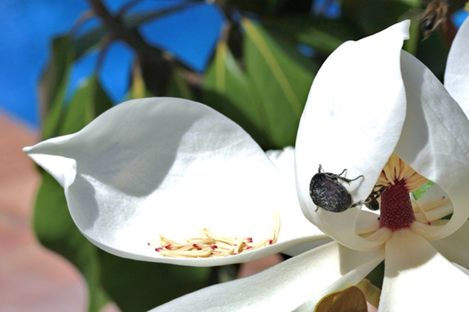
As seen in the image above, the beetles appear fuzzy and white or yellow as pollen gets caught in their setae. Magnolia flowers close their petals at night, often trapping the beetles inside. When inside, beetles deposit the pollen they’ve collected from other magnolia flowers to complete the fertilization process. In the morning, beetles are released when the magnolia petals open and the process continues. To learn more about magnolia flowers and their origin read here: Magnolias.
If you are hoping to catch beetles in the act of pollination, try finding a magnolia or spicebush. Come back for the next blog to read about flies as pollinators!
Gwendolyn Pender, UF/IFAS Summer Intern, is the author of this blog.
 2
2