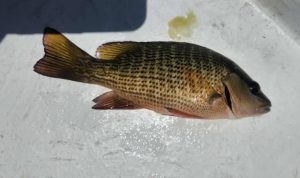
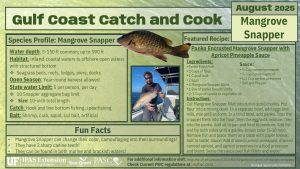
The featured Gulf catch and cook species for August 2025 is the Mangrove Snapper!
Mangrove Snapper are fun to catch and delicious to eat! Mangrove Snapper can be caught in the Gulf year-round in both nearshore and offshore waters! Mangrove Snapper are exciting to catch and can provide fun for the whole family.
Read on to learn how to catch Mangrove Snapper and make a delicious meal!
Fun Facts
- Mangrove Snapper can change their color, camouflaging into their surroundings.
- They have sharp canine teeth!
- They can be found in both marine and brackish waters.
Species Profile
The Mangrove Snapper (Lutjanus griseus), also called the grey snapper, mango, or black snapper, is a common fish in the Snapper family, which is targeted both recreationally and commercially. The Mangrove Snapper is located through the western Atlantic Ocean, though the Gulf of America (formally Gulf of Mexico) and into the Caribbean Sea. They can be found in shallow nearshore environments and into deeper offshore waters, typically around structure, but prefer warmer waters. They are a part of the larger snapper family (Lutjanus), including the mutton, red, cubera, dogtooth, yellowtail, lane, and blackfin snappers.

Appearance
The Mangrove Snapper has a grayish to brown/red body that fades to a white belly, although that can change their color to a bright red to help them camouflage. They have an almond shaped body and a truncate tail, where their dorsal and tail fins tends to have a brown to red color fading to black. Juveniles will have a brown stripe from their snout though the eye, to the gill plate, however this fades with age. The mangrove snappers snout is long and triangular with many sharp teeth and two distinct canines towards the found of the snout. These teeth and very sharp and can cause a painful bite, reflected by their name of a SNAPPER! The male and female snapper can not be distinguished by there outside appearance.
The Cubera Snapper is often confused with the mangrove snapper by fishers. Although the Cubera can grow to much larger sizes, in its juvenile state they look very similar. Learn more about Cubera Snapper here to avoid confusion!
Habitat
The Mangrove Snapper can be found in a wide variety of habitats and water depths, ranging from water depths of 5 to 590 ft, although most stay in water shallower than 160 ft. While a majority live in marine waters, Mangrove snapper have been found in brackish waters as they are tolerant to low salinity levels. In shallow nearshore waters, both adult and juveniles can be found in habitats, such as seagrasses beds, mangroves roots, canals, or piers. While juveniles tend to stay in shallower waters, the adult Mangrove Snappers will frequent deep water with bottom structure such as reefs, platforms, ledges, or wrecks. The larger Mangrove Snapper are typically caught in deeper waters, as they tend to move offshore with age. Like many other snapper species, they will form schooling aggregate groups, often when feeding or for protection from predators. This means if you catch one Mangrove Snapper, you are likely to catch more!
Biology and Life cycle
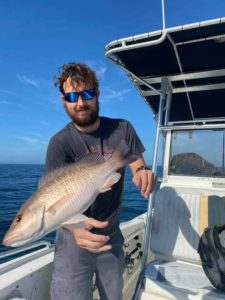
Mangrove Snapper are medium sized fish that can grow up to 24 inches in length and 10 pounds, but average 10-14 inches in length. They reach maturity after 2 years and can live up to 25 years old. The Mangrove snapper will spawn in large aggregate groups, most often in the summer months. The larval juvenile snapper will settle inshore and live in shallow sea grass beds or with mangrove roots as it grows. Estuary habitats are the most common environments for juveniles, as they have both food and protection from predation. As they grow they will begin to move further off shore, living among structured bottom. Mangrove Snapper are often predated by larger fish (grouper and other snapper), sharks, and eels as they grow. They are opportunistic feeders but prefer crustaceans, such as crabs and shrimp, as well as mollusks, snails, and smaller fish. Mangrove Snapper prefer to feed at night, thus nigh time fishing will have better success of catching this species.
Catch
To maintain a healthy fishery, it is important to use sustainable fishing practices when catching and releasing fish. A Florida fishing license is required to land all saltwater species in Florida regardless of where they are caught (state or federal waters). Florida fishing licenses require a fee, however, fishing licenses from a shoreline are free. Both types require you to register for the license on the FWC website which can be found here: https://license.gooutdoorsflorida.com/
Habitat
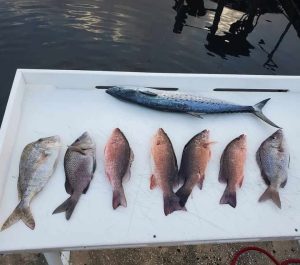
- Common in 5 – 150 ft water depth, can be found in waters up to 590 ft in depth
- Can be found in a large range of areas from inland coastal waters (i.e. seagrass beds, canals, sandy patches, mangrove roots) to offshore open waters with structured bottom (wrecks, reefs, ledges)
- Target prey such as crabs, shrimps, snails, and smaller fish.
Season and Regulations
-
- Mangrove Snapper can be caught year round, with no closed harvest season.
- The minimum size limit in state waters is 10 inches in total length and 12 inches total length in federal water.
- You are allowed to keep 5 Mangrove Snapper per person in state waters and 10 in federal waters, with a 10 Snapper aggregate bag limit in both waters.
- The snapper aggregate bag limit means that no more than 10 total snapper of any combination of species can be harvested per person per day.
Fishing regulations can change frequently, always check current FWC regulations before fishing. Regulations can be found here: myFWC
While you always hope to catch “The Big One” small fish are often caught during a fishing trip. If your catch is smaller than the regulations allow make sure you return them right. Fish should be returned to the water as quickly as possible and resuscitated. Learn more about the Return ‘em Right program here.
If in deep water (>50 ft) a descending device should be used to help the fish make it home. Using best release practices will help the future of your local fishery!
Mangrove Snapper are considered a reef fish. Descending devices are required when fishing for reef fish. You can get a free descending device sent to you by following this link: https://returnemright.org/
Methods
Hook and line fishing is the most common way to catch Mangrove Snapper. Spear fishing is also a common practice, where shallow water and large aggregates of fish make them and easy target!
Hook and line fishing
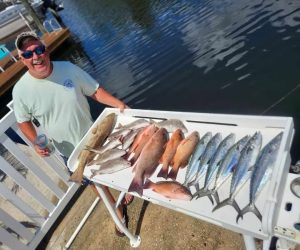
The most common way to catch Mangrove Snapper is with hook and line fishing. Mangrove Snapper are plentiful and can be caught year-round in both inshore and offshore waters, making them ideal target species for all fishers. As the Mangrove Snapper are often found around structures such as piers, they can be easily targeted by people fishing from land. Mangrove Snapper also tend to live in large groups, so if you can catch one you will likely catch many more! As they are opportunistic feeders they can be targeted with live, dead, or artificial baits. Mangrove snapper often stay near the seafloor, so bottom fishing is the best method for catching them!
Bait
Below are some great bait choices for targeting Mangrove Snapper:
- Shrimp
- Squid
- Cut/small bait fish
- Artificial jigs
Tips and Tackle
When fishing for reef fish, such as the Mangrove Snapper, in the Gulf it is required to use non-stainless steel, non-offset circle hooks when using natural bait. A dehooking tool and descending device are also required for fishing in federal waters. If you are not reef fishing other hooks can be used.
Mangrove Snapper are commonly found near the bottom, so using weighted leads to get your hook to the bottom is recommended.
- use a lead weight above your hook to get the bait to the sea floor.
- move bait slowly or leave it to attract the fish, fast movement may spook them
- When near shore target areas with some structure, such as canals, docks, piers, or mangrove roots.
- When offshore target areas with some bottom structure, such as reefs, ledges, and wreaks.
- While you will catch keeper Mangrove Snapper inshore, you will catch bigger fish as you go into deeper waters.
- Using a Chum bag can help attract the fish to you.
Tackle
- Using light tackle and a weighted line can help disguise the line from the fish.
- The best hook sizes for Mangrove Snapper are #1 to 3/0 hooks.
- 20 lb monofilament line works best inland to hid the line, but maintain strength to catch the Mangrove Snapper
- 30-60 lb test can be used if targeting larger snapper offshore, but may scare them away. Use can try using a heavier line as a leader, while fishing with lighter line like braid.
Spearfishing
Mangrove Snapper are a common target species when spearfishing. They often live in shallow coastal waters near docks or structures, making them easy to target. Their plentiful numbers and large schools also make them ideal for hunting.
When spearfishing you much follow fishing regulations, meaning that you cannot shoot a Mangrove Snapper in state waters less than 10 inches in total length. As the spearfishing method requires you to estimate the fish size, make sure you have practice with accurately estimating fish size underwater! You can practice hunting fish species of non-regulated sizes, like the white grunt, until you feel comfortable with this skill!
*Remember fish can look bigger underwater, so be careful when picking your target!!!*
Spearfishing can be conducted while scuba or free diving. Always take precautions to be safe when spearfishing. It is best to go with an experienced diver or be trained before attempting this method.
For best fishing practices and to learn more fishing tips, tricks, and regulations check out the free Florida Friendly Angler course: Florida Friendly Angler Certification Program
If you want to go fishing but don’t have a boat of your own, fishing charters are a great option! You can find a list of certified Florida Friendly Fishing Guides here: FFA Guides
Clean
Learn how to fillet a Red Snapper with the Collier County Florida Sea Grant Agent: Michael Sipos!
Cook
In the Gulf, Mangrove Snapper is currently considered a sustainable seafood choice, supporting both the recreational and commercial fish harvest year round.
Mangrove Snapper is a delicious fish to eat and a favorite of many, with white flakey meat. It can be prepared in a variety of ways, fried, grilled, sautéed, steamed, and more! Below is a delicious recipe from UF/IFAS Florida Sea Grant Agent Michael Sipos for cooking your fresh catch of Mangrove Snapper:
Panko Encrusted Mangrove Snapper with Apricot Pineapple Sauce
Serving size: 2 fillets
Ingredients:

Panko Fried Fish
- 4 Mangrove Snapper fillets
- 1 Box of panko breadcrumbs
- 2 Cups of flour
- 1 Cup of milk
- 2 Eggs
- 2-3 Cups of canola or vegetable oil
- Salt
Apricot Pineapple Sauce
Instructions:
Panko Fried Fish
- Prepare the Mangrove Snapper fillet into cutlet sized chunks or nuggets depending on party’s preference. If the fillet is thick, you may be able to flatten the meat slightly with pressure from your hand while applying breading to ensure for a thoroughly cooked crispy bite!
- Place 1-2 cups of flour into a mixing bowl.
- In a seperate bowl, crack 2 eggs and add ~1 cup of milk. Mix the milk and eggs with a fork until the mixture is uniform.
- In a third bowl, add 1/3rd – 1/2 box of panko breadcrumbs.
- Toss the snapper filets into the flour, making sure to coat thoroughly.
- Next add the flour coated fish pieces into the egg/milk mixture, making sure to remove excess flour first, and make sure its covered thoroughly.
- Remove the fish fillets from the egg/milk mix and let drip before placing them into the panko breadcrumb container. Toss or press the breadcrumbs into the fillet.
- Prepare/preheat your oiled pan or deep fryer for the breaded fillets. If you’re using a pan, fill the container with oil to a height that is slightly less than half the thickness of the fillet. A good temperature to fry fish may be anywhere from 5-7 on a typical stove top. Allow your oil to heat up before placing the fillet to be fried. Fy fish until a golden-brown color, if one side is becoming “done” too fast, you may lower the temperature and/or flip the fillets periodically. It may take 5-10 minutes to fry your fillets depending on the thickness of the fish as well as the temperature of your oil.
- Remove fried fish and place them on a plate with a layer of paper towels to absorb excess oil until ready to be plated or eaten! Salt or season to taste!
Apricot Pineapple Sauce
*The sauce can be created using a food processor, blender, or electric hand mixer.
- Add ½ cup of drained canned pineapple, ½ cup of drained canned apricot, and 1/3rd cup of apricot preserves to your food processor container.
- Blend the mixture until desired consistency is reached.
To serve, pour the mixture over the top of fried fish right before eating or use as a dipping sauce and enjoy!
Next month sneak peek!
Our featured Gulf Catch for June is the Red Drum!
- Red Drum can live up to 40 years!
- The Red Drum spends the majority of its full life cycle in nearshore waters and estuaries.
Do you have a favorite Red Snapper recipe or a photo of you with your catch? Share it with us for a chance to be featured as a photo or recipe of the month! Submit here
More information on the Stock assessments can be found here: NOAA Stock Assessment
Check out the other Gulf Coast Catch and Cook blog posts!

Have a question? Ask the Author!
For more detailed information, contact your local University of Florida Extension Office.
Follow us!
An Equal Opportunity Institution.
 1
1