In Part 1 of this series we explored several popular but invasive plants often found in Florida yards, including Mother of Millions, Wandering Dude, Mimosa Tree, Chinese Wisteria, and Common Lantana. These species may look beautiful, but their aggressive growth and ability to outcompete native plants make them problematic in our landscapes.
In this second installment, we’ll take a closer look at more invasive ornamentals you may encounter—such as Tropical Milkweed, Britton’s Wild Petunia, Nandina, and Wild Taro/Elephant Ear—and share tips on how to identify them and what to plant instead. Together, these two guides will give you a solid foundation for making Florida-Friendly plant choices that protect our environment while keeping your yard vibrant and healthy.
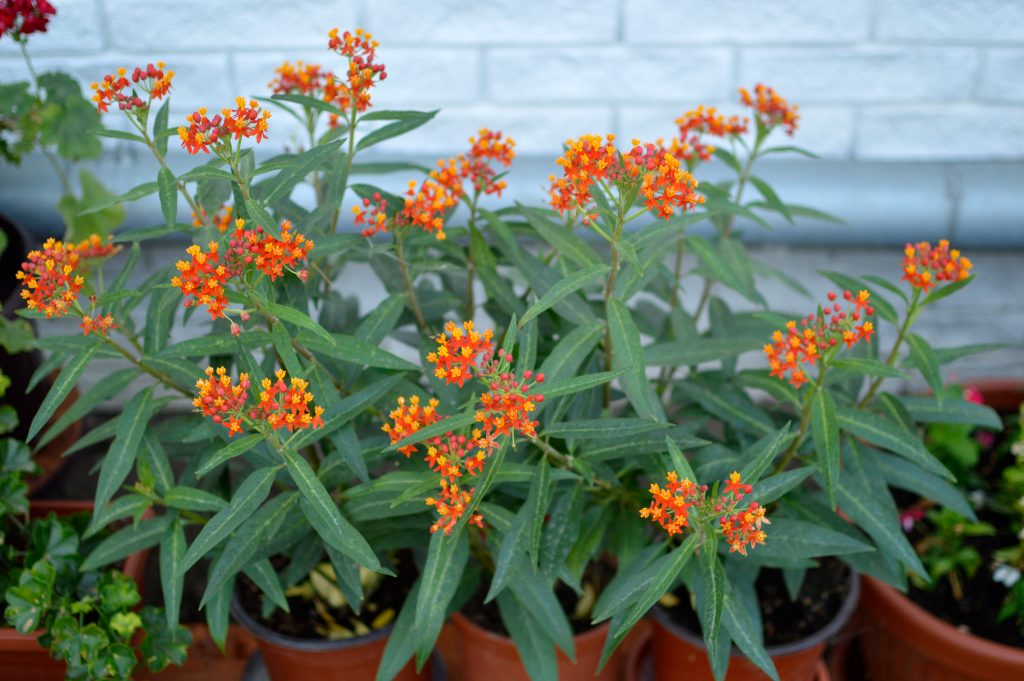
Tropical Milkweed (Asclepias curassavica)
- Tropical Milkweed is new to the Invasive Species list. This is another plant that is still commonly found in local nurseries; but it’s best to avoid planting it and instead choose native milkweed species.
- According to UF/IFAS Gardening Solutions, “Scientists are divided over tropical milkweed’s value to monarch preservation. Its year-round growth may encourage monarchs to overwinter instead of following their normal migration pattern. Some studies suggest that overwintering puts monarch populations at a higher risk for certain diseases.”(Gardening Solutions, Milkweed).
- In the past, the University of Florida recommended cutting tropical milkweed back from October to March and/or removing seed pods to encourage butterfly migration. However, as of July 2025, the updated recommendation is to inspect tropical milkweed plants for caterpillars—and if no active caterpillars are present, remove the plant entirely. This change aims to reduce the risk of disease and disruption to monarch migration while still protecting any caterpillars already using the plant.
- Similar to Common Lantana, it’s important to check plant labels for scientific names or at least complete common names. Plants labeled simply as “Milkweed” could be any number of cultivars, including invasive ones. To prevent the accidental spread of invasive plants, choose only verified native species. To learn about native milkweed varieties, you can check out this Gardening Solutions page
 Britton’s wild petunia/Mexican Petunia (Ruellia simplex)
- Britton’s wild petunia can be found in almost every neighborhood in Florida and is often sold in the garden sections of big box stores. This perennial shrub is easy to recognize by its trumpet-shaped flowers, which bloom in shades of white, pink, and purple.
- One of the main reasons Ruellia is considered invasive is its prolific seed production. With each flush of blooms comes an abundance of seeds, and the plant readily self-seeds, spreading quickly through landscapes. In addition to seeds, Britton’s wild petunia also spreads underground through lateral roots, making it difficult to contain once established.
- If you love the look of this plant, there are sterile cultivars available that offer the same colorful flowers without the same invasive risks. These cultivars produce little to no fruit, and after the flowers fade, the stems typically shrivel and drop off. However, it’s still important to monitor for spread through lateral roots. To learn more about sterile cultivars, check out the UF/IFAS blog post: An Alternative to Invasive Ruellia – UF/IFAS Extension Washington County.
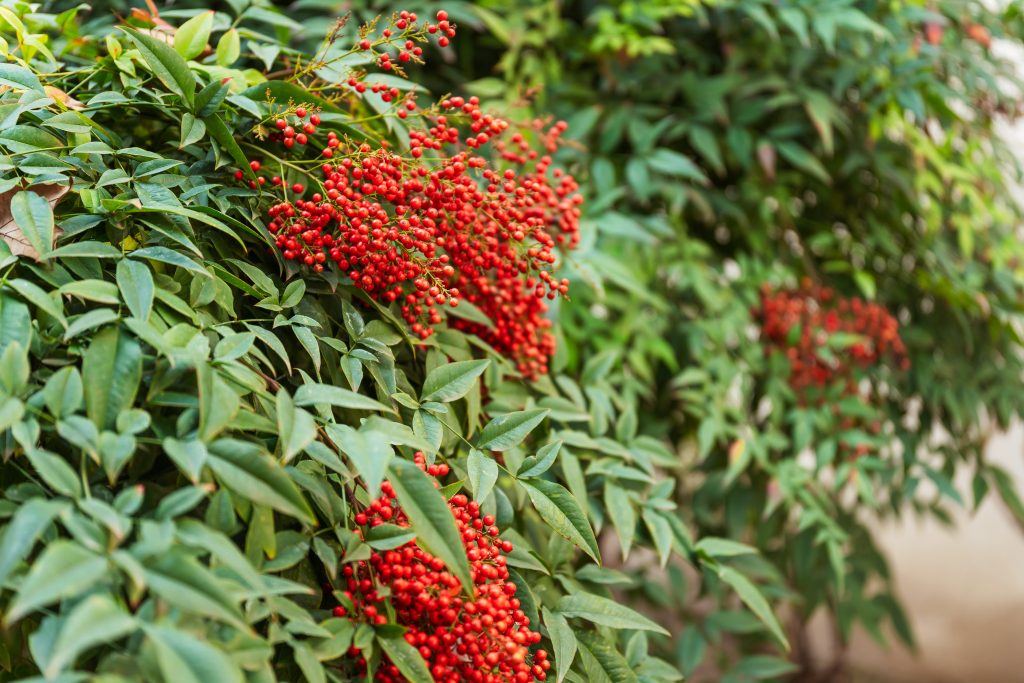
Nandina/Heavenly Bamboo (Nandina domestica cv.)
- There are many cultivars of Nandina. In addition to the Nandina/Heavenly Bamboo cultivar, Harbour Belle Nandina and Gulf Stream Nandina are also listed as invasive. Nandina is a midsize shrub that produces clusters of red berries. This plant spreads through underground roots (rhizomes) as well as by wildlife that eat the toxic seeds.
- There are two current cultivars that are considered to be safe options by the UF IFAS Assessment of Non-Native Plants in Florida’s Natural Areas: Nandina domestica cv Harbour Dwarf and Nandina domestica cv Firepower.
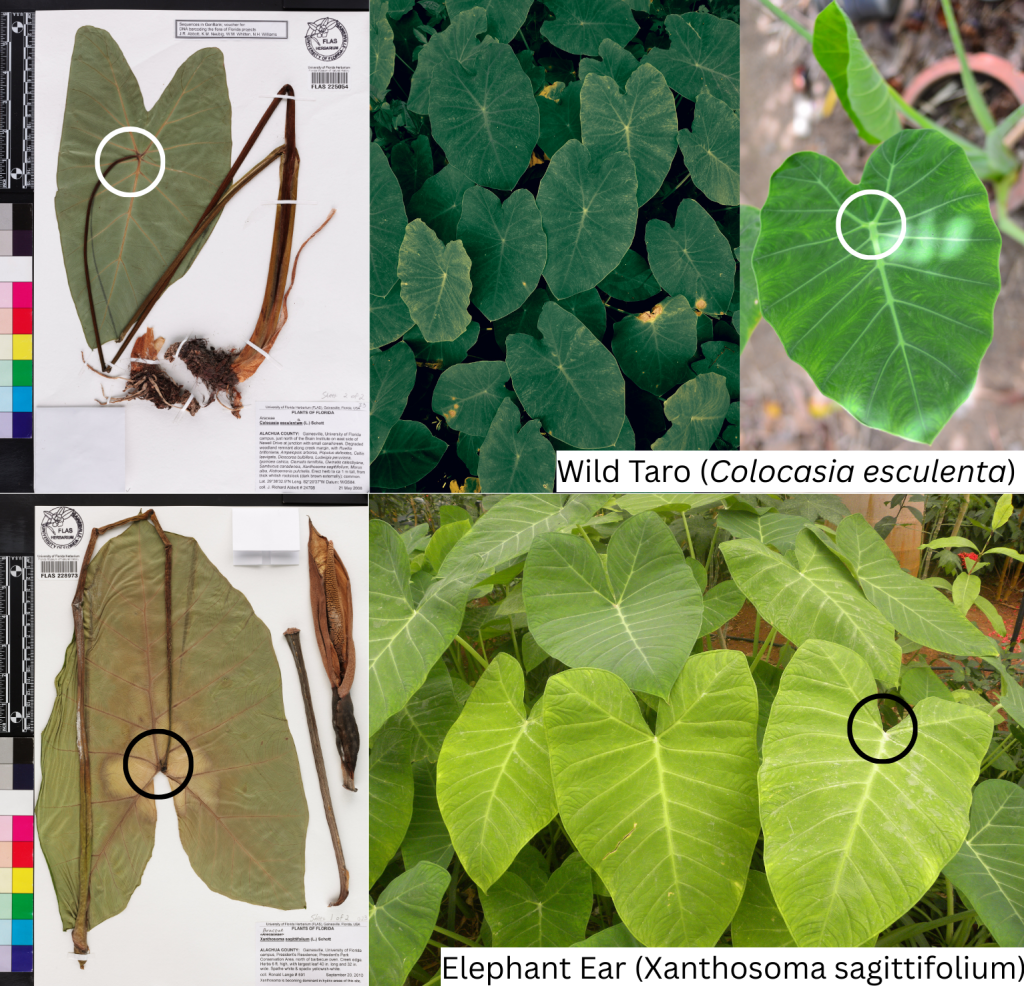
Wild Taro (Colocasia esculenta) & Elephant Ear (Xanthosoma sagittifolium)
-
Wild Taro is often mistaken for Elephant Ear, which highlights the importance of using scientific names—many plants share similar common names. Unfortunately, both species are invasive in Florida and share many of the same traits. They have large, arrowhead-shaped leaves, spread aggressively through rhizomes and root fragments, and thrive in moist environments such as swamps, stream banks, and wetlands. Their sheer size (Wild Taro can reach up to 4 feet tall, while Elephant Ear may grow as tall as 9 feet) allows them to shade out native vegetation, preventing the regeneration of desirable plant species. There are a few characteristics that can help tell them apart:
-
Wild Taro has smaller, darker leaves, and its stem attaches below the “V” notch of the leaf.
- Elephant Ear has larger, lighter green leaves with wavy edges, and its stem attaches at the corner of the “V.”
-
-
If you love the dramatic look of these plants, consider planting Caladiums instead. Caladiums have similar heart- or arrowhead-shaped leaves but come in a wide range of colors and patterns. They are smaller, shade-loving plants that add a vibrant pop of color without overwhelming your landscape or shading out neighboring plants. Learn more here: Caladiums – Gardening Solutions.
This list only scratches the surface of invasive plants that can show up in Florida yards. For a more complete resource, explore the UF/IFAS Assessment of Non-Native Plants in Florida’s Natural Areas to see which species are listed as invasive, prohibited, or “plants to watch” for potential invasiveness. Be sure to read Part 1 of this series, where we cover additional invasive ornamentals including Mother of Millions, Wandering Dude, Mimosa Tree, Chinese Wisteria, and Common Lantana—plus Florida-Friendly alternatives to consider for your yard.
Don’t forget to check out the other blogs in our Florida’s Hidden Invaders Blog Series!
- Introduction to Invasive Species
- Invasive Houseplants
- Common Invasive Plants in Our Yards Part 1
- Teaching Youth About Invasive Species
 0
0