The holidays may be behind us, but the season of celebration isn’t over. With Valentine’s Day around the corner, you may be wondering how to turn the chill of winter into something sweet, thoughtful and homemade.
The University of Florida Institute of Food and Agricultural Sciences (UF/IFAS) has the answer.
UF/IFAS has just unwrapped a timely Ask IFAS publication focused on one of the world’s most coveted spices, vanilla. Natural Vanilla Extract Production, also available in Spanish, offers a step-by-step guide to making vanilla extract at home. Whether you’re planning dessert night, crafting a heartfelt gift or curious about how vanilla goes from vine to bottle, this resource offers guidance from start to finish on this involved process.
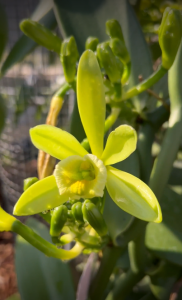
Vanilla is one of the most prized spices in the world, valued for both its flavor and the labor required to produce it. The spice comes from the seed pods of a tropical orchid, making it one of the few spices derived from an orchid species. Each vanilla flower must be pollinated by hand to produce a bean. After harvest, the beans undergo a curing process that can take several months, helping explain why pure vanilla extract is often more expensive than many artificial flavorings.
For Floridians, vanilla holds special appeal. The state’s warm, humid climate makes it possible for home gardeners and specialty crop growers to experiment with growing vanilla orchids, particularly in South Florida. This Ask IFAS publication unveils the layers on that process, giving consumers and growers a clearer understanding of how patience, timing and tactics transform a simple orchid pod into a kitchen staple throughout the year.
Here’s what readers can expect from this month’s featured Ask IFAS resource:
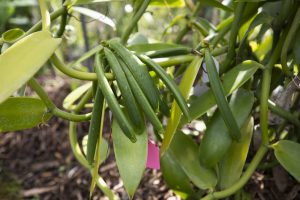
A behind-the-scenes look at vanilla production: Learn how vanilla goes from flower to finished extract, including harvesting, curing and extraction.
Why vanilla flowers need a helping hand: Discover why hand pollination is essential and how it affects vanilla yield and quality.
Tips for harvesting high-quality vanilla beans: Find out when vanilla pods are ready and what makes a bean suitable for extraction.
The curing process that creates flavor: Understand how proper curing develops vanilla’s signature aroma and taste.
Steps to make vanilla extract at home: Get clear, practical guidance on turning cured beans into natural vanilla extract using food-safe ingredients.
###
by Lourdes Mederos, rodriguezl@ufl.edu
Para accesar a este contenido en español, por favor utilice este enlace.
ABOUT UF/IFAS
The mission of the University of Florida Institute of Food and Agricultural Sciences (UF/IFAS) is to develop knowledge relevant to agricultural, human and natural resources and to make that knowledge available to sustain and enhance the quality of human life. With more than a dozen research facilities, 67 county Extension offices, and award-winning students and faculty in the UF College of Agricultural and Life Sciences, UF/IFAS brings science-based solutions to the state’s agricultural and natural resources industries, and all Florida residents.
 3
3

