Central Florida wildflowers attract many pollinators, and the best are honeybees and native bees. So what plants should we add to our garden to bring bees into our backyard habitat? Here are a few things to consider.
Bee Attractors
- Nectar & Pollen: Bees need nectar for a sugar source and pollen for protein and lipids. Flowers provide both!
- Flower Shape: Bees have short tongues and require short, flat flowers to access the nectar. Some bees have long tongues and can feed from tubular flowers.
- Color & Scent: Bees are attracted to flowers that are blue to purple, yellow and white. Flower scents assist bees in locating nectar sources.
- Seasonal Blooming: Bees need a food source throughout the year. We must be mindful of our plants’ seasonality.
- Native Plants: Don’t we want plants that are naturally adaptive to our local climate and environment? Native plants are a great choice.
- Nesting Resource: Bees need a place to nest, such as bare ground, hollow tree trunks, and dead wood.
Bees of Florida
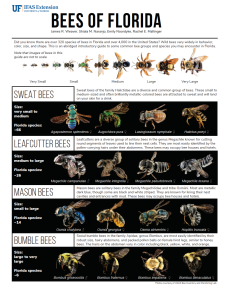
There are over 320 bee species in Florida. Luckily, we have an excellent publication that summarizes the most common bees here in publication ENY-2046.
|
 |
Bees Plants: Native and Florida-Friendly Plants
Central Florida gardens may attract bees all year long. Below is a partial list of pollinator plants, along with their flowering period, so that you may feed our local bees throughout the year.
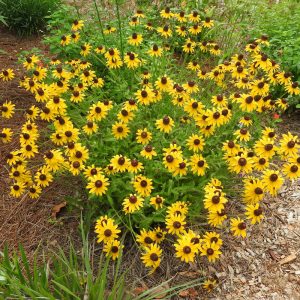 Black-eyed Susan Black-eyed SusanRudbeckia hirta Blooms Spring-Fall Photo: FNPS |
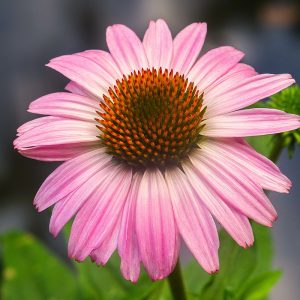 Purple Coneflower Purple ConeflowerEchinacea purpurea Blooms Summer-Fall Photo: FNPS |
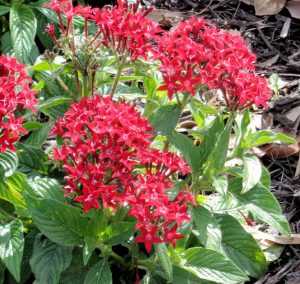 Pentas PentasPentas lanceolata Blooms Year-round Photo: UF/IFAS Extension Charlotte County |
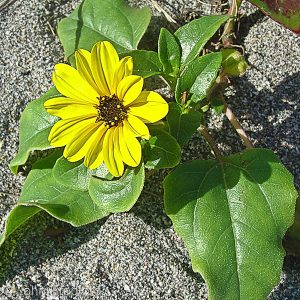 Sunflower SunflowerHelianthus debilis Blooms Year-round Photo: FNPS (Florida Native Plant Society) |
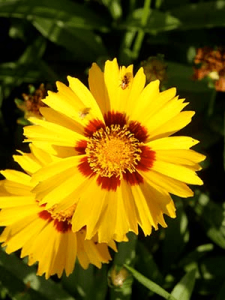 Tickseeed TickseeedCoreopsis leavenworthii Blooms Spring-Summer Photo: UF/IFAS Gardening Solutions |
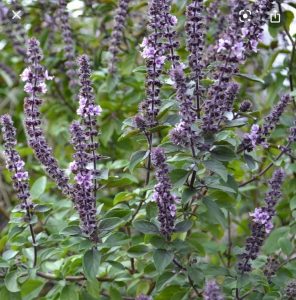 African Blue Basil African Blue BasilOcimum kilimandscharicum x basilicum Blooms Year-round Photo: FNPS |
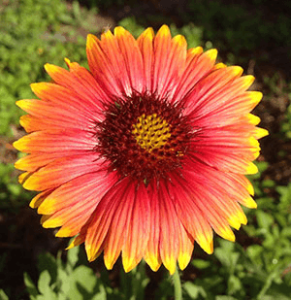 Blanket Flower Blanket FlowerGaillardia pulchella Blooms Spring-Fall Photo: UF/IFAS Gardening Solutions |
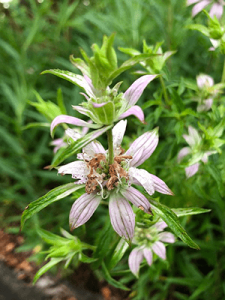 Spotted Beebalm Spotted BeebalmMonarda punctata Blooms Summer Photo: UF/IFAS Gardening Solutions |
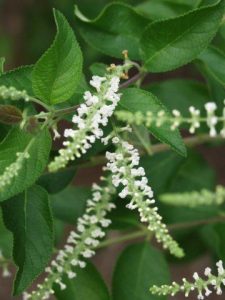 Sweet Almond Tree Aloysia virgata Blooms Year-round Photo: UF/IFAS FFL |
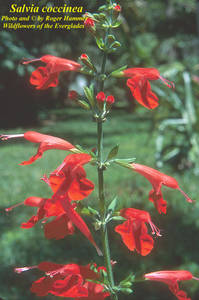 Tropical Sage Salvia coccinea Blooms Year-round Photo: USF Atlas of FL Plants |
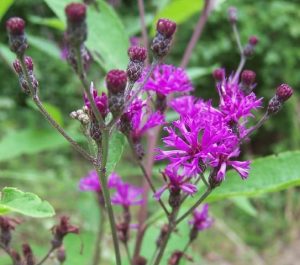 Tall Ironweed Tall IronweedVernonia gigantea Blooms Summer-Fall Photo: Georgia Native Plant Society |
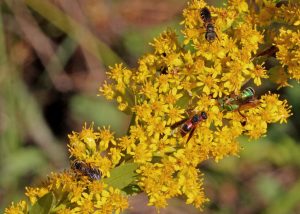 Seaside Goldenrod Seaside GoldenrodSolidago sempervirens Blooms Summer-Fall Photo: Florida Wildflower Foundation |
Bee Garden Design
Now you know about plants that attract bees, and their flowering seasons, so here are a few tips on garden design.
- Group plantings of similar species or types help bees remember their location, encouraging them to return daily to feed. Asters are a good example to consider.
- Blooms throughout the year really help bees maintain a constant food source. This will greatly assist in the hive maintenance.
- Native plants are best adapted to your Florida garden and will establish quicker, grow easier, and flower more consistently.
- Minimize pesticide and herbicide use. Any chemical may detrimentally affect our bees. If you must apply a pesticide, please use the least toxic option and apply when bees are the least active (dawn/dusk).
Bee Gardens
The Discovery Gardens is a collection of 28+ themed demonstration gardens. We have a vast collection of Florida-Friendly Plants, which includes over 125 native plant species. It offers a year-round Bee Pollinator Plant Collection. In particular, please visit these gardens:
- Native Landscape Garden
- Cottage Garden
- Keep Lake Beautiful Garden
- Butterfly Garden
We are open Monday through Friday from 9:00 am – 4:00 pm, and Saturday from 9:00 am – 3:00 pm. You may even request a Docent Tour led by a Master Gardener Volunteer! And, for those of you who are interested in raising bees, please visit the Lake County Bee Keepers website for more information.
The Discovery Gardens is located adjacent to the Lake County Agricultural Center, 1951 Woodlea Drive, Tavares, FL 32778, P: 352-343-4101. We’re located only 5 minutes from Downtown Tavares; look for us on SR19 on your way to Howey-in-the-Hills!
This post was written with the help of a Lake County Master Gardener Volunteer. Thank you!
Resources
Bees of Florida. James R. Weaver, Shiala M. Naranjo, Emily Noordyke, and Rachel E. Mallinger. Link to ENY-2046.
Native Florida Flowers for Native Pollinators. Abbey Smith. Link to Publication.
Plants for Bees. Florida Department of Agriculture and Consumer Services. Division of Plant Industry. Link to Publication.
 0
0