My Recent Discovery of an Ancient Crop
I tried persimmons for the first time this fall and became an instant superfan. The lack of distinct seasons in Florida is a little strange for me, even after living here for four years. Persimmons help to satisfy my cravings for autumn. The trees are deciduous, meaning they lose their leaves in the fall, rare for this evergreen State. The fruits are resplendent in autumn colors, ranging from pale yellow to deeply orange-red. Persimmons are available from September to early December. They are a delightfully sweet treat, and belong next to seasonal favorites like pumpkin pie, caramel apples, or hot cocoa.
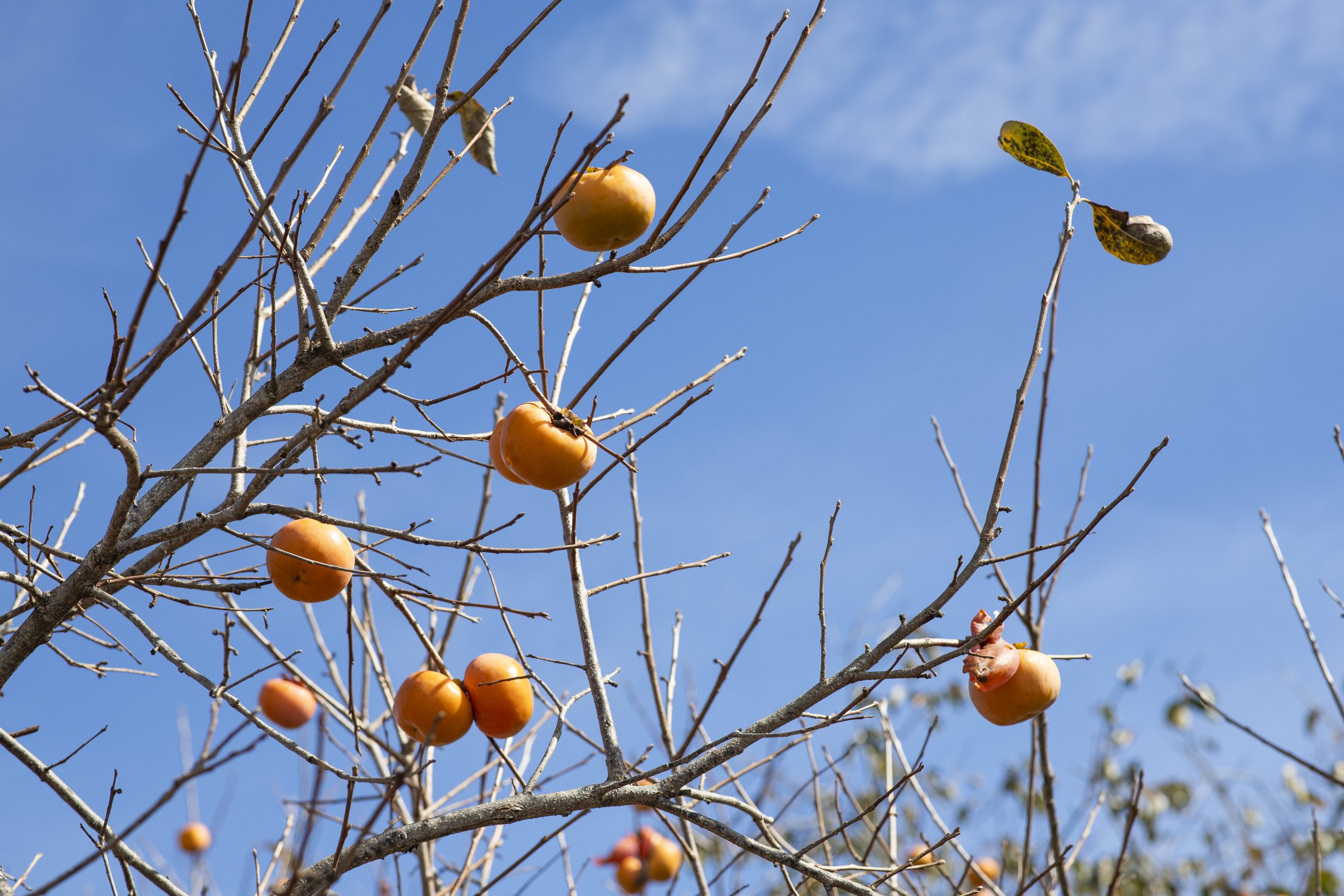
There are two main species of persimmon, the American (Diospyros virginiana) and the Japanese, Kaki, or Asian (Diospyros kaki). These are in the same genus as Ebony, a notoriously dense hardwood. The American persimmon has one of this highest wood densities in the States, following hickory and live oak, and has traditional use in golf club heads. It is still used in wood turning and carving. Both species have been used for wooden handles on tools and mallet heads, due to their hardness and elasticity. The wood does not plane well, so it is harder to find in furniture or other larger applications.
American Persimmon
The American persimmon is a wonderful tree for home gardeners, because it is hardy, drought resistant when established, and produces an abundance of fruits. The flavor of the American persimmon is said to be complex, comparable to caramel or dark honey. The fruits are astringent until well-ripened and on the small side of what is possible among persimmons, making them less attractive for large-scale farming when compared to Asian varieties. They are also very large trees, which makes them impractical for orcharding.
Asian Persimmon
The Asian persimmon has been in active cultivation for at least two thousand years, much longer than the American. Due to this, there are many more cultivars, with a correspondingly large variation in fruit traits. Asian persimmons can be either astringent or non-astringent. Non-astringent varieties may be picked earlier, stored longer, and eaten when firm or ripened until soft, when compared to astringent varieties. Among cultivars, fruit shape, color, and size vary widely. There are even “seedless” cultivars (the fruits may contain 1 seed where typical seeded fruits will contain up to 6).
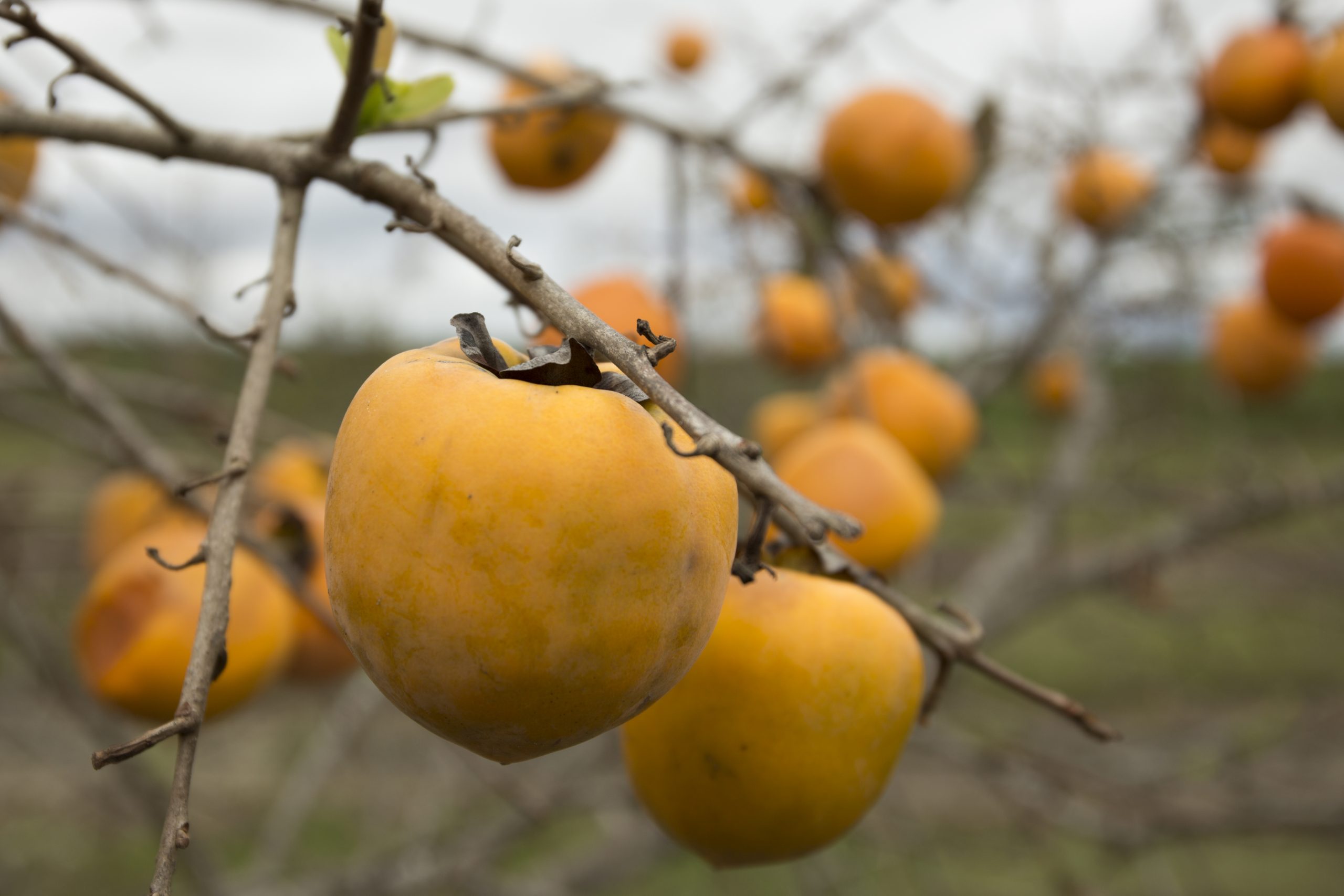
Whatever the species, persimmons are very nutritious. They are a good source of vitamins A and C, as well as potassium and magnesium. Furthermore, they are rich in antioxidants. Tannins, a group of antioxidants plants use to protect from predation, are the reason for the fruits’ astringency. Chemical changes that happen over the ripening period make tannins inactive to our saliva (and thus no longer astringent). Persimmons are low in fat and high in fiber.
The University of Florida has been studying this fruit since at least the 1910s. Professor Harold Hume (a former UF President, pomologist, and major contributor to agricultural studies in the early and mid-1900s, an example of his writing can be found here) developed a flesh-color classification system for persimmons that is the basis for what is used today. He also noted strong correlations between seed shape and fruit shape, studied the flowering patterns of the trees, and helped to establish best practices for starting and maintaining persimmon orchards. The University’s stellar reputation in the agricultural sciences was built in part by work on persimmons, which continues to this day.
Persimmons Today at UF
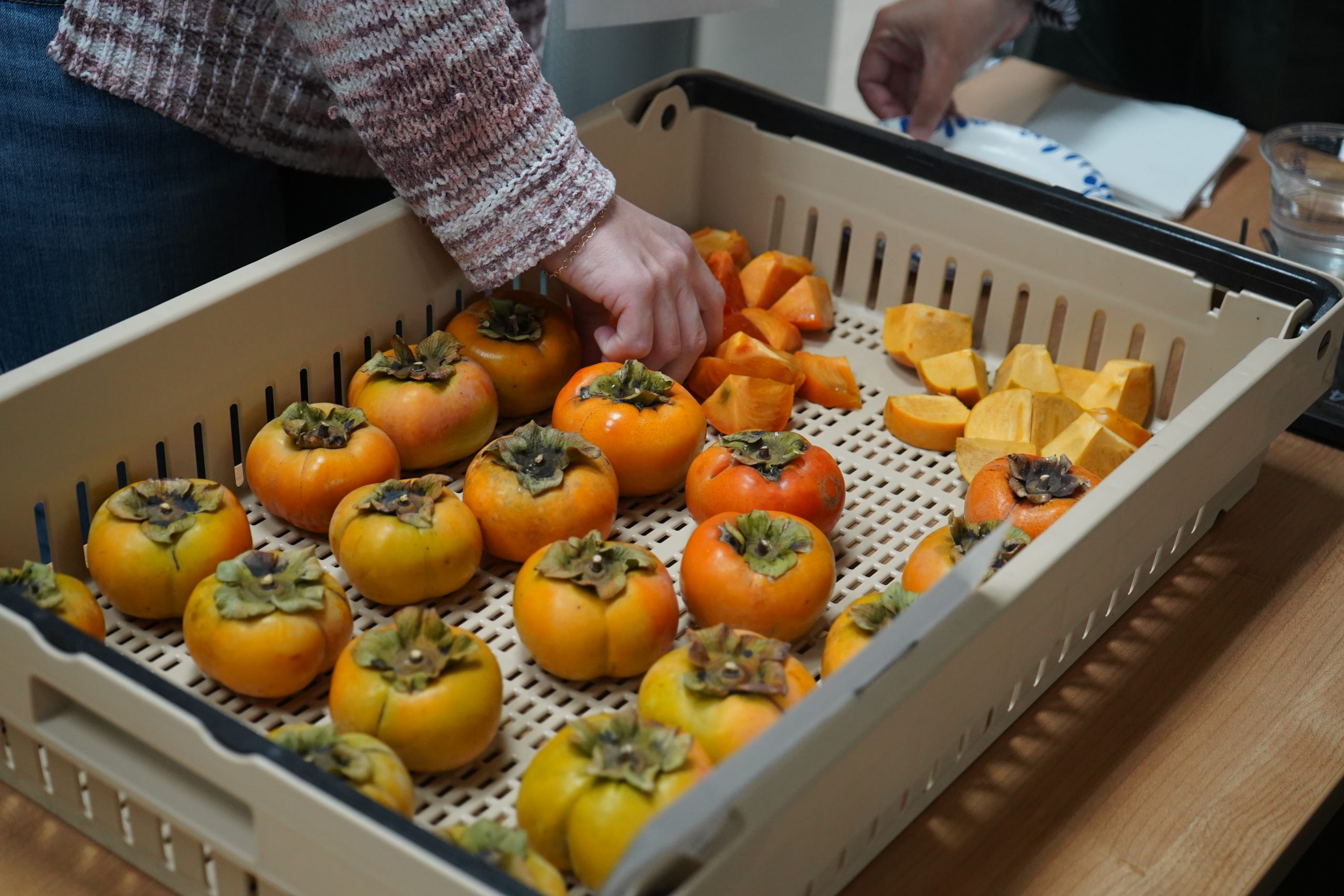
This year’s annual Persimmon Field Day was held at the North Florida Research and Education Center (NFREC) in Quincy, Florida in October. Public outreach like these Field Days is an important component of the university’s overarching mission of teaching, research, and service. Field Days focus on a single crop, with demonstrations and seminars on the various agricultural practices and current research which may affect best practices in the garden or field.
This year’s Field Day had a lot of information on Japanese persimmons. Most large-scale farming of persimmons has been done with Japanese persimmons (American persimmons are more common in homesteads and as ornamentals due to their tolerance of urban environments). Non-astringent cultivars are especially popular, as fruit can be harvested earlier and therefore have a longer shelf life, although astringent cultivars have maintained a presence in the public conscience; astringent cultivars tend toward more complex flavors. During the Field Day, Dr. Shahid, a persimmon researcher at NFREC, gave this advice: “For growers, we recommend planting 70% non-astringent and 30% astringent for both consumers’ preferences,” giving growers and consumers the best of both production and flavor traits over the season.
Cultivars on Display
There are 2 main non-astringent cultivars: Fuyu and Jiro. They share many characteristics: their squat, round shape, like a tomato, rich color, and their crisp firmness when harvest-ready. They are both harvestable from October through mid-November. Jiro stands apart in that it is non-climacteric, so it will not ripen further after harvest. Fuyu, like all other persimmon cultivars, is climacteric and will ripen further.
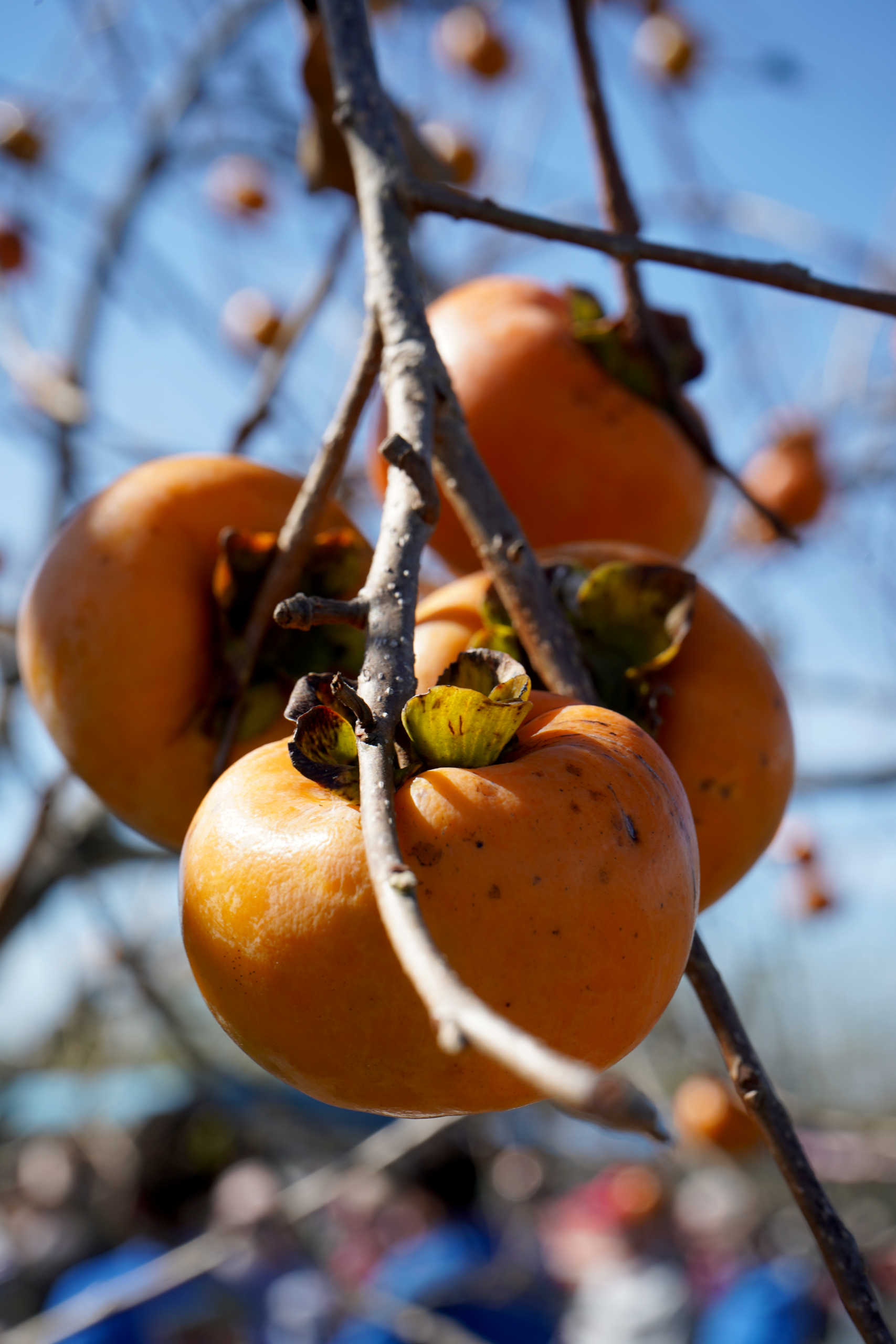
There are also 2 primary astringent cultivars: Hachiya and Tanenashi. These fruits are less squat than the non-astringent varieties, with Hachiya being almost heart-shaped, glossy, and deeply colored. Tanenashi is less glossy than Hachiya and has a less distinct “point” at the end opposite the stem. When fully ripened, both varieties take on a jelly- or custard-like consistency, with Hachiya being sweeter on average.
Postharvest Care and Shelf Life
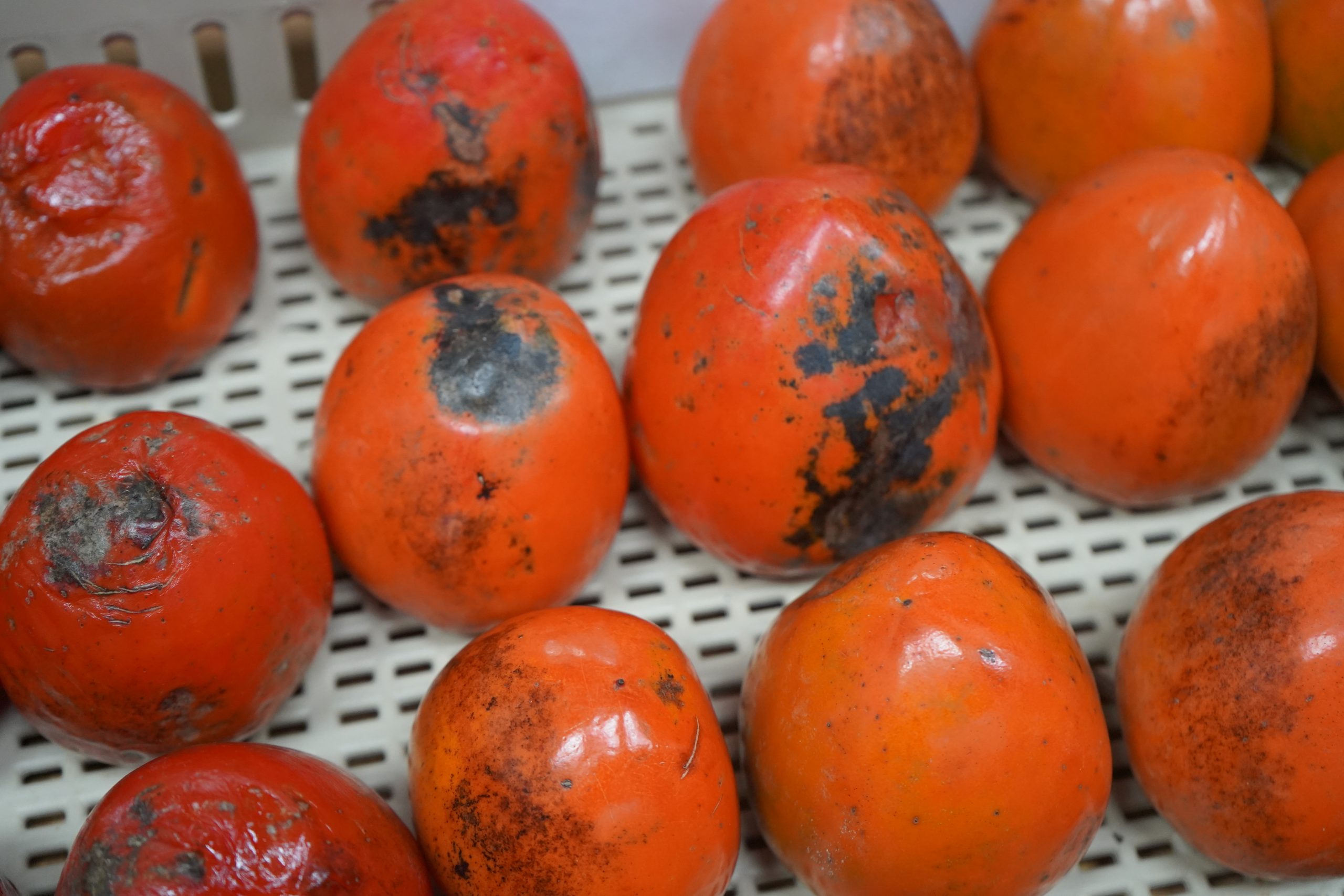
One of the largest limitations for persimmons becoming a major crop is their short shelf life. This complicating shipping and fresh produce availability. Shelf life can be somewhat combatted with good post-harvest storage techniques (this trait has been selected in breeding programs for other fruits, like tomato and apple, but this requires very long timetables). Limiting the number of layers in packed fruits is an easy way to help preserve their quality over time, as the ripe fruits are easily bruised or crushed.
Extending Shelf Life at Home
One of the most accessible post-harvest techniques discussed at the Field Day was refrigerating or freezing the fruits. A refrigerated persimmon can last up to two months, while frozen fruits last up to six. Another benefit to freezing is that persimmons lose their astringency when frozen, making less perfectly-ripe fruits enjoyable. The frozen fruits brown and become more fragile after thawing, so weigh this against the advantages.
Value Addition
The Field Day also demonstrated “value addition” in this crop. The term refers to “increasing the economic value” of a raw resource “through transformation, innovation, or differentiation.” There are examples of this everywhere, from cut gems costing more than rough ones to bed sheets costing more than raw wool. In persimmons’ case, many products are available in Asian markets (example here), where the fruits are more integrated into the cultural landscape. Such products include dried fruits, fruit leather, and bottled beverages. Here, scaled production for this fruit is novel. Finding the techniques and products that help to do this in the States is part of UF’s ongoing research.
Reflections
I have learned a lot about persimmons this year, despite me trying them for the first time just last month. Once I had tasted a properly ripe persimmon, it shocked me that they aren’t grown everywhere. “One reason why people dislike astringent persimmons is they eat it at the wrong time,” Dr. Shahid said during the Field Day, “a fully ripened astringent will taste sweet like jelly honey.” I am glad that I first learned of the fruit through the university, avoiding the astringent underripe fruit and getting the best possible first bite. The Field Days give that opportunity to the public, combining discovery and learning with outreach.
Events like the Field Days give the university another point of contact with the wider public, helping to spread best practices, new cultivars, and most significantly, allowing the university to learn about what is needed by growers and consumers in a real-world setting. This interaction is critical to the university’s teaching and service missions, with research confirming best practices and adjusting standards based on new findings.
 1
1