How UF/IFAS Is Reimagining Coffee for Florida
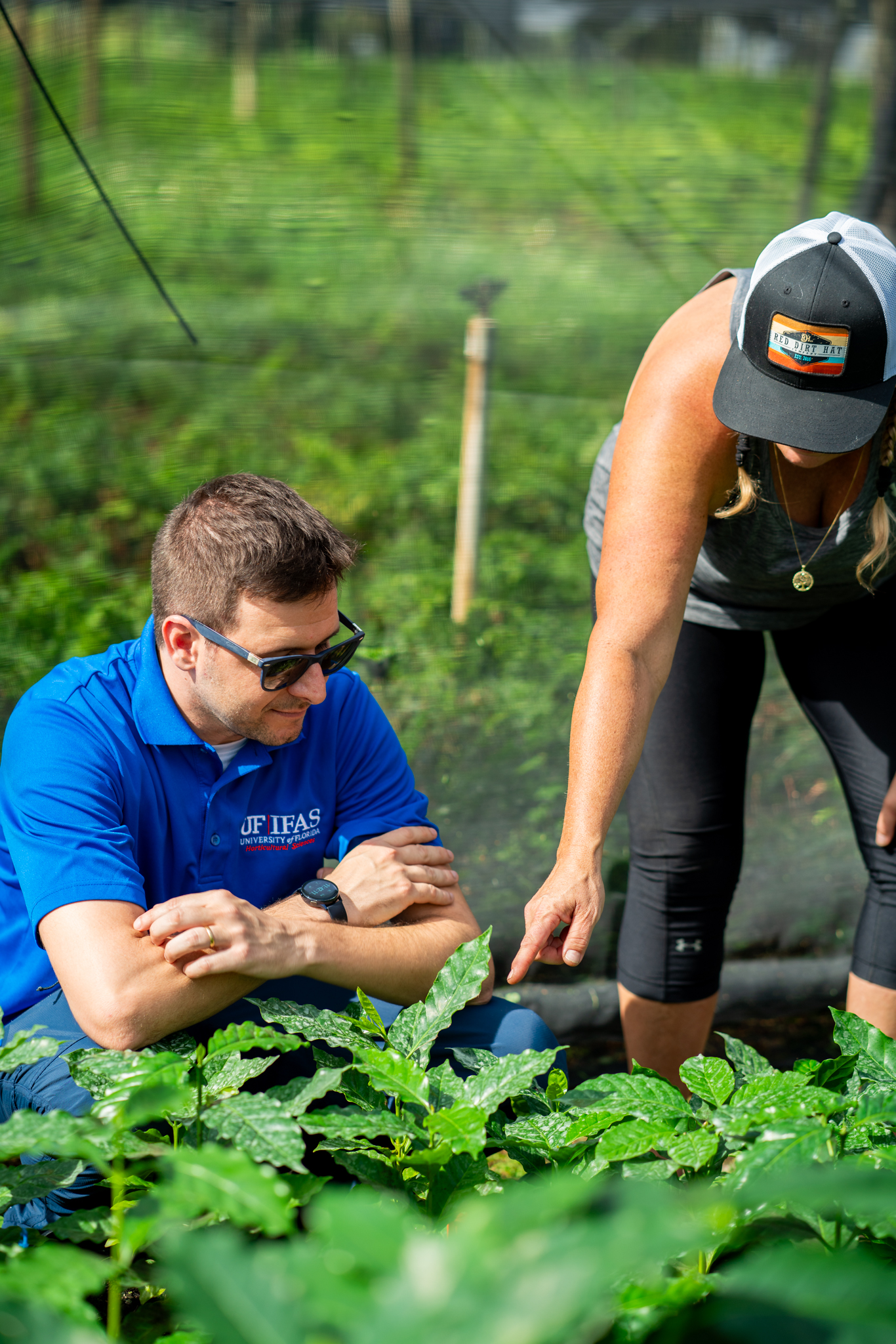
Can coffee be reimagined as a viable crop for Florida growers? It is a seemingly simple question posed by UF/IFAS researchers, as Florida agriculture searches for resilient, high-value alternatives as they navigate new environmental stressors and adapting markets.
Seeking to answer this question, Dr. Felipe Ferrão, a research assistant scientist working in the Blueberry Breeding and Genomics Lab, is focusing his research less on introducing a quick new commodity and more on addressing what the global coffee chain urgently lacks: innovation.
Compared with other crops, coffee breeding programs have been slower to adopt modern genomic tools and data-driven selection, despite coffee’s enormous global footprint, with more than 2.2 billion cups consumed daily and over 100 million farmers worldwide depending on the crop. In blueberry breeding, for example, genomic DNA information is routinely used to guide selection decisions and accelerate genetic progress. In coffee, many comparable molecular tools already exist, but they have not yet been widely implemented at scale in active breeding programs. “Our goal is to help close that gap by integrating molecular tools that can assist breeding decisions and support biological discovery about gene control of key agronomic and quality traits,” clarified Dr. Ferrão.
Traditionally, coffee has been grown only within the “coffee belt” of the tropics (between the Tropic of Cancer and the Tropic of Capricorn), where temperatures remain relatively stable between 60–80°F and environmental stress is relatively low. These regions, primarily in parts of South Asia, Latin America, and East Africa, are often highland or upland areas where cooler nights slow bean development and good drainage and airflow support plant health. Florida’s warmer, more humid climate presents additional challenges, underscoring the need for adapted varieties and thoughtful management strategies.
Building a foundation for coffee in Florida: Research and Production
To build a foundation for long-term progress, Dr. Ferrão’s team is pursuing two complementary goals: advancing fundamental coffee research while evaluating pathways toward viable production. On the research side, the team is leading international collaborations with established coffee breeding programs in Brazil, France, and Africa, drawing on Dr. Ferrão’s background in coffee research in Brazil. This work brings together scientists from multiple institutions to better understand coffee diversity, the genetic mechanisms that influence yield and quality, and how the plant adapts to different environments.
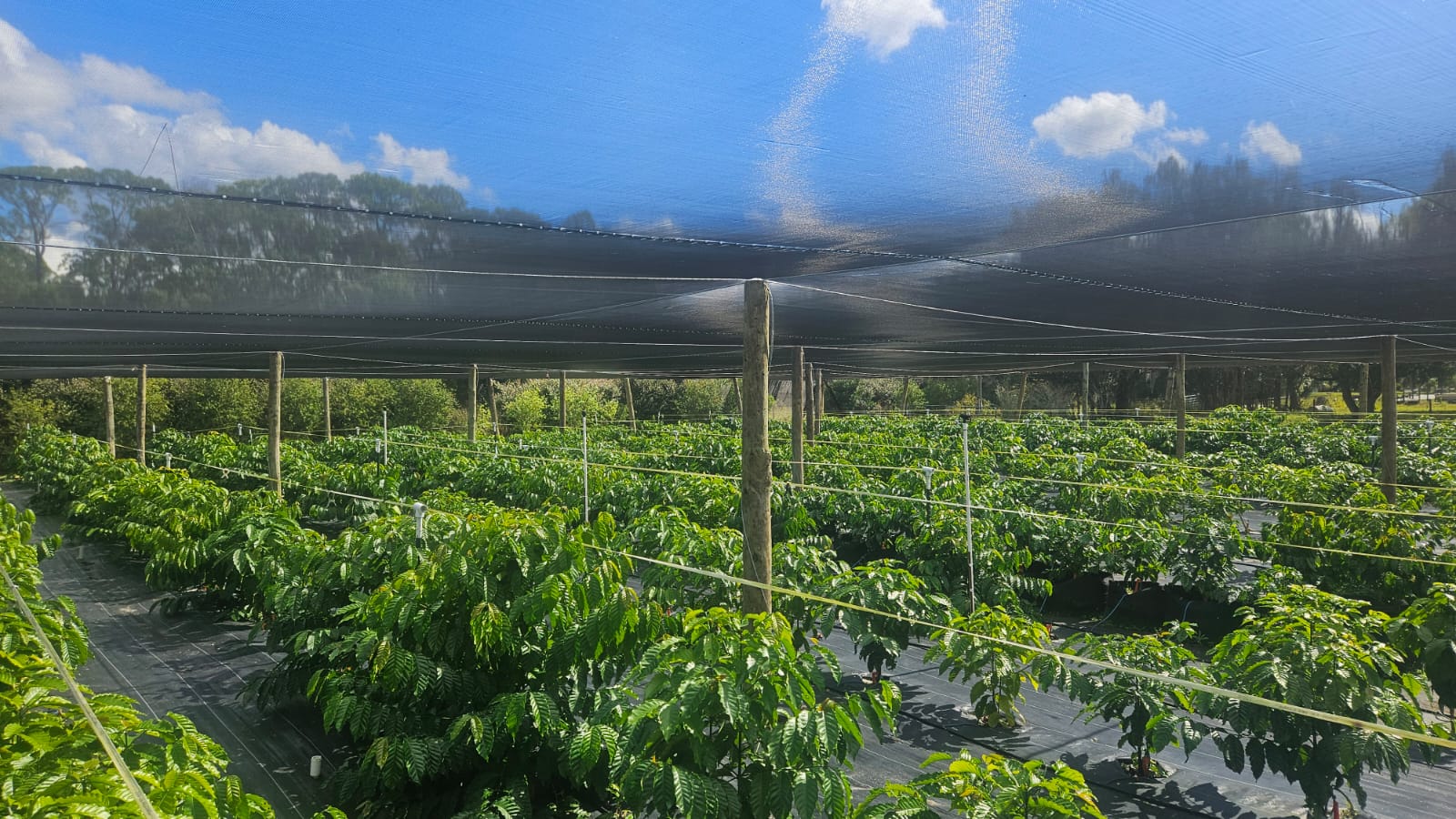
At the same time, Florida is being used as a living laboratory to push the boundaries of coffee production outside the tropics. Coffea arabica and Coffea canephora plants are being tested across contrasting environments and management systems, from South Central to North Florida, including both field and high-tunnel production. By evaluating the same genetic backgrounds under different soils, climates, and management protocols, the team can examine genotype-by-environment interactions and identify which combinations of genetics and practices show the most promise for Florida growers.
Data emerging from these trials is already shaping management recommendations and breeding priorities, clarifying which coffee types may be workable for local production, which hold value as breeding parents, and which are poorly aligned with Florida’s conditions. This step-by-step approach is building the evidence base needed to eventually develop coffee cultivars adapted to Florida’s soils, climate, and production realities.
Genomics supports both the science behind coffee research and its potential use in production systems. Dr. Ferrão is particularly interested in using genomic tools to accelerate breeding, identify genes linked to traits such as cold tolerance, vigor, and flavor, and support evidence-based selection rather than relying solely on long, field-based evaluation cycles. This work is supported through a partnership with the Neta Foundation, a hybrid funding model designed to invest in long-term, impact-driven agricultural research, with support from The Severin Hacker Vision Fund through a GrantVestment.
Reflecting on its support of the program, Neta stated that “this initiative was a strong fit because it’s translational by design—it doesn’t stop at discovery. The project integrates varietal development with regional field validation, quality and market testing, and clear economic projections for growers. This end-to-end approach perfectly aligns with our mission at Neta. We’re also grateful to Severin Hacker for funding the work and bringing a founder’s lens and deep passion for the future of coffee to this effort.”
Exploring pathways for growers
Interest in coffee research has come from a wide range of stakeholders across Florida, reflecting multiple potential pathways for the crop. Some producers are exploring specialty and farm-to-table models that emphasize quality, agritourism, and local branding. Others see coffee as an ornamental or small-scale addition that adds diversity to existing operations. A smaller but growing group is watching to see whether coffee could one day support larger-scale diversification, particularly in regions heavily affected by citrus decline.
At this stage, the research is focused on understanding which of these pathways is most realistic. Rather than promoting a single outcome, the project aims to generate data that helps growers make informed decisions based on their goals, resources, and risk tolerance.
Based on current engagement with growers, the strongest interest is emerging from farm-to-table and agritourism-oriented producers. These stakeholders are less focused on volume and more on the experiential side of coffee. The vision invites consumers to see the plants, participate in harvest, and engage with on-site processing and roasting. In these systems, flavor still matters, but plant reliability, vigor, and consistency under Florida conditions often rank higher. For now, this segment represents the most near-term fit for coffee production.
Measuring success beyond a single cultivar
By 2029, the long-term goal is to identify strong candidate coffee cultivars adapted to Florida conditions. However, success is defined by more than a single release.
According to Dr. Ferrão, releasing a cultivar adapted to Florida is the final product, “but what will really define success is how much knowledge and how many new tools we can bring to the coffee community to support breeding in Florida and beyond.”
Apart from cultivar development, the program is working to advance breeding tools, generate new biological insight, train researchers and stakeholders, and ultimately establish a foundation for continued innovation in coffee research and production.
 1
1