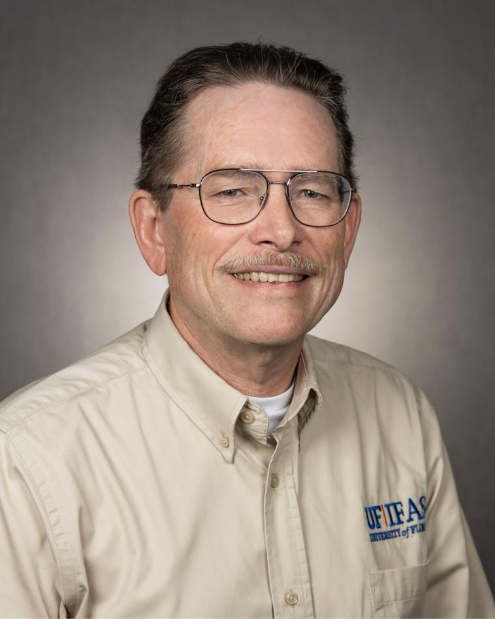
When Dr. Jeffrey Brecht arrived at the University of Florida in 1984, fresh out of graduate school, he stepped into what would become his lifelong career. What began as a first job turned into four decades of research that advanced postharvest horticulture, trained generations of students, and guided the Florida produce industry through many changes. Known for his work on tomatoes, mangoes, and the science of keeping fruits and vegetables fresh, Dr. Brecht now enters a new phase as professor emeritus.
A Career in Postharvest Innovation
Brecht’s entry into postharvest science came, as he puts it, through “serendipity.” He started as an English major before switching to botany at Whittier College in California. Through his older brother, also a botanist, he met UC Davis professor, Dr. Adel Kader, a leading figure in postharvest research.
“That introduction was my entry point into postharvest physiology,” Brecht recalled. “[My brother and I] were 11 years apart, so when I was about 12 or 13, I went out one summer to visit him and stayed for a month. That’s when I first met Adel Kader,” Brecht recalled. Years later, he returned to Davis for a Ph.D. under Dr. Kader, working on non-ripening peaches.
Brecht joined the Gainesville faculty at the University of Florida before the fruit and vegetable crops departments merged into Horticultural Sciences. “I came here right out of graduate school, and I’ve been here ever since,” he said.
Much of his early work centered on Florida tomatoes, harvested mature green to simplify logistics. Consumers often complained about a lack of flavor, and Brecht set out to explain why. His research showed that immature fruit were often mixed in, and those were highly sensitive to chilling injury, which suppressed the volatile compounds that give tomatoes their aroma and flavor. “That reputation that Florida tomatoes tasted like cardboard? It was because some of the fruit were actually immature,” he explained.
His studies went further, identifying the exact physiological signals that mark when ripening truly begins. “When you cut a tomato open, the tissue around the seeds starts to liquefy into a gel. That’s the moment when the fruit becomes capable of producing its own ethylene and starting the ripening process. The red color we see on the outside is actually a later signal,” he said. This discovery provided insight into how maturity is measured and improved handling practices across the industry.
Partnering with Industry to Drive Change
Over the years, Brecht’s research broadened to many other crops, including emerging fruits like starfruit. One of his most recent projects, funded by the National Mango Board, focused on improving how tree-ripe mangoes can be shipped from South America without losing quality. He and his collaborators developed modified atmosphere packaging – specialized bags that regulate oxygen and carbon dioxide to slow ripening and extend shelf life. They tested the system with full commercial shipments from Brazil to New Jersey and from Peru to California. “It worked,” Brecht said simply. “We showed you can get tree-ripe mangoes across the ocean and still have them reach consumers in good condition.”
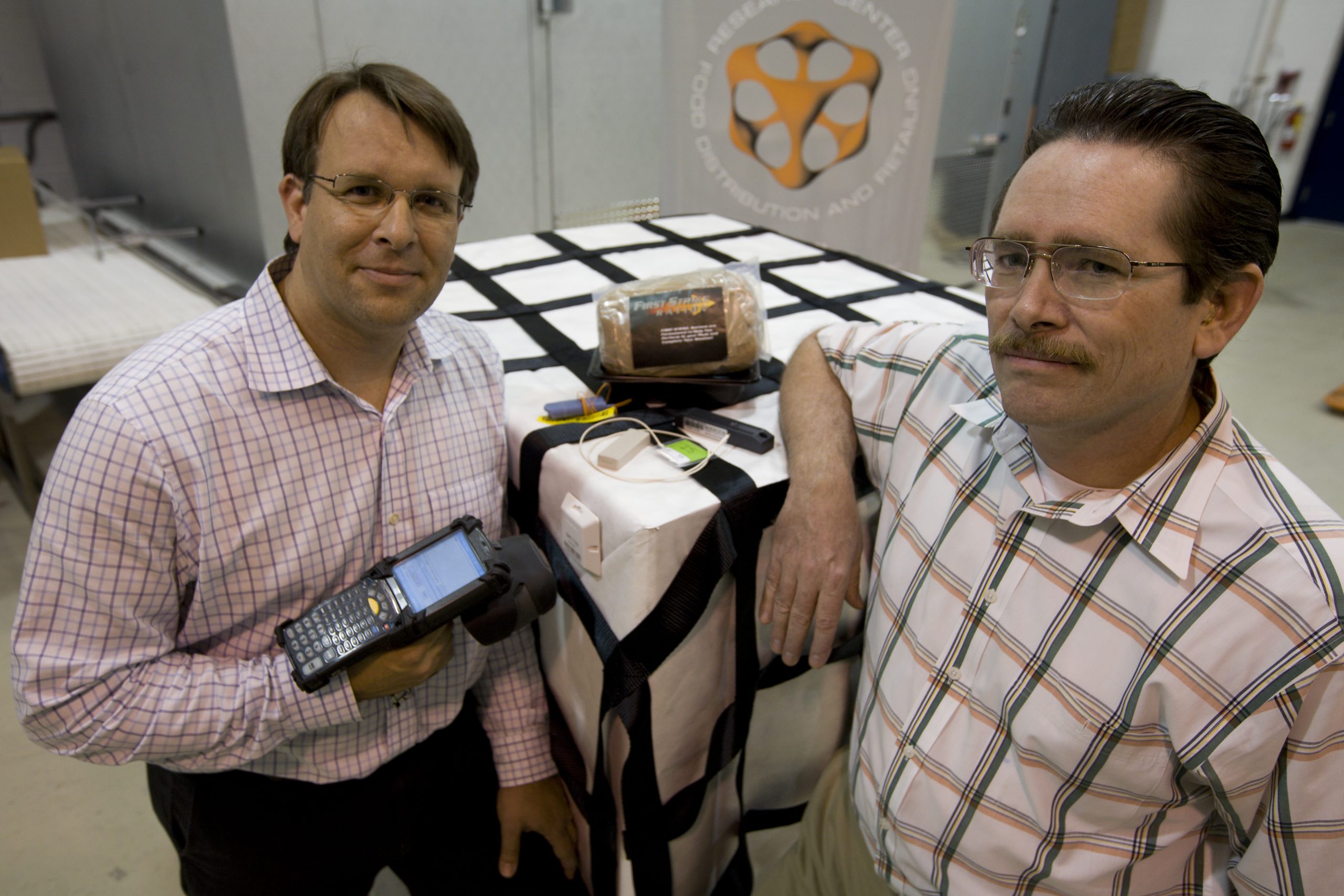
In 2002, Brecht co-founded the UF/IFAS Center for Food Distribution and Retailing (CFDR) with colleague Jean-Pierre Émond, then in Agricultural and Biological Engineering. The timing coincided with a turning point in which food safety was becoming a central concern in produce, with the retail end of the food distribution system being the instigator of changes. This had been recognized and observed by Brecht and his colleagues for some time, but it became inescapable when Albertsons was the first major grocery chain to require food safety programs and third-party audits from its suppliers, and within months, every other retailer followed in 1998. “A lot of the innovations in postharvest were being dictated by the retailers. They were the ones saying, ‘You must palletize,’ or ‘You must pre-cool before shipment.’ So we set up a center where the retailers themselves were the advisory board.”
Through the CFDR, an advisory council was formed that brought together Publix, Kroger, Walmart, Ahold, Burger King, Outback Steakhouse, and the U.S. military’s food research laboratories into direct conversation with UF scientists. The center united faculty from Agricultural and Biological Engineering, Horticultural Sciences, Food Science, Plant Pathology, Animal Science, and Food Resource Economics.
“It gave us a way to make sure the work we were doing would be adopted,” Brecht said.
The CFDR addressed critical issues such as hurricane preparedness, cold chain management, and packaging innovation—efforts that reshaped how perishables move from farm to store.
Science With Real-World Purpose
Since 1984, Brecht has taught Principles of Postharvest Horticulture every year, eventually co-teaching it with colleague Dr. Mark Ritenour. He organized his course around physiology, technology, and commodity-specific needs, always returning to one message: temperature management. He emphasized that getting crops down to their lowest safe temperature as quickly as possible was the foundation of postharvest handling, with every other practice building on top of that principle. Classroom lessons connected to real-world practice, whether it was explaining harvesting methods or the economics of produce distribution. “It sparks student interest when they see how science meets the real world,” he said.
Recognition and Reflections
Brecht’s career holds honors such as Fellow of the American Society for Horticultural Science. But for him, the greatest satisfaction comes from bridging science and practice, and from seeing students and colleagues carry the work forward. “What I’m proudest of is being able to connect the physiology to the practical handling of crops, and seeing others build on it,” he reflected. His career reflects a steady commitment to following science wherever it leads, turning chance opportunities into decades of impact on agriculture, education, and the way fresh food reaches people’s tables.
Though he has officially retired, Brecht is not stepping away entirely. He continues to advise projects on new crops like finger lime, sustainable packaging for small fruits, and the use of essential oils as natural fungicides. He serves as an editor for two journals and sits on the advisory board of the Global Cold Chain Alliance.
“I’m just going to take things as they come,” he said of retirement.
 5
5