Introduction
UF’s Horticultural Sciences Teaching Farm hides a trove of opportunity. A couple of functional buildings sit on a fenced-in lot divided into several small garden plots. It is across the street from Fifield Hall on the outskirts of the university proper. Descriptions do not do it justice, as the learning that takes place there is far more impactful. When someone visits this teaching garden, they will work in a natural setting, far different than the careful landscaping on the rest of campus. This is an important aspect of the education of many students in the plant sciences, offering a space for experiential learning and real-world application of class knowledge.
Several classes incorporate the garden and its facilities, both for commercial- and personal-scale applications. These facilities go far beyond a patch of land, and include greenhouses, high tunnels, diverse growing systems, and irrigation and fertilization technologies. The Teaching Farm is also home to student organizations and special events throughout the year, from seasonal Fairs and plant sales. As the new school year begins, the Teaching Farm will undergo new plantings and be host to a new set of aspiring horticulturalists.
Farm Management
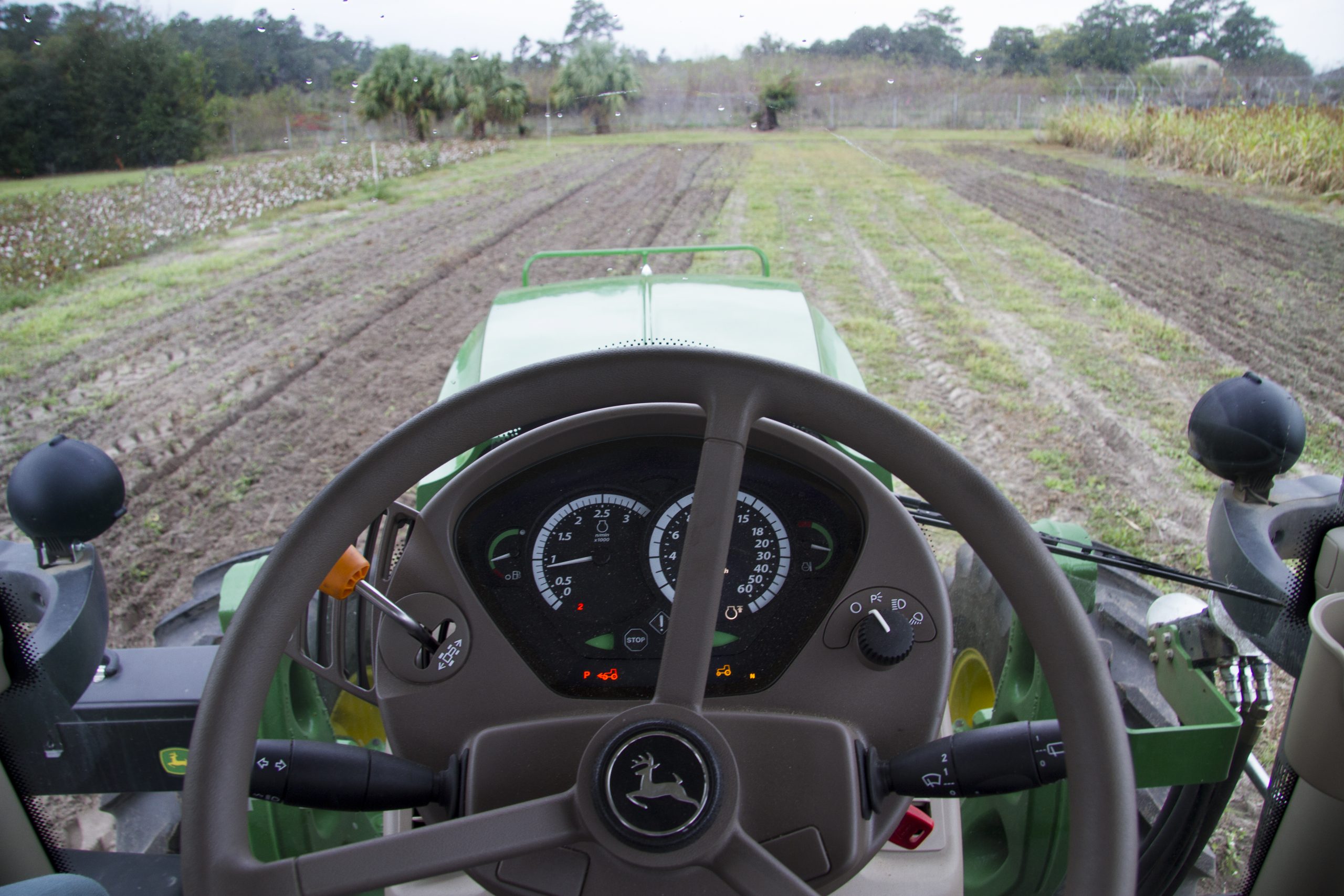
Zack Black, Farm Manager for Horticultural Sciences, tends the Teaching Farm year-round. He is an integral support to the various classes and labs that use the space, with years of hands-on experience guiding students in farm managements practices. Looking ahead at the fall semester, Black noted, “The farm crew is looking forward to a new semester and season. Although there are plenty of warm days ahead, relief is in sight. Fall is an exciting time to grow crops in Gainesville. As temperatures and daylight hours diminish, weed and pest pressure can be lower.
This is great for beginning growers! Fall is a transitional season—you can grow warm-season crops if you plant early enough, and as it cools down, a whole other set of cool-season crops can be grown. By the time students are harvesting in November, they’ll have summer vegetables as well as winter greens.”
Zack not only helps with these semester-long projects, but maintains blueberries, blackberries, peaches, and other more permanent plantings. His in-depth knowledge in managing outdoor spaces – and close work with a wide variety of plants help anchor lessons in fact- and experience-based demonstrations.
Classes on the Farm
PLS 3800C
One of the classes that explores these planting options is PLS3800C (Vegetable Crop Production), taught by Dr. Bala Rathinasabapathi, or “Dr. Saba.” He is known for his passion for growing and improving vegetable crops. He is well liked for his teaching style with hands-on active learning modules. In this class, students “will do a field laboratory where they will grow many vegetable crops including tomato, sweet and hot peppers, kale and collards, cucurbits and a variety of beans,” with the goal of learning more about commercial crop production, he explained when I asked about the Teaching Farm.
This extends past what the students grow themselves. “Just before Thanksgiving break, students will also be involved in harvesting and evaluating purple sweet potatoes, to compare different varieties for yield and quality,” Explains Dr. Saba. These evaluations provide students with insights into how producers choose crops and cultivars and give them tools to assess their own produce.
All told, a student for this class will be expected to learn information about “the crops and their varieties, crop stand, weather, irrigation, soil fertility management, insect pests, diseases and weeds encountered and how the problems were handled, and the quality and quantity of vegetables harvested.”
For questions about the course, please e mail Dr. Saba at brath@ufl.edu.

HOS 3281C
Another class that leans heavily into hands-on learning is HOS 3281C (Principles of Organic and Sustainable Crop Production), taught by Dr. Xin Zhao. She leads a vibrant research program on organic and integrated vegetable and strawberry cropping systems, and she is also a dedicated and enthusiastic teacher who engages students in active learning, critical and creative thinking, and problem solving. When I inquired about how she will use the Teaching Farm this year, she said:
“Students in this class will join a team-based hands-on learning project at the Horticultural Sciences Department Teaching Farm, where they will design and operate their organic vegetable ‘Incubator Farm’ plots and integrate key concepts, principles, and practices learned in HOS3281C to understand, develop, and evaluate integrated cropping systems by targeting environmental, social, and economic sustainability goals.”
This class is an essential element to meeting the organic agriculture education needs in response to the growing organic sector of agriculture and food markets, and addressing concerns about resource use efficiency, soil and plant health, and resilience and long-term sustainability of food production systems. This is another important class for students to see some of the variables, technologies, and innovations that go into successful agricultural systems, whether that is in a home garden or a commercial enterprise.
About the Incubator Farm
An incubator farm is a start-from-scratch plot of land that students are given as beginning farmers, with on-site equipment and resources to help them learn every step of the horticultural production process with a focus on organic farming practices and systems. Each student team is required to develop a holistic management program for operating the Incubator Farm that encompasses crop production as well as business planning, marketing, and budgeting. Throughout the Fall season, students will monitor and assess the Incubator Farm progress toward achieving holistic management goals.
For more information on the course, please email Dr. Zhao at zxin@ufl.edu
Student Groups
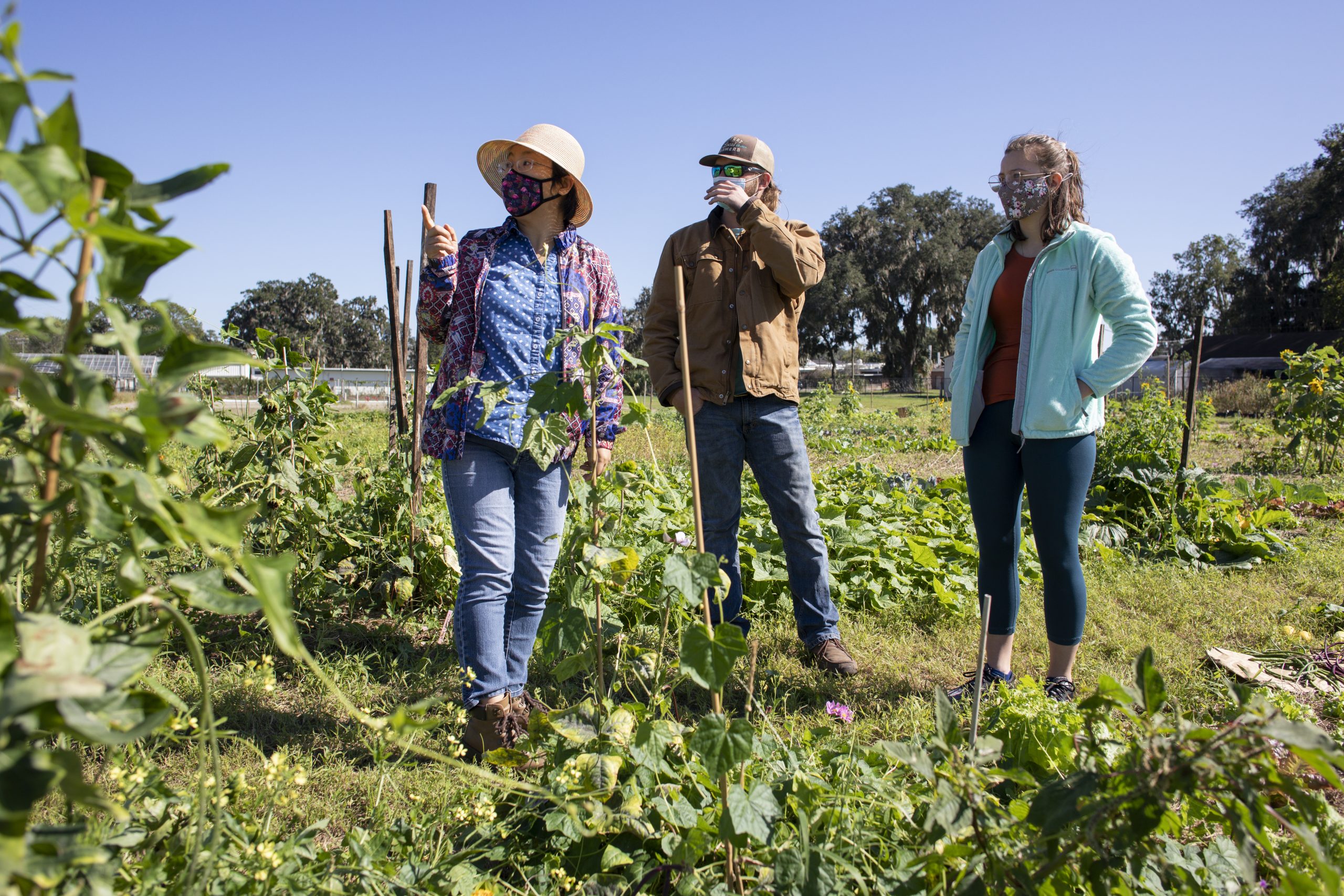
There are also student groups that have access to the Teaching Farm. The Vice President of the Horticultural Sciences Club, Galen Nightingale, recently participated in our Student Spotlight blog series. In it, he mentioned that the club is going to be planting heirloom varieties of several vegetables and edible flowers, a first for the club. They will also be planting carrots, onions, radishes, and squashes, just to name a few. Galen then referred me to the group’s president, Connor Seymour.
“The Horticultural Science Student Club is a club that welcomes students of all majors interested in gaining a well-rounded understanding of field and greenhouse crop production,” Connor said in summary of the club’s mission. This ranges from seed saving and planting for selective breeding demonstrations, growing with hydroponic systems, and participating in numerous events throughout the year including the Spring and Fall Festivals.
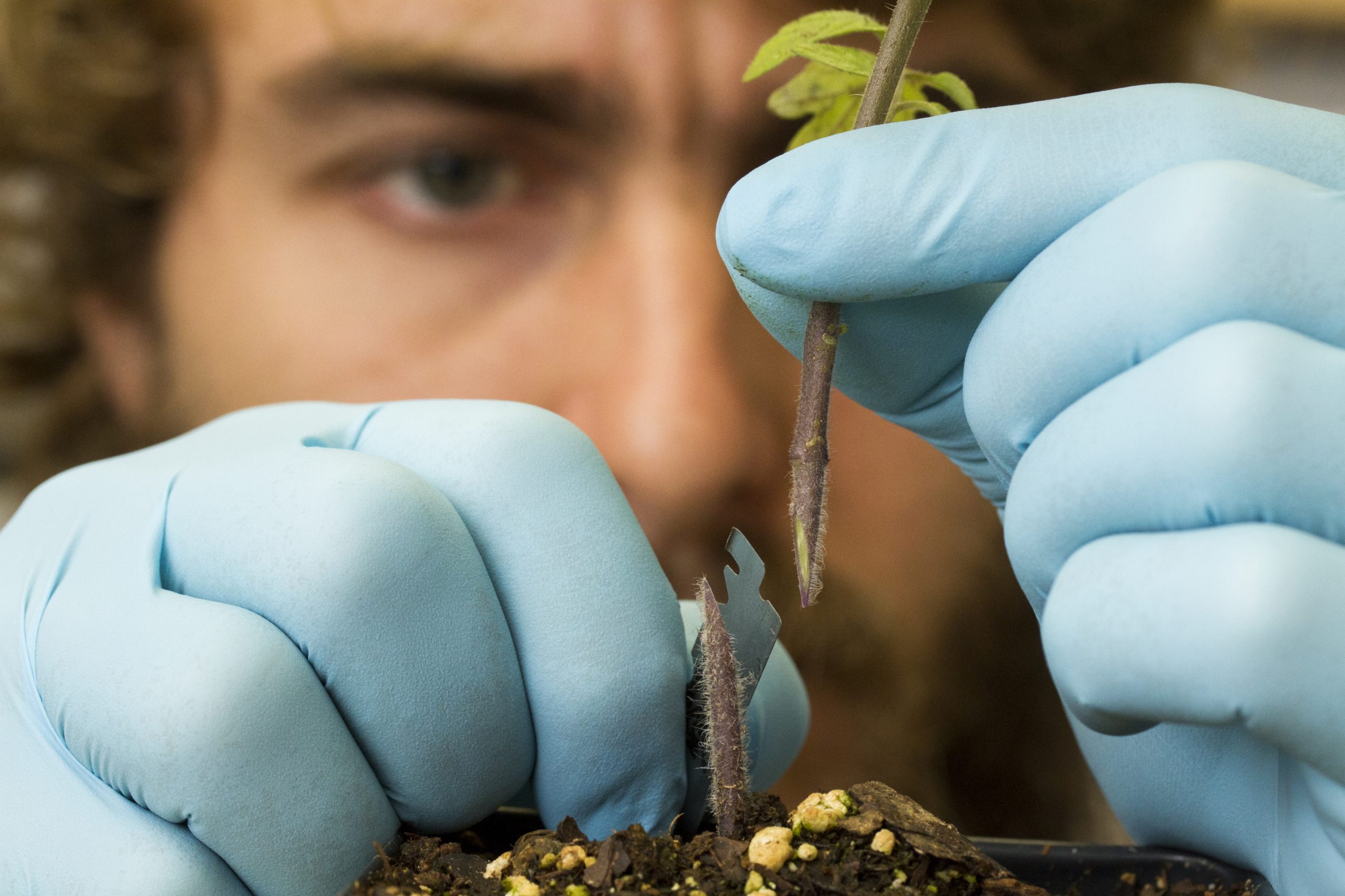
Another first for the club this year, they will do a tutorial on how to clone plants from cuttings. This is important for plants with desirable traits; often, new plants produced from seeds will have different characteristics than their parents, like different fruit taste or flower color. Plants grown from cuttings avoid this problem. This skill is also useful for some plants with very low germination rates in their seeds and in some herbs where we do not keep them until they produce seeds.
For more information on clubs in the plant sciences, visit https://plantscience.ifas.ufl.edu/student-clubs/.
To reach Connor Seymour for the Horticultural Sciences Club in particular, please email Connor at connorseymour890@gmail.com
Final Thoughts
Not all classes fit neatly into the four walls of a classroom. The Horticultural Sciences Teaching Farm is home to some of these lessons, where “touching grass” is only the beginning. The exposure students get, whether from clubs or in core classes for a major, to the multiple components of the agricultural system is invaluable for them as future consumers, producers, and researchers. With modern conveniences, it is easy to forget just how dependent we are on soil, sun, water, and seed. The Teaching Farm is exactly what students need to explore those connections, understand the issues surrounding them, and prepare to be their stewards in the future.
 4
4