Thousands of students come to UF every year, but only a select few return to the university after their education is complete. These individuals have a unique, 2-sided insight into the lasting impacts that this institution can have and the value it offers to the local community, Florida, and the globe. One such returning alumni, and the first to be interviewed for this series, is Manuel Gastelbondo, who currently works at the Blueberry Breeding and Genomics Lab under Patricio Munoz.
 Introduction and Background
Shane: What can you tell me about yourself?
Manuel: I am Colombian. I am a married father of 2. I’m a plant breeder, orchidologist, and scientist. I also have an artistic side, I like to make music, play guitar, and paint.
S: When were you a student here?
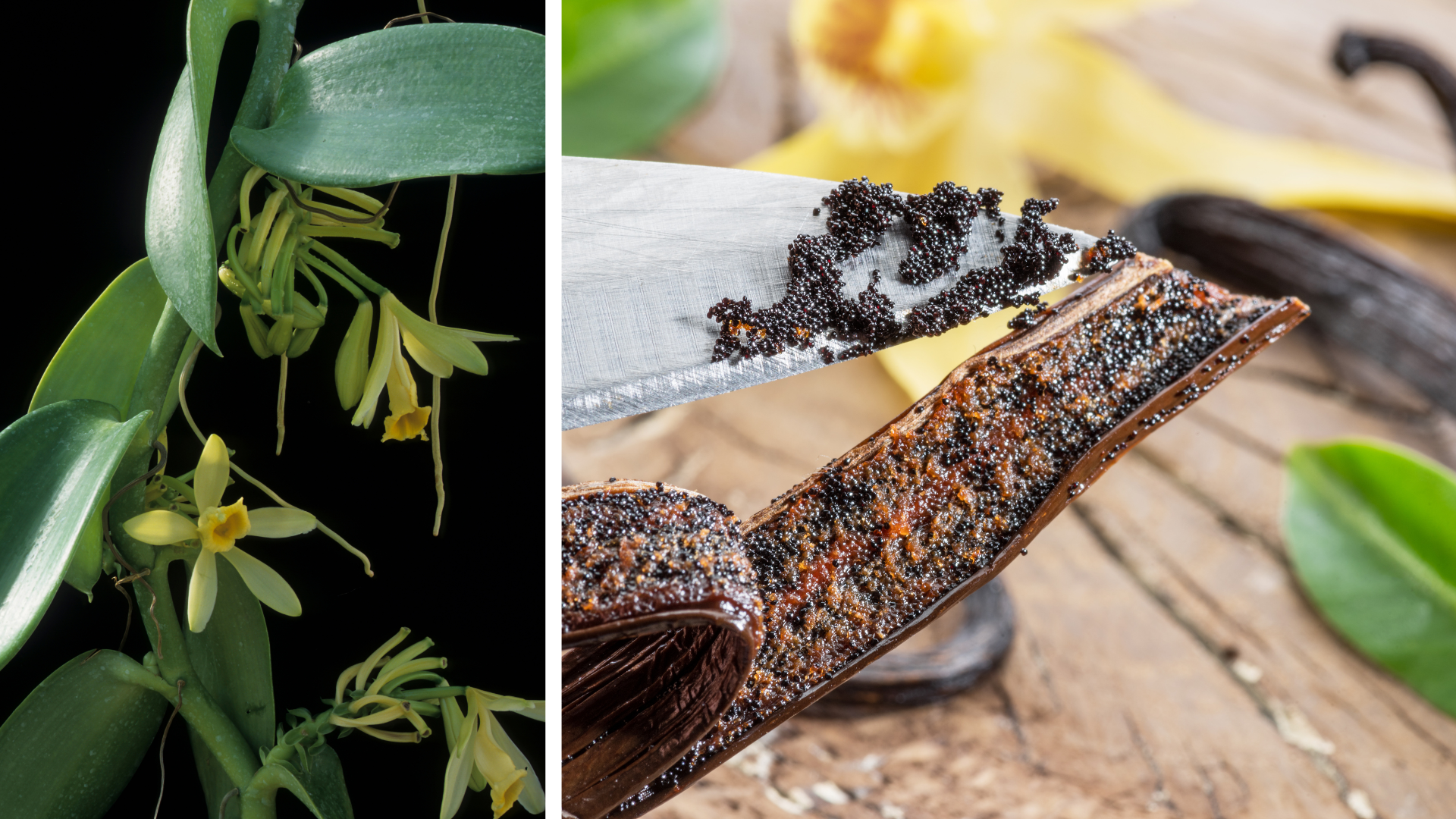
M: I came in August of 2021 for my PhD in plant breeding. I started working under Alan Chambers and later moved to Xingbo Wu. My project was on improving breeding capacity to enhance vanillin content in vanilla orchids. I already had a lot of passion for orchids at that point, so it worked out well.
S: What made you pursue that degree?
M: In general, I respect knowledge, and I always wanted to acquire wisdom. For me, science is one of the areas that provides a deep understanding of the world. Alongside that, one of my first mentors, Mariano Ospina Hernández, introduced me to the world of orchids. He had a tissue culture lab and an astonishing orchid collection, where he taught me to propagate, pollinate, and breed orchids.
S: And here, did you find any courses or projects that were particularly impactful?
M: The core program of plant breeding here at UF is holistic. It spans a lot of subjects within the sciences, professional development, field work, statistics, and other hands-on experiences. All the professors were excellent, but I’d like to mention Drs. Mario Resende, Estéban Rios, Freddy Altpeter, and Patricio Munoz, my current boss, to highlight some of the people that had a profound influence during my PhD.
Current Work at UF
S: What brought you to work for UF after graduating?
M: Patricio offered me a Post doctoral associate position in his lab. It was very flattering, and competitive, which made the choice easier. It is nice to be able to focus 100% on the research compared to my time as a student.
S: What are you working on now?
M: I am part of the cellular and molecular biology team led by Dr. Felix Enciso, directing tissue culture research. I provide plant material for genome editing projects and do ploidy manipulation, protoplast development and regeneration, and other cellular manipulation strategies. I am particularly excited about the protoplast development, because it will be a great tool for the program.
S: What do you bring to this job from your time as a student or before?
M: Before my PhD, I worked for 11 years as a plant breeder and researcher for Ball S.B. as the R&D director. I also had an orchid breeding company with the mentor I mentioned. My undergraduate and master’s degrees are from the 2 most important universities in Colombia. I have a lot to offer.
Future at UF/IFAS
S: How do you see your relationship with the university progressing?
M: I am planning to stay around 4 years with the blue berry breeding lab. This will also be good for my family, as they have moved with me during my studies. I am very grateful to the university, not only for my academic formation, but also for the experience and professional development of living amongst an incredible diversity of the students and faculty here.
Originally, I had wanted to shift back to the private sector, but recently, my perspective has changed. If I can develop and pass on knowledge for future generations, I will feel honored. There is recompense beyond pay in that. I am open to any one of those paths.
S: Imagine you are leading a lab here. What is your “dream project” to contribute to plant sciences?
M: I would do plant breeding using 2 novel approaches. The first is participatory breeding, where the community involved with the plants participates directly in the breeding process through collaboration and information exchange. Scientists, producers, and end users all build on the continuing development of new varieties. The USDA’s GRIN program is an example of a potential first step towards a participatory breeding strategy.
The second would be researching ways to enhance plants’ ability to generate symbiosis and other beneficial relationships, I call it symbiotic breeding. An example of this would be exploring the rhizosphere, or root environment, and examining the metabolites plants produce to attract beneficial microorganisms, then making selections based on that interaction.
S: Have any final thoughts to share?
M: The plant sciences are incredible. It is an ever-growing and -changing field, so there is always more to learn and a lot of room for creative ideas. It is an intellectual challenge that constantly rewards those who are passionate about it.
S: Thank you very much for your time.
M: A pleasure.
 5
5