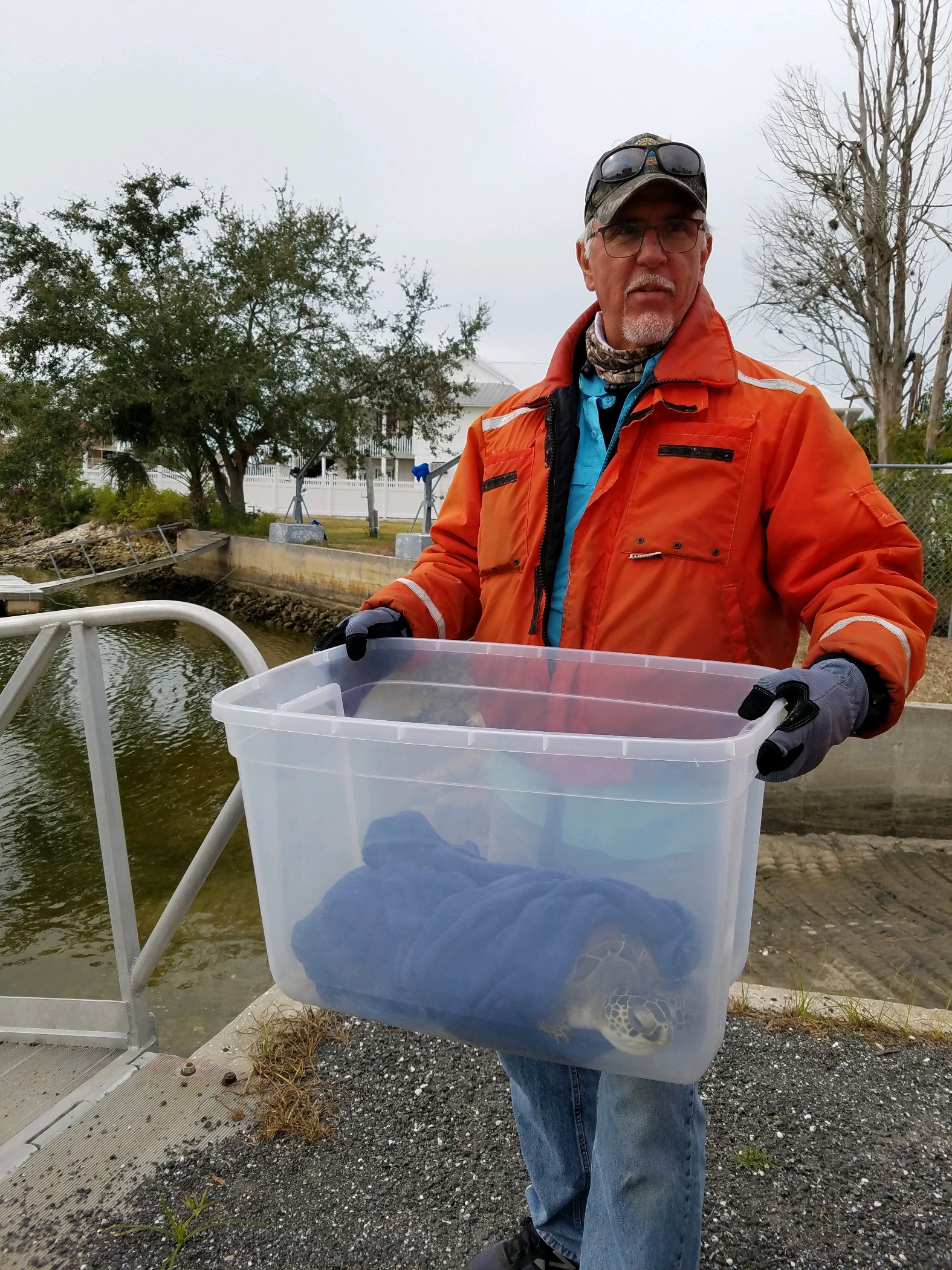
What is Cold-Stunning?
Sea turtles are ectothermic meaning their body temperature matches the water around them. Unlike warm-blooded animals, they can’t produce their own heat. When water temperatures drop rapidly (especially around 50 °F (10 °C) or below), sea turtles can become cold-stunned.
During cold-stunning:
– Their metabolism slows drastically.
– They become lethargic, weak, and unable to swim properly.
– They may float near the surface or wash ashore in shallow waters or marsh areas.
Although a cold-stunned turtle might look like it is dead, many are still alive and can be saved with help.
Why This Matters
Sea turtles are already threatened or endangered. Cold stunning adds an extra layer of danger when weather turns unexpectedly cold. If sea turtles remain cold-stunned too long without help, they can suffer from health complications, drowning, predator attacks, or even death. Florida has seen mass cold-stunning events in the past where hundreds to thousands of turtles were affected and required rescue and rehabilitation.
What You Can Do If You Spot A Cold-Stunned Sea Turtle
Sea turtles are protected under state and federal law, and it’s illegal to disturb them. But there is a critical role the general public plays during cold snaps:
1. Report It Immediately
If you find a sea turtle that looks lethargic, floating at the surface, stranded on shore, or otherwise in distress, call the Florida Fish and Wildlife Conservation Commission’s (FWC) Wildlife Alert hotline at 888-404-3922.
This hotline connects you with trained responders who coordinate rescues with authorized Marine Turtle Permit Holders and rehab facilities.
2. Do Not Attempt to Handle or Move the Sea Turtle Yourself
Although it may feel natural to try and help, moving a cold-stunned sea turtle incorrectly can harm it further and it is against wildlife protection laws. These animals sometimes need trained hands and specialized equipment to be safely rescued and transported. Please wait for directions from the FWC hotline responder for next steps.
3. Stay Aware on the Water
If you are boating in cold conditions, keep a watchful eye. Sea turtles may float listlessly and be at risk of boat strikes. Slow down if visibility is poor.
Be Part of the Solution
Cold-stunning events remind us how weather extremes, even brief ones, can have big impacts on our wildlife. By staying informed and knowing how to respond, we can make a real difference for these marine reptiles.
Eager to do more?
– Consider sharing this information with friends.
– Volunteer with a local sea turtle rescue organization.
– Support local marine rehabilitation centers that care for cold-stunned sea turtles until they are ready to return to warm Florida waters.
To learn more, visit:
https://www.fisheries.noaa.gov/feature-story/cold-snaps-and-stunned-sea-turtles
https://myfwc.com/research/wildlife/sea-turtles/mortality/cold-stunning/
https://mission.cmaquarium.org/news/clearwater-marine-aquarium-successfully-rehabilitates-and-releases-15-cold-stunned-turtles-to-floridas-east-coast/
 0
0