This blog post was developed using original content by Laila Cohen, intern UF/IFAS Extension Brevard County, and Holly Abeels, FL Sea Grant Extension Agent, and edited with assistance from Microsoft Copilot.
Introduction: What Are Clams?
Clams are bivalve mollusks—marine animals with two shells hinged together. These filter-feeders play a vital role in maintaining water quality by straining out particles from the water. In Florida, the most common species are hard clams, also known as quahogs.
Fun Fact: Clams don’t have brains, but they do have a muscular “foot” that helps them move through sand!
Meet Florida’s Clam Species
Florida’s coastal waters host several clam species, including:
- Northern Hard Clam
- Southern Hard Clam
- Coquina Clam
These clams thrive in estuaries, lagoons, and bays—areas where saltwater and freshwater mix. Coquina clams, in particular, are often used by scientists as indicator species to monitor environmental changes.
Clam Aquaculture: Sustainable Seafood in Action
Florida’s clam farming industry is booming, producing millions of clams annually. These farmed clams:
- Filter gallons of seawater daily, improving water clarity and quality.
- Are harvested year-round, though cooler months yield better meat quality.
- Support local economies and help offset declines in wild clam populations.
Did You Know? Clam aquaculture is a key part of Florida’s sustainable seafood movement.
For harvesting regulations, including size and bag limits, visit the FWC Shellfish Regulations Page.
Clams & Ecosystem Health
Clams are more than just seafood—they’re ecosystem engineers. By filtering water, they:
- Reduce excess nutrients
- Improve water clarity
- Support seagrass growth and marine biodiversity
Cooking with Clams: Tasty & Sustainable
Looking to enjoy clams at home? Try a classic clam chowder such as this recipe. Watch us cook this recipe on YouTube. 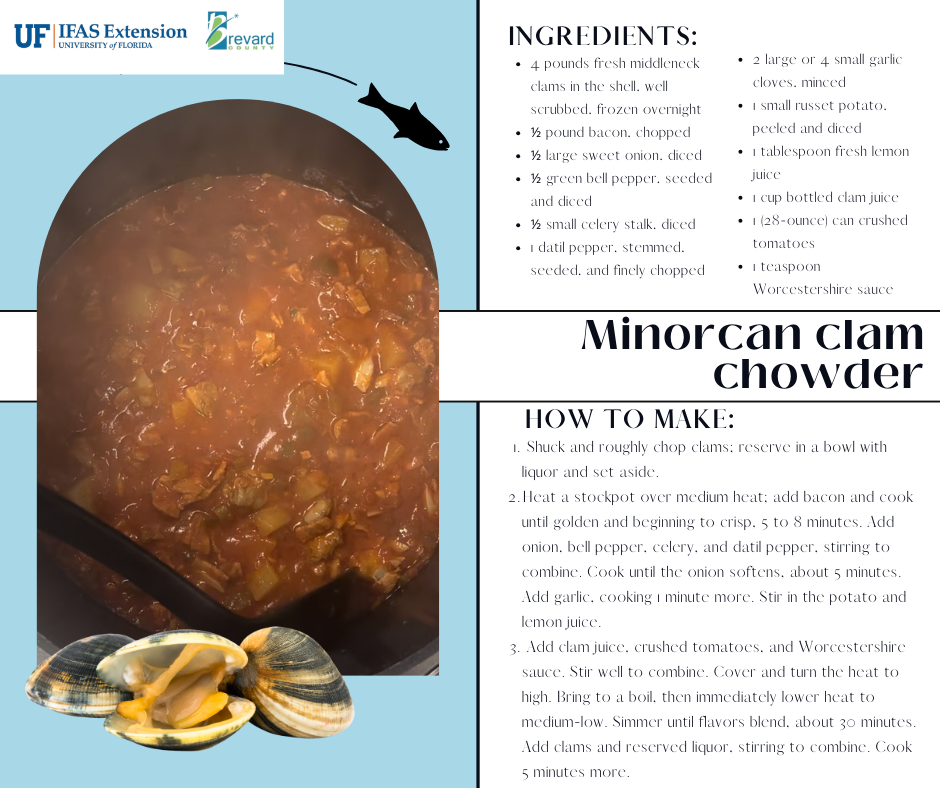
Minorcan Clam Chowder
Ingredients:
- 4 pounds fresh middleneck clams in the shell, well scrubbed, frozen overnight
- 1/2 pounds bacon, chopped
- 1/2 large sweet onion, diced
- 1/2 green bell pepper, seeded and diced
- 1/2 small celery stalk, diced
- 1 datil pepper, stemmed, seeded, and finely chopped
- 2 large or 4 small garlic cloves, minced
- 1 small russet potato, peeled and diced
- 1 tablespoon fresh lemon juice
- 1 cup bottled clam juice
- 1 (28 ounce) can crushed tomatoes
- 1 teaspoon Worcestershire sauce
How To Make:
- Shuck and roughly chop clams; reserve in a bowl with liquor and set aside.
- Heat a stockpot over medium heat.
- Add bacon and cook until golden and beginning to crisp, 5 to 8 minutes.
- Add onion, bell pepper, celery, and datil pepper, stirring to combine.
- Cook until the onion softens, about 5 minutes.
- Add garlic, cooking 1 minute more.
- Stir in the potato and lemon juice.
- Add clam juice, crushed tomatoes, and Worcestershire sauce. Stir well to combine.
- Cover and turn the heat to high.
- Bring to a boil, then immediately lower the heat to medium-low.
- Simmer until flavors blend, about 30 minutes.
- Add clams and reserved liquor, stirring to combine.
- Cook 5 minutes more.
Or explore alternatives like: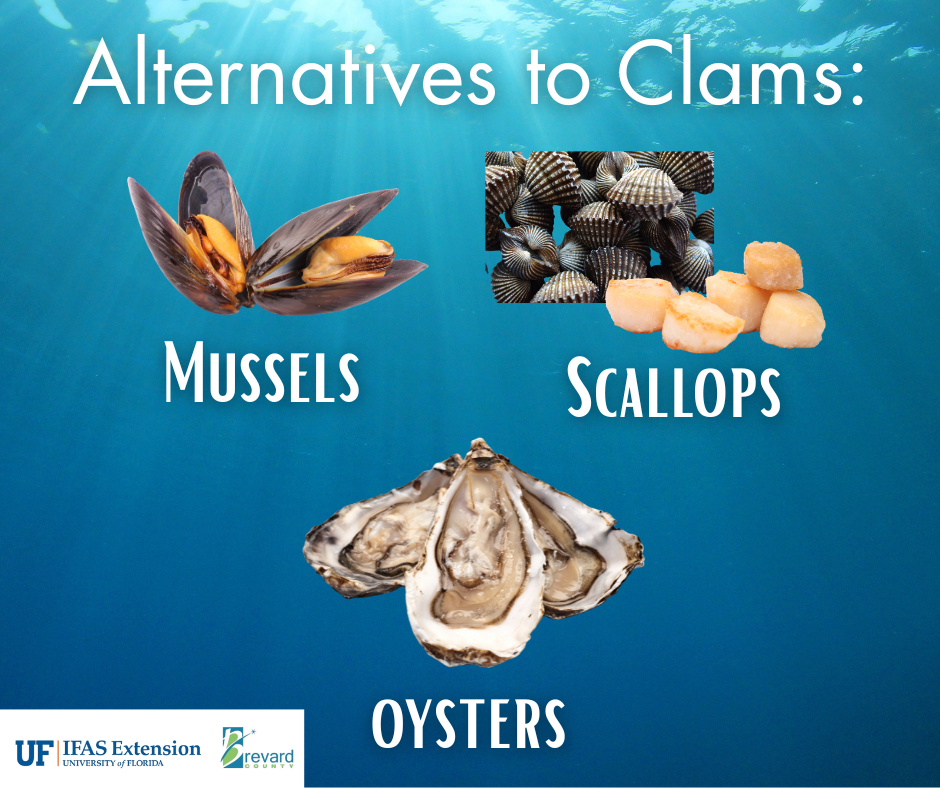
- Mussels
- Scallops
- Oysters
These shellfish offer similar flavors and sustainability benefits.
Learn More
- FWC Hard Clams Information
- FWC Coquina Clams Information
- FWC Recreational Shellfish Harvesting Regulations
- FDACS Seafood Recipes
Reference
Microsoft Copilot. (2025). Shell Yeah! Learn about Florida’s Clams original draft. Edited content provided to Holly A. Abeels. Microsoft.
 0
0