One of the Natural Area Training Academy’s (NATA’s) core courses, “Managing for Diversity Across Florida’s Unique Landscapes,” just concluded. We discussed non-native and invasive plants, which brought up several questions regarding terminology, lists, regulations, and resources available.
Below, we consolidate and outline many of the non-native plant resources to help you make informed management decisions without feeling overwhelmed.
Terminology
“Standardized Invasive Species Terminology for Effective Outreach Education”
The above EDIS article is an excellent reference for anyone working with invasive species, as it defines seven commonly confused terms (native, nonnative, introduced, established, invasive, nuisance, range change). We will highlight three of those terms below, but be sure to read the publication for more extensive explanations of all seven terms:
- Native: A species that occurs naturally in a specified geographic area.
- Nonnative: A species that does not occur naturally in a specified geographic area.
- Invasive: A species that (1) is nonnative to a specified geographic area, (2) was introduced by humans (intentionally or unintentionally), and (3) does or can cause environmental or economic harm or harm to humans.
Some important notes for these definitions:
- Not all nonnative species are invasive, but all invasive species are nonnative.
- The terms “native” and “nonnative” depend on geographical scope. There are species native to Florida that are therefore native to the United States, but there are species native to the United States that are not native to Florida. For management purposes, narrower geographical ranges may be more useful for determining nativeness, particularly in Florida.
Regulatory Lists
In Florida, there are two core regulatory lists which have been established by law to set precedents and rules regarding invasive species. These lists overlap to a degree, and both must be abided by.
Federal Noxious Weed List
This was created under the Federal Noxious Weed Act by the Secretary of Agriculture in 1974, and it prohibits the trade, transportation, and movement of invasive species on the list. The Federal Noxious Weed List applies to the entire country, but several states have created their own versions of this list to better suit threats which are specific to those states.
Florida Noxious Weed List
This is where the Florida Noxious Weed List comes in. It is overseen and enforced by the Florida Department of Agriculture and Consumer Services (FDACs). It can be likened to a stricter, Florida-specific version of the Federal Noxious Weed List. Under the Florida Noxious Weed List, “it is unlawful to introduce, multiply, possess, move or release any noxious weed,” which includes “any plant that is a serious agricultural threat in Florida; has a negative impact on endangered, threatened or commercially exploited plant species; or is a naturalized plant that disrupts naturally occurring native plant communities (FDACs).”
Directories
UF/IFAS Assessment of Non-Native Plants
The Assessment contains 993 plants and is the most comprehensive directory we have found. Its purpose is to “evaluate the invasion risk of non-native species that occur in the state, new species proposed for introduction, and novel agricultural and horticultural selections, hybrids, and cultivars.”
A note from the program director, Dr. Luke Flory:
“One thing to keep in mind is that the Assessment is not a ‘list.’ People love lists and knowing what is on the list, but the Assessment is a database that includes information only on species that have been evaluated using one of the three assessment tools. Meaning, if a species is not in the Assessment database, it simply means that it hasn’t been evaluated. It doesn’t mean it didn’t make it onto ‘the list.'”
FISC Plant Directory
This directory only contains invasive species, which makes it different from the UF/IFAS Assessment discussed above (which discusses non-native species, not all of which are invasive). Here, invasive species are listed as Category I or Category II depending on measured impacts. Category I invasive species have harmed native plant communities and caused ecological damage, whereas Category II invasive species have the potential to harm but have not done so to the same extent. Additionally, Category II invasives can become Category I invasives if they cause significant damage.
 EDDMapS
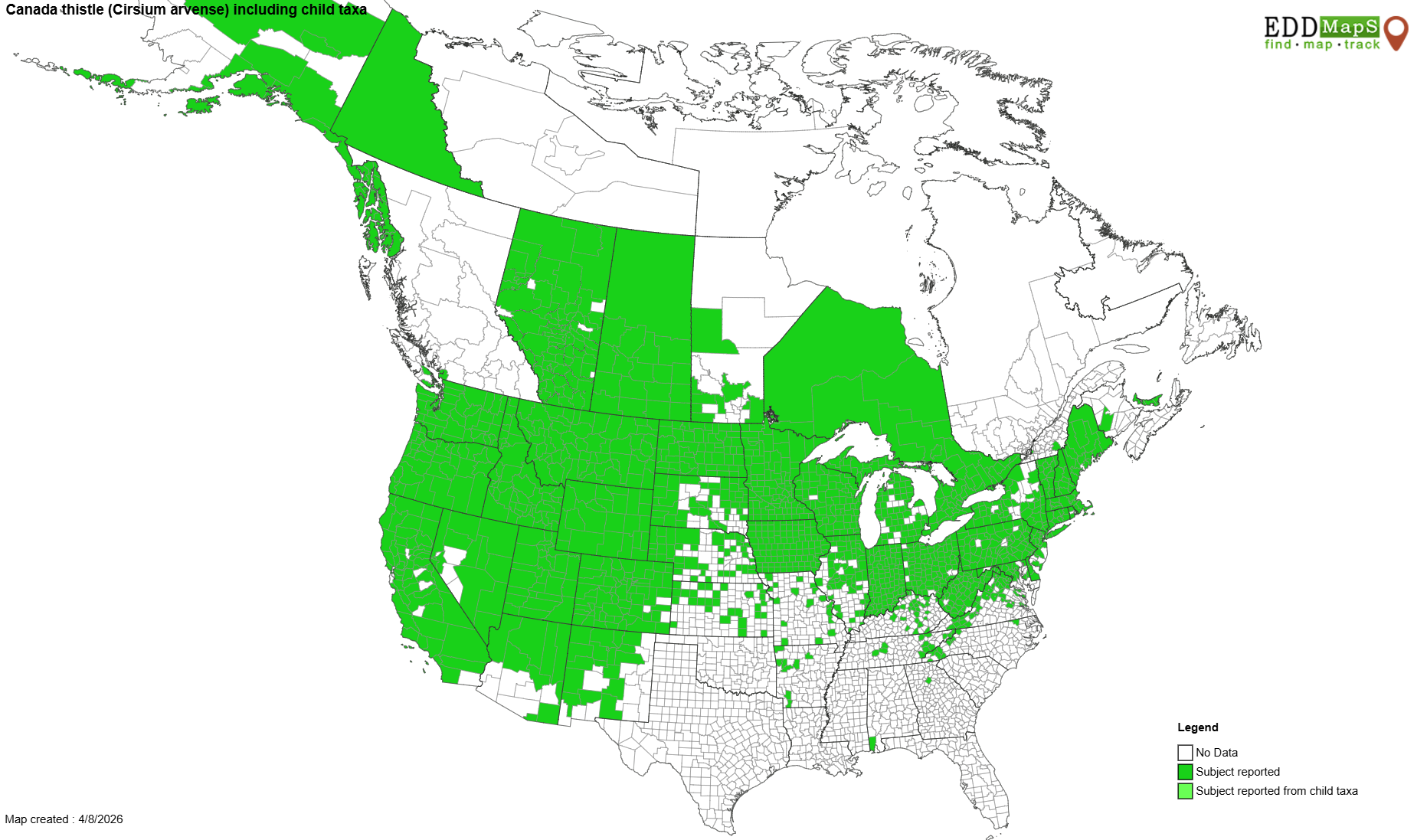
You can REPORT invasive species here! This tool has several features, including invasive species sighting reports, maps, and species information. Its most notable feature is its map tool which illustrates the physical distribution of invasive species across the United States and Canada, helping managers visualize the spread of invasives. You can narrow the map to look at one particular species, such as in the Canada thistle map featured here.
Organizations
Florida Invasive Species Council (FISC)
There may be some confusion regarding the name of this organization, as it has undergone several changes and mergers. The site explains this well: “In an effort to retire outdated invasive species terminology, the Florida Exotic Pest Plant Council (FLEPPC) formally changed its name to the Florida Invasive Species Council (FISC). Read more about this change here. FISC has often partnered with the Florida Invasive Species Partnership (FISP), and the two organizations decided to merge in 2022 to better leverage our efforts and to reduce confusion with names and acronyms.”
Cooperative Invasive Species Management Areas (CISMAs)
Created through FISC, CISMAs are regional organizations in Florida comprising of partnerships between federal, state, and city governments to manage and prevent invasive species spread. Each region is comprised of various counties and has one or more contacts. There is a website for each region listed on the main CISMAs website.
What’s the link between regulatory lists and the directories and organizations listed above?
Regulatory lists (both the Federal and Florida Noxious Weed Lists) are created by law and outline the rules regarding non-native species that must be adhered to. Violations to these regulatory lists are punishable by law. The resources (directories and organizations) provided disseminate information and foster collaboration between experts, helping managers ensure they are adhering to regulations to better identify and manage non-native species.
Additional Reading
“Lost in the Weeds? A Comprehensive Guide to Florida’s Many Non-Native Plant Lists”
To further explore the topic of non-native plant lists, review the above UF EDIS publication. It explains regulatory lists, the UF/IFAS Assessment of Non-Native Plants, and the Florida Invasive Species Council in more detail.
 1
1