The opossum Didelphis virginiana is one of nature’s most misunderstood and underappreciated creatures. Often dismissed or feared, these gentle animals quietly go about their business doing remarkable work for the environment.
I recently had the sweetest encounter with one myself — curled up sound asleep on my front porch inside a watering can, surrounded by leaves it had carefully gathered for bedding. That moment reminded me just how endearing and harmless these animals truly are.
Opossums are nocturnal and slow-moving, especially when a mother is carrying her 12 to 25 tiny babies on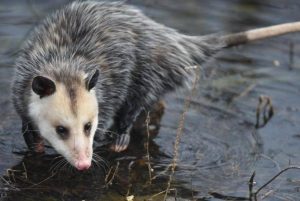 her back. Unfortunately, that makes them vulnerable to fast-moving cars, contributing to their short natural lifespan of only two to three years (a little longer in captivity). When frightened, they sometimes fall into an involuntary “coma-like” state — what we call “playing opossum” — which can last several hours. It’s their natural defense mechanism, not a choice.
Despite their sometimes-scruffy appearance, opossums are surprisingly clean. They groom themselves constantly, much like cats, and prefer to live solitary, peaceful lives. What I admire most, though, is their role as natural pest control. They feast on insects, rodents, frogs, plants, fruits, and even roadkill — helping to keep our environment balanced and tidy. One opossum can eat up to 5,000 ticks a year, making them powerful allies in reducing the spread of Lyme disease.
They also have a few superpowers worth celebrating: their low body temperature makes it rare for them to contract rabies, and they’re immune to most snake venoms. As scavengers, they are nature’s recyclers, cleaning up what others leave behind.
So the next time you spot an opossum shuffling through your yard or tucked away in a quiet corner, take a moment to appreciate them. These humble little creatures are doing far more good than most realize — gentle guardians of the night, keeping nature in balance one tick, one scrap, and one leaf at a time.
Photo Credit: Andy Reago and Chrissy Mclarren. https://creativecommons.org/licenses/by/4.0/
 1
1