At the Sarasota County UF/IFAS Extension Office, we’ve been cultivating a Food Forest to showcase the most productive, unique, and often underutilized fruits suited to our distinctive southwest Florida climate. Through this project, we aim to inspire and educate our community by offering a firsthand look at these remarkable trees and shrubs, allowing visitors to sample flavors before purchasing, and providing opportunities to gather seeds and cuttings.
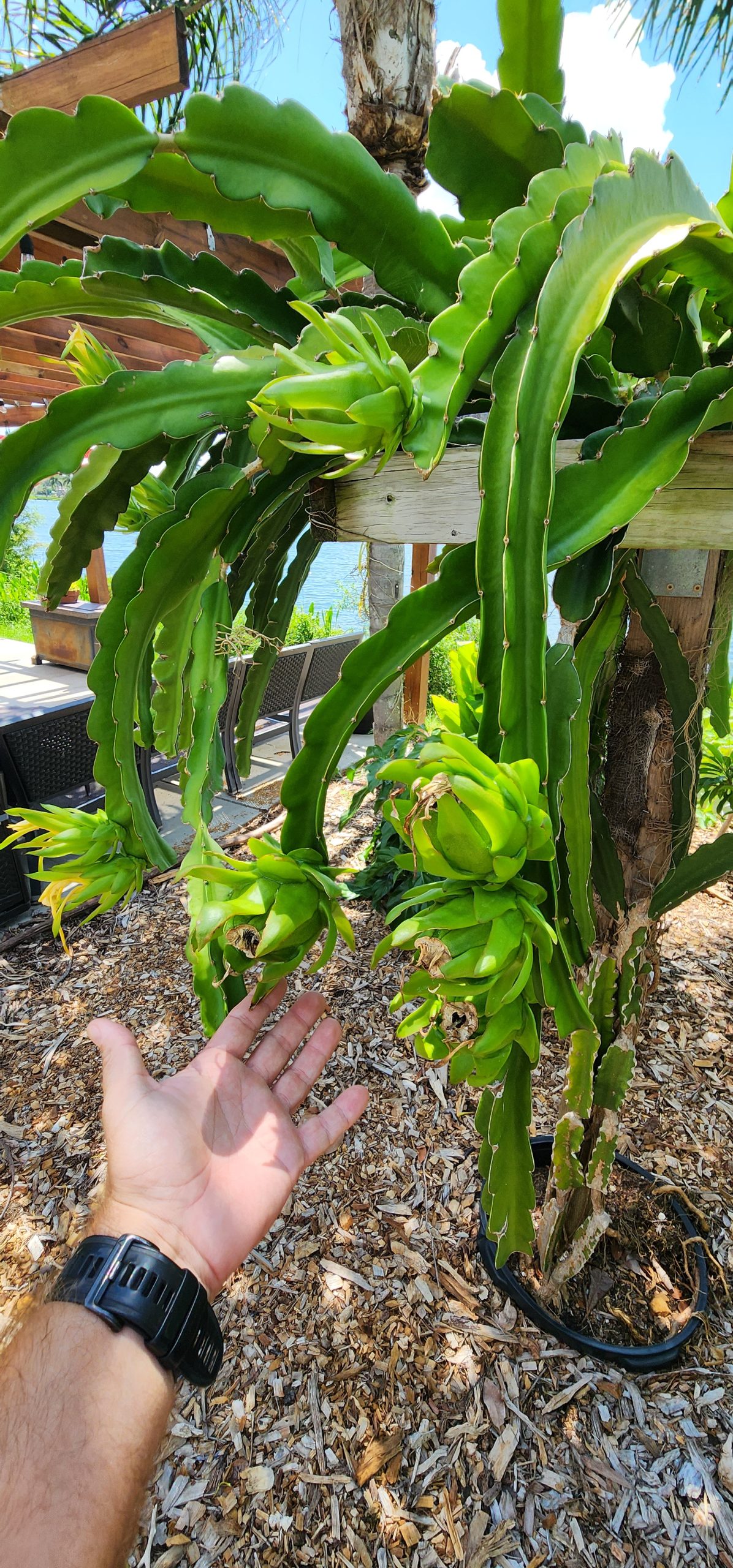
Dragonfruit, also known as Pitaya, are a group of fast-growing, climbing cactus that thrive in South Florida’s subtropical climate. Its fleshy, tri- to five-sided stems can reach well over 20 feet if unpruned, and it produces large, striking, nocturnal flowers followed by hefty fruit in shades of red or yellow with white, red, or magenta pulp. The pulp, speckled with tiny edible seeds, is both visually stunning and delicious. With proper care, a mature plant can yield hundreds of pounds of fruit in a compact area, producing from early summer through fall.
Why Dragonfruit Deserves a Spot in Your Foodscape
-
Rapid Growth & Early Fruit: Many plants often produce fruit in as little as two years. Maturity is reached at 3-4 years and a single plant can yield approximately 220lbs of fruit per year!
- Low Maintenance: Beyond the initial growing setup, few inputs are needed for production.
-
Growing Public Interest: The fruit is increasingly popular in fresh markets and specialty foods, with many restaurants having dragonfruit drinks in particular. Florida has over 720 acres dedicated to dragonfruit cultivation, particularly in Miami-Dade County but also in Charlotte County on the Suncoast.
Dragonfruit Species & Cultivars

The main species cultivated in Florida include:
| Table from Pitaya (Dragonfruit) Growing in the Florida Home Landscape
Created by Jonathan H. Crane and Carlos F. Balerdi |
Color |
|
|
Species |
Peel |
Pulp |
| Hylocereus undatus |
Red |
White |
| Hylocereus triangularis |
Yellow |
White |
| Hylocereus costaricenes |
Red |
Red |
| Hylocereus monacanthus |
Red |
Red |
| Hylocereus ocamponis |
Red |
Red |
| Selenicereus megalanthus (formerly Hylocereus megalanthus) |
Yellow |
White |
| Cereus triangularis |
Yellow |
White |
| Acanthocereus pitajaya |
Yellow |
White |
| Cereus ocamponis |
Red |
Red |
Cultivation Tips
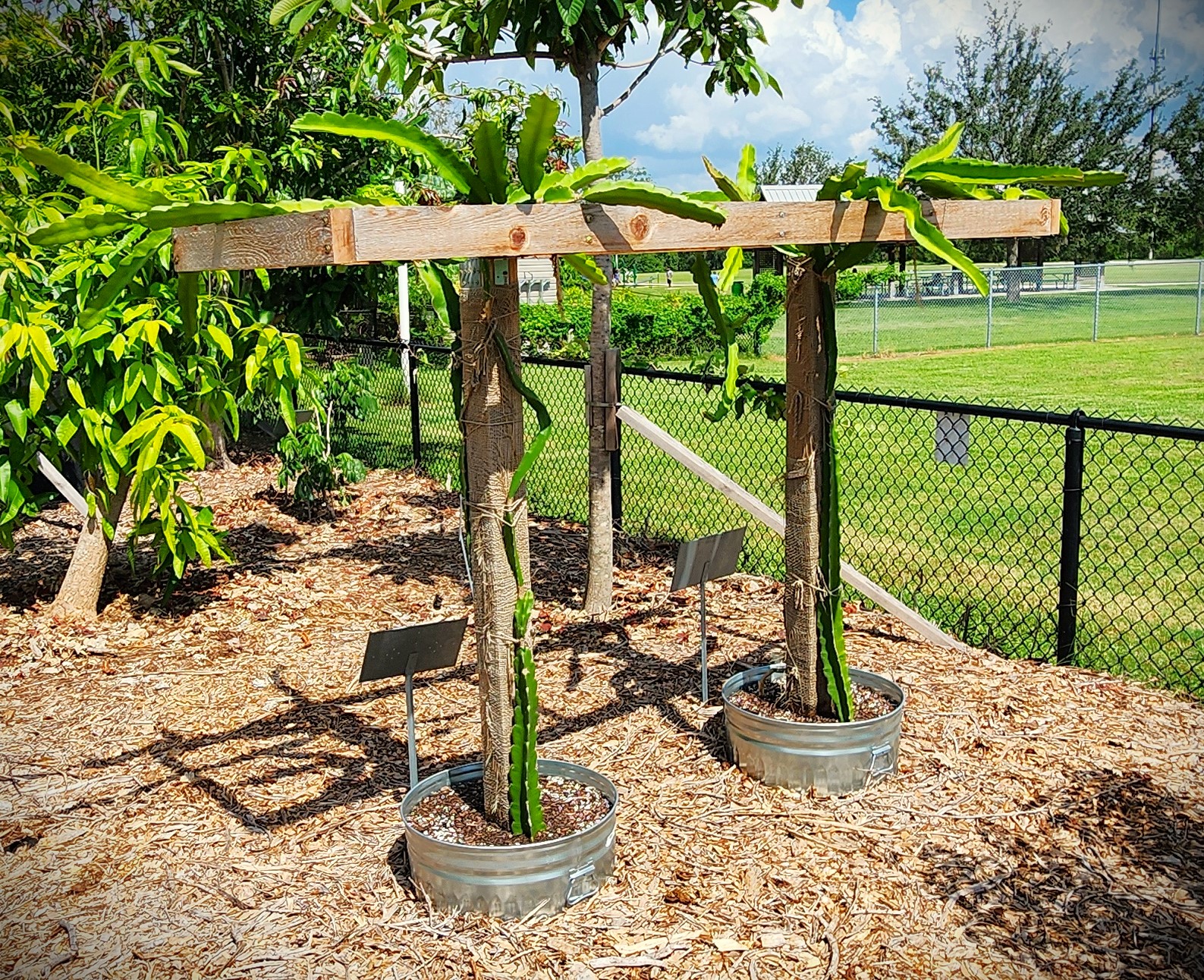
-
Pollination: Many dragonfruit cultivars benefit from hand-pollination to achieve optimal fruit set. For best results, plant at least two genetically distinct varieties. Using a small brush to transfer pollen to the stigmas of open flowers can reliably ensure fruit production.
-
Light & Temperature: Dragonfruit thrives in full sun but benefits from about 30% partial shade during establishment. Freezing temperatures can cause damage or even kill the plants—especially the yellow-skinned varieties, which seem particularly sensitive to cold.
Dragonfruit Seasonality
-
Florida’s dragonfruit harvest extends from June through November. As a long-day plant, dragonfruit relies on daylength (photoperiod) to trigger flowering—so growers sometimes use supplemental lighting to extend the “day” and increase fruiting seasons. Fruit matures approximately one month after pollination and many flushes of flowers occur over a season for a plant.
-
August is mid-season, making it an excellent time to experience and enjoy various cultivars. This is why we selected it for a great refreshing summertime fruit, best served chilled in my opinion.
 4
4