At the Sarasota County UF/IFAS Extension Office, we’ve been cultivating a Food Forest to showcase the most productive, unique, and often underutilized fruits suited to our distinctive southwest Florida climate. Through this project, we aim to inspire and educate our community by offering a firsthand look at these remarkable trees and shrubs, allowing visitors to sample flavors before purchasing, and providing opportunities to gather seeds and cuttings.

A Taste Worth the Wait
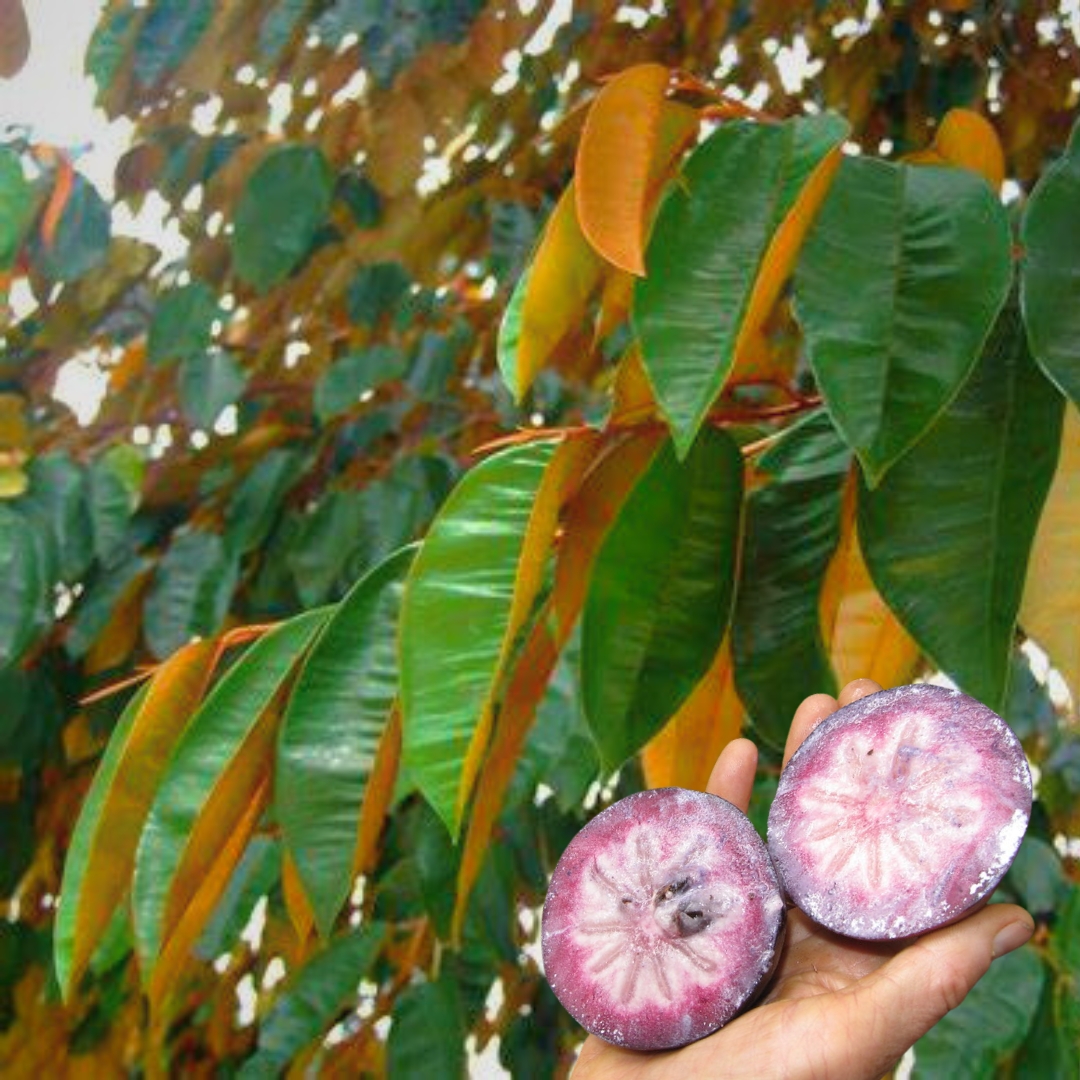
The fruit, typically in season from late March to early May in Florida, is where the Caimito earns its stellar name. The fruit come in two distinctive colors depending on cultivar, a deep purple or a greenish hue. When both types are sliced, the inside reveals a star-shaped core surrounded by juicy, translucent pulp. The flavor is often described as creamy, sweet, and mildly grape-like, with some calling it one of the best tropical fruits they’ve ever tried.
But here’s a tip that could save you from disappointment: don’t eat the skin. It’s rich in latex and can be astringent or even bitter, especially when unripe. Simply scoop out the soft flesh, avoid the skin and rind, and enjoy the ambrosial interior chilled for a tropical treat.
Growing Caimito in Florida—Challenges & Considerations
Caimito trees thrive in tropical and subtropical climates, with their natural range spanning from Mexico through the Caribbean and into northern South America. They’re right at home in South Florida, and with some careful planning, can be grown well in select microclimates in the Suncoast’s coastal, Zone 10, areas.
Here’s what they need to succeed:
- Well-drained, fertile soil—loamy or sandy with good organic content well lead to quickest growth.
- Wind protection—especially from dry winter winds which can lead to defoliation.
- Frost-free location—trees are sensitive to cold snaps below 32°F, as they mature they become cold hardy into the upper 20s.
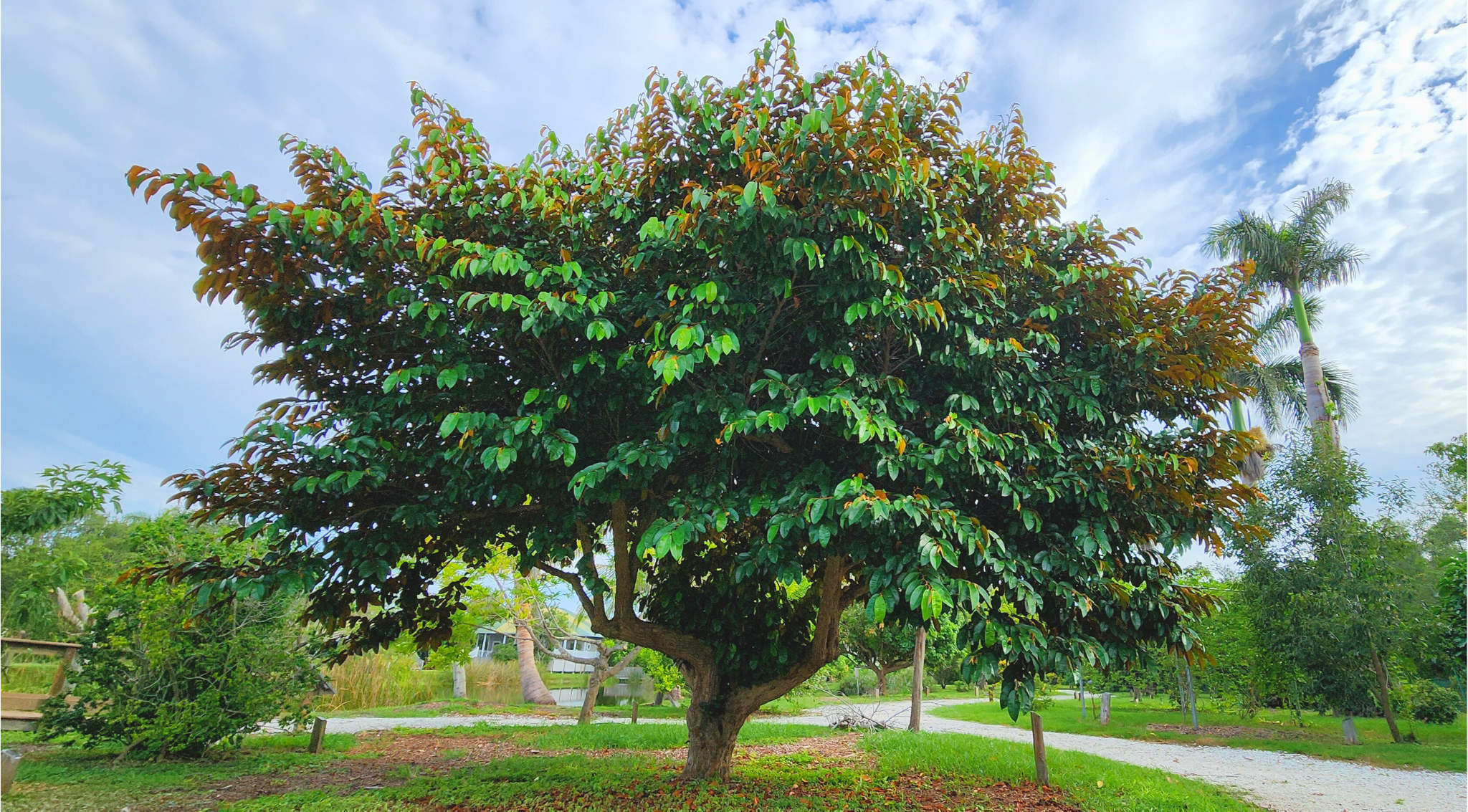
- Space to grow—they can reach 25–50 feet tall with a wide canopy. These are large trees if left unpruned annually.
Unfortunately, one major drawback in the Suncoast region is inconsistent fruit production. Like many tropical trees pushed to their hardiness limits, Caimito may drop most or all of its developing fruit if hit with a combination of windy and chilly weather during the winter and early spring. Gardeners closer to Miami or the Keys often report much better yields. So year-to-year just like Mangos, Longans, and other fruits the yields can be erratic.
Worth It? That Depends on Your Goals
While not as productive for it’s size as mango, jaboticaba, or jackfruit, Caimito still earns its place in a spacious edible landscape due to its:
- Upper tier fruit flavor
- Great ornamental value
- Ability to provide deep summer shade
- Low maintenance needs once established
If you’re short on space or hoping for a guaranteed bumper crop each year, this may not be your tree. But for those looking to diversify their food forest or showcase a rare gem of the tropics, Caimito offers a unique blend of aesthetics and edible rewards. I would definitely recommend planting this tree over “tropical” but traditional apple cultivars like “Anna” or “Dorsett”. But remember it does not taste like a traditional apple in most aspects.
Before planting, we always recommend: try the fruit first! Some local tropical fruit markets or South Florida nurseries may carry it fresh. Or the easiest way to obtain it is mail order from south Florida fruit markets. You’ll know right away whether its creamy sweetness is something you want more of—or not.
Final Thoughts for April
Star Apple may never be the poster child of Florida fruit trees, but its star quality is real for those who can provide the right conditions. As part of the Suncoast Grown & Gathered series, we invite you to explore these lesser-known edible options that bring diversity, beauty, and a sense of place to our warm-weather gardens.
Resources
- UF/IFAS on Caimito in the Home Landscape: https://edis.ifas.ufl.edu/publication/HS309
- UF/IFAS on Star Apple / Caimito Considerations: https://hort.ifas.ufl.edu/woody/Pages/chrcai/chrcai.shtml
- Growables on Star Apple / Caimito: https://www.growables.org/information/TropicalFruit/starapple.htm
During the preparation of this work, the author used ChatGPT to help build the blog post. After using this tool/service, the author reviewed and edited the content, and takes full responsibility for the content of the public
 1
1