Star anise (Illicium parviflorum), also known as Anise or Yellow Anisetree, is a low-maintenance, fragrant, native shrub that could be the perfect addition to your landscape.
Origins of the Florida Star Anise
The evergreen star anise is native to the southeastern United States and is often found naturally in moist, wooded areas such as hardwood forests and swamp edges, particularly in Florida’s central and northern regions. While it shares its name with the more widely known spice Illicium verum, Illicium parviflorum has no culinary uses. Instead, many love the plant’s distinctive and aromatic star-shaped flowers.
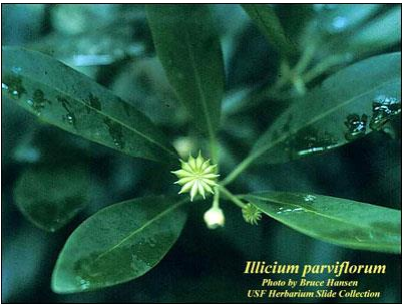
Growing Conditions and Characteristics
The star anise is an excellent choice for woodland gardens, butterfly gardens, and naturalistic landscapes. The plant thrives in USDA Hardiness Zones 7B to 10a, which is well-suited for gardeners across Florida, particularly in regions with rich, moist soils. It can grow up to 20 feet tall and 15 feet wide, though it is often maintained as a shrub with regular pruning.
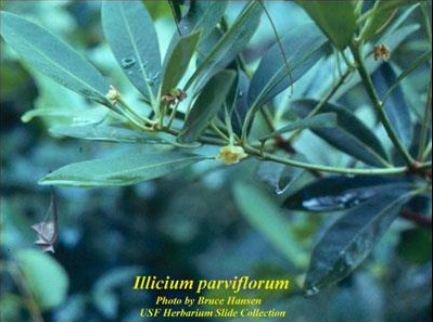
Illicium parviflorum prefers slightly acidic, well-drained, moist soils. It is tolerant of a range of soil types, including those that are slightly clayey or sandy. Once established, it is relatively drought-tolerant, pest-free, and cold-hardy. So, it only needs supplemental watering in times of drought. This shrub is a good option for shaded and partially shaded locations, so if you’re looking for an option for the landscape that does not receive full sun, consider the star anise. This plant is a good choice for various landscape purposes, including dense hedges, screens, espaliered designs, foundation plantings, border plants, or those difficult-to-fill, low-light spots in your garden.
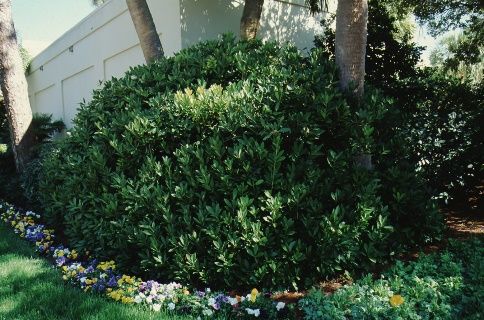
This evergreen shrub has glossy, dark green leaves that have a licorice-like fragrance when crushed. In spring, the Illicium parviflorum produces distinctive yellowish-green, star-shaped flowers that attract pollinators such as bees and butterflies. In late summer to fall, the flowers are followed by star-shaped pods filled with seeds. The plant produces small, red fruits that mature in the fall, which serve as a food source for wildlife. The star anise is an excellent choice for woodland gardens, butterfly gardens, and naturalistic landscapes.

Why Plant Native Species?
Native species typically require less water and maintenance compared to non-native plants, making them more sustainable choices for landscaping. By planting the star anise, gardeners support local wildlife and promote biodiversity. Want to know more about natives? Read our native series.
Have a question?
If you have any questions about gardening in Central Florida, please contact UF/IFAS Extension Pasco County at 352-518-0156. Supervising Authors: Dr. Whitney Elmore
Follow us!
We have several ways to connect. Visit our Facebook, Instagram, Eventbrite, Blogs, UF IFAS Extension Pasco County Master Gardeners | Dade City FL | Facebook, Florida-Friendly Facebook, & Website.
Other Blogs in the Series
- Exploring Florida’s Natives: The Prickly Pear
- Exploring Florida’s Natives: Grass Pink Orchids
- Exploring Florida’s Native Gems: Carolina Jessamine
- Exploring Florida’s Natives: The Florida Violet
More resources
- UF/IFAS Extension Pasco County
- Dr. Whitney Elmore’s Podcast: Rooted in Florida
- Illicium parviflorum Anise, Yellow Anisetree, Star Anise
- Illicium parviflorum1
- Star Anise Illicium parviflorum
- Center for Aquatic and Invasive Plants | University of Florida, IFAS
Photo credits to: Wunderlin, R. P., B. F. Hansen, A. R. Franck, and F. B. Essig. 2025. Atlas of Florida Plants (http://florida.plantatlas.usf.edu/). [S. M. Landry and K. N. Campbell (application development), USF Water Institute.] Institute for Systematic Botany, University of South Florida, Tampa.
Featured Image: Illicium parviflorum 1 by Scott Zona is licensed under CC BY-SA 2.0.
 1
1