Tomatoes are a staple in many home gardens, and for good reason. But if you’re gardening in Central Florida, you might need to tweak your approach a bit to ensure a successful harvest. Here’s a comprehensive guide to help you grow tomatoes in the Sunshine State.
Things You Should Know
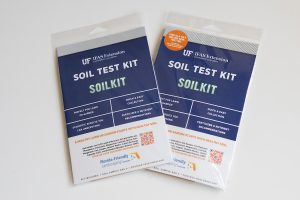
Before you dive into planting your tomato seeds or seedlings, it’s essential to assess the quality of your soil. An excellent place to start is by getting your soil tested. You can do it at home with a kit, or you can send it to the UF/IFAS soil laboratory, where inexpensive testing is available to the public.
The test measures:
- the soil’s pH, or acidity, which affects the nutrient availability to your plant.
- the nutrients in the soil.
This information is key for picking the vegetables you want to grow, adding the right fertilizer, or amending soil.
pH, Why Is It Important?
pH might not be the first thing on your mind when you think of starting a garden, but it is important for happy and healthy plants. Why is it important?
- The pH of the soil controls the availability of essential nutrients for plant growth.
- If the soil is too acidic, or conversely too alkaline, the roots will have trouble absorbing nutrients.
Most garden plants like for the pH level to be between 5.5 and 6.5 for optimal growth. Central Florida soils tend to have a high, or alkaline, pH with the soils averaging 7.0-7.4. That’s too high, or alkaline, for veggies. The soil must be adjusted, which is temporary, to lower the pH into a more acidic range of 5.5-6.5.
Adjusting pH
Amending Acidic Soil
So, how do you adjust soil pH if it’s too acidic, or below 7.0 on the pH scale?
To temporarily adjust pH, consider applications of:
- lime
- ground dolomite
This is not typical of Central Florida soils, however. The application of lime is not one that should be done routinely as is the case in gardens in northern states. Typically, the garden soils in Central Florida need to be acidified.
Amending Alkaline Soil
How do you acidify soil if your pH is too high?
Unfortunately, there’s no permanent fix for most alkaline soils. Adding organic matter will help acidify the soil, due to the decomposition process. Highly acidic options like peat or sphagnum peat moss are good amendments to lower soil pH. The addition of pine needles and oak leaves can also help to lower the soil pH for a short while, plus it’s a great way to recycle nutrients back into the environment.
Beyond those amendments, the addition of sulfur is typically the quickest and most impactful way to lower soil pH. Sulfur containing fertilizers are easy to find on the market. Simply follow the label directions for dosage and timing.
Maintaining Soil pH

Regular soil testing will help you gauge soil pH over time and keep your plants happy and healthy. Adjusting the pH is a continual process, it does not happen overnight. You can recheck your soil again in 3-6 months after you add your amendments.
In veggie gardens, adjusting the pH is as easy as applying the fertilizers and amendments. For landscape beds, turfgrass, etc., applying these amendments only temporarily changes the pH, so the best thing to do would be to use plants that can tolerate the pH of your soil.
Where To Plant
Tomatoes require:
- 4-6 hours of direct sunlight daily
- 1-2 inches of water per week
- well-draining soil
Remember the first principle of Florida-Friendly Landscaping (it applies to all types of plants and not just trees and shrubs), which is to put the right plant in the right place.
Fertilizing Tomatoes
When it is time to fertilize, opt for a controlled-release fertilizer and apply it sparingly every other week to avoid damage to the plants and polluting water resources. Something with a nutrient analysis of 6-8-8 will be beneficial. You can identify the nutrient analysis by looking for the 3 numbers on the label. These numbers give the percentage of the three main nutrients, nitrogen (N), phosphorus (P), and potassium (K), by weight. So, think N-P-K when you see these 3 numbers.
To learn more about choosing the right fertilizer, read Fertilizer Fundamentals: How to Choose the Right One – UF/IFAS Extension Pasco County (ufl.edu).
Seasonality
Planting at the right time of the year is critical, especially for tomatoes. Summer is not a veggie growing season in Central Florida. Aim to plant tomatoes between Halloween and Labor Day for a fall garden and between February 15-March 15 for a spring harvest. The disease pressure is much lower during these growing seasons when compared to the wet, humid days of summer.
Start your tomato seedlings indoors during late winter or early spring, transferring them to your outdoor garden once they reach around 8 inches in height. Ensure the soil is well-drained to prevent waterlogging, especially during periods of heavy rainfall. 
Pests and Diseases
In Central Florida’s warm and humid climate, pests and diseases can pose significant challenges to tomato plants. Plant diseases are not easily treated, so prevention is the key to having healthy tomatoes (any garden veggies, actually). Regularly inspect your plants for signs of disease, intervening promptly to prevent any widespread damage.
- Planting resistant or tolerant plant varieties can help to prevent pest problems, so purchase plants grown specially for your area.
Common issues include:
- verticillium wilt
- fusarium wilt
- nematodes
When verticillium wilt and fusarium wilt infect your garden, there is no treatment. The best thing to do is get rid of the infected plants, and do not replant where the disease is present.
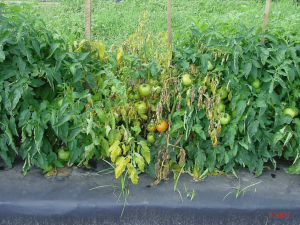
Cultural methods like proper pruning, watering efficiently, and fertilizing appropriately will keep these fungal infections at bay. Also, look for tomato varieties labeled with resistance to these pests and diseases to give your plants a fighting chance.
Choosing the Right Varieties
Speaking of varieties, selecting the right ones can make all the difference in your gardening success. Opt for varieties that:
- thrive in Florida’s climate
- are resistant to common pests and diseases
- produce desired fruit size and flavor
- match growing conditions
Indeterminate varieties, such as ‘Sweet 100’ and ‘Sun Gold’, continue to produce fruit over several months.
Determinate varieties, like ‘Amelia’ and ‘Heat Wave II’, grow to a predetermined size and produce a single crop of tomatoes. Cherry and grape tomatoes are particularly well-suited to Florida gardens, offering delicious flavor in bite-sized packages.

Are you Florida Friendly?
Putting the right plant in the right place is critically important to plant health and survival like the first principle of Florida-Friendly Landscaping teaches us. Add the words “at the right time” to that principle and you’ve got the winning recipe for veggie gardening in Florida.
Visit our page for more tips and tricks on maintaining a home garden!
More resources from UF/IFAS Pasco County:
- UF/IFAS Extension Pasco County
- UF/IFAS Extension Pasco County Community Gardens
- Dr. Whitney Elmore’s Podcast: Rooted in Florida
UF/IFAS resources:
- Florida Plant ID: Tomato
- Heirloom Tomatoes: The Good, the Bad, and the Ugly (but almost always tasty)
- Nematode Management in the Vegetable Garden
- UF/IFAS Soils Lab
- Central Florida planting calendar
From UF/IFAS Gardening Solutions
- Cherry Tomatoes
- Growing Vegetables in Containers
- Tomatillos and Husk Tomatoes
- Tomato Insect Pest Management
- Trusty Tomato Varieties
Supervising agent: Dr. Whitney Elmore.
 2
2