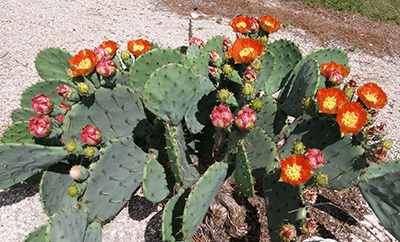
Florida has its very own native cactus, so if you’re looking for a pretty, but low maintenance plant, consider the prickly pear cactus (Opuntia humifusa). This plant adds both beauty and ecological value to your landscape. Let’s explore the origins and growing conditions of the evergreen prickly pear.
Origins of the Florida Prickly Pear
This resilient cactus is native to Florida and has a role in traditional uses—its pads (also called cladodes) and fruits (tunas) are edible when properly prepared and have been used for centuries by Indigenous communities for both food and medicinal purposes.
Growing Conditions and Characteristics
The prickly pear is suitable for USDA Hardiness Zones 4 to 10 and typically grows 1 to 2 feet tall, spreading up to 3 feet or more. So, if you’re thinking of growing one of these at home, make sure you plan for the growth.
In the wild, the prickly pear thrives in dry, sandy soils across pine flatwoods, scrublands, coastal dunes, and disturbed areas throughout the southeastern United States. It thrives in sandy, well-drained soils and full sun, and is highly drought-tolerant once established. In a garden, it can tolerate poor soil and even salty coastal conditions, making it ideal for xeriscaping. Long exposure to wet conditions could result in root rot, since the plant cannot tolerate wet conditions for long. It is also used as a natural border, since an established row can deter any passerby. It is also not known to have a particular issue with pests, making this plant a great choice for the low-maintenance gardener.
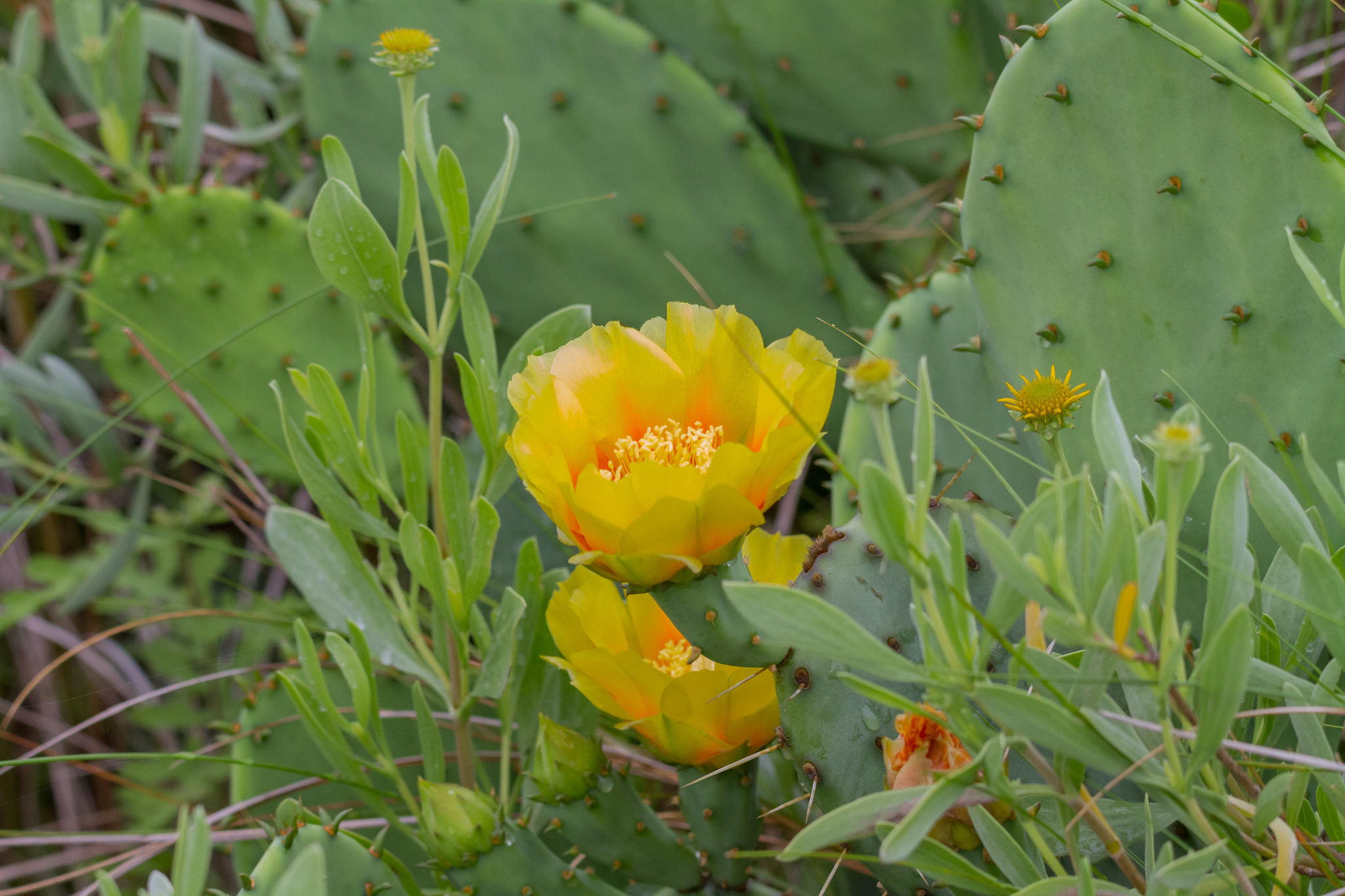
The flat, green pads of the plant are modified stems, and the small spines are modified leaves. They also have tiny, hair-like glochids, which can irritate skin. In late spring to early summer, a blooming prickly pear is a sight to behold as the large flowers range in color from orange, red, purple, yellow, and white. The plant flowers for several weeks before the blooms turn into sweet, reddish-purple fruits. The flowers are particularly important for native pollinators, and the fruit is enjoyed by gopher tortoises and other small animals.
Why Plant Native Species?
While some non-native plants may seem appealing, invasive species like Mexican petunia or sword fern can quickly overtake native habitats and threaten biodiversity. This native is in danger of extinction, so choose native plants like the prickly pear to keep it in our landscapes. Native plants like the prickly pear support local wildlife and help preserve natural ecosystems. They also require less water, fertilizer, and are more resistant to pests and diseases than many exotic species. Planting the prickly pear can create a sustainable landscape while attracting pollinators and supporting local ecosystems.
Have a question?
If you have any questions about gardening in Central Florida, please contact UF/IFAS Extension Pasco County at 352-518-0156. For more information on UF/IFAS Extension Pasco County Community Gardens, and how you can join one, visit http://sfyl.ifas.ufl.edu/pasco/. Supervising Authors: Dr. Whitney Elmore
Follow us!
We have several ways to connect. Visit our Facebook, Instagram, Eventbrite, Blogs, Florida-Friendly Facebook, & Website.
Other Blogs in the Series
- Exploring Florida’s Native Gems: The Coreopsis
- Exploring Florida’s Native Gems: Coral Honeysuckle
- Exploring Florida’s Native Gems: The Florida Maple
- Exploring Florida’s Native Gems: The Firebush
More resources
- UF/IFAS Extension Pasco County
- Dr. Whitney Elmore’s Podcast: Rooted in Florida
- Opuntia spinosisima Prickly Pear Cactus
- Opuntia spp. Prickly Pear Cactus
- Prickly Pear
Featured Image: “Opuntia humifusa” by aberkov is licensed under CC BY 4.0.
 3
3