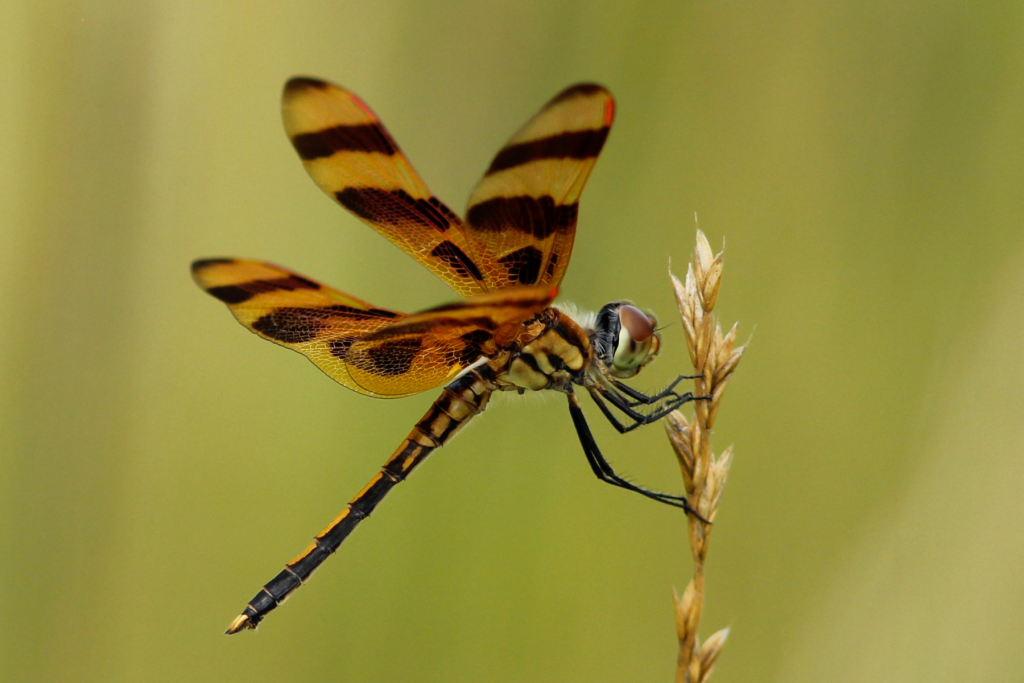
When you think of Halloween, you might picture bats swooping through the twilight or the rustle of leaves beneath a moonlit sky as an owl perches high in the trees, ready to take flight. But there’s another winged creature that fits the season perfectly — the Halloween Pennant dragonfly (Celithemis eponina).
With orange wings streaked by dark brown bands, this decorated dragonfly looks like it’s dressed for the spooky season. Its wings catch the sunlight like fluttering banners — or “pennants” — as it perches gracefully on tall grasses and wetland plants.
But the Halloween Pennant is more than beauty. It’s a symbol of balance in Florida’s wetlands and a reminder of the important role dragonflies play in healthy ecosystems.
The Ecological Role of Dragonflies
Dragonflies are ancient insects, with ancestors dating back over 300 million years. They are voracious predators, feeding on mosquitoes, midges, and flies — making them valuable natural pest managers.
Dragonflies also serve as indicators of water quality. Their nymphs spend months to years living underwater before emerging as adults, meaning that thriving dragonfly populations often signal a healthy aquatic environment. By supporting dragonflies, we help strengthen biodiversity and maintain the ecological connections between water, plants, and wildlife.
So how can you encourage more of these fascinating insects — including the Halloween Pennant — in your landscape?
The secret lies in planting for them.
Five Plants to Attract Dragonflies
Dragonflies depend on both water and plants throughout their life cycle. Aquatic vegetation provides shelter and hunting grounds for nymphs, while tall, sunlit stems offer perches for adults to rest and hunt. The following five Florida-friendly plants, are great choices to start your dragonfly-friendly landscape.
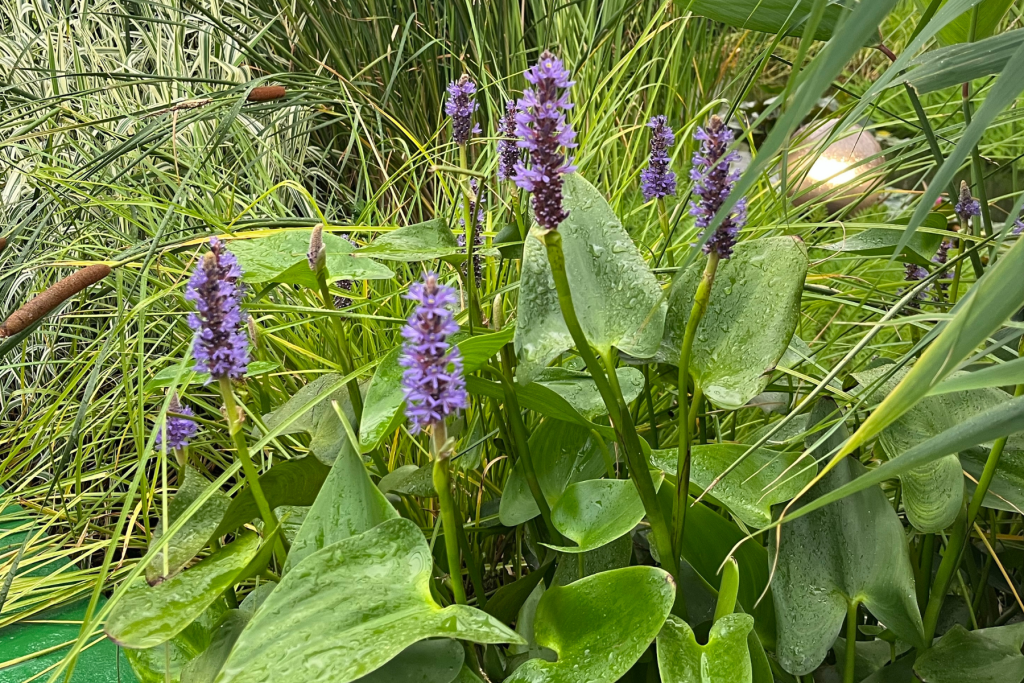
- Pickerelweed (Pontederia cordata)
This Florida native is a standout in any pond or wetland edge. Pickerelweed’s tall spikes of purple flowers attract pollinators — and dragonflies love to perch on its sturdy stems while scanning for prey. UF/IFAS notes that native aquatic plants like pickerelweed benefit wildlife and create visual appeal in water gardens.
Plant pickerelweed in shallow water or along pond margins where its roots can stay moist.
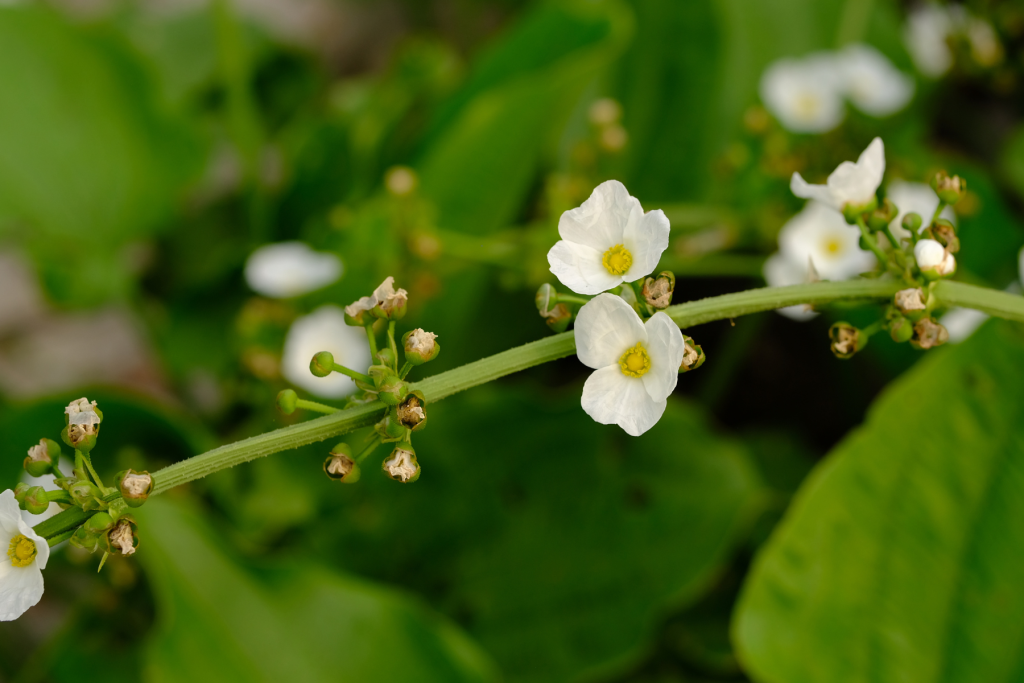
- Arrowhead (Sagittaria lancifolia)
Also known as duck potato, this native wetland plant produces elegant, arrow-shaped leaves and white flowers. Its thick stems make ideal emergence structures for dragonfly nymphs climbing out of the water to molt into adults. Arrowhead is common in Florida marshes and easy to grow in water gardens or retention ponds.
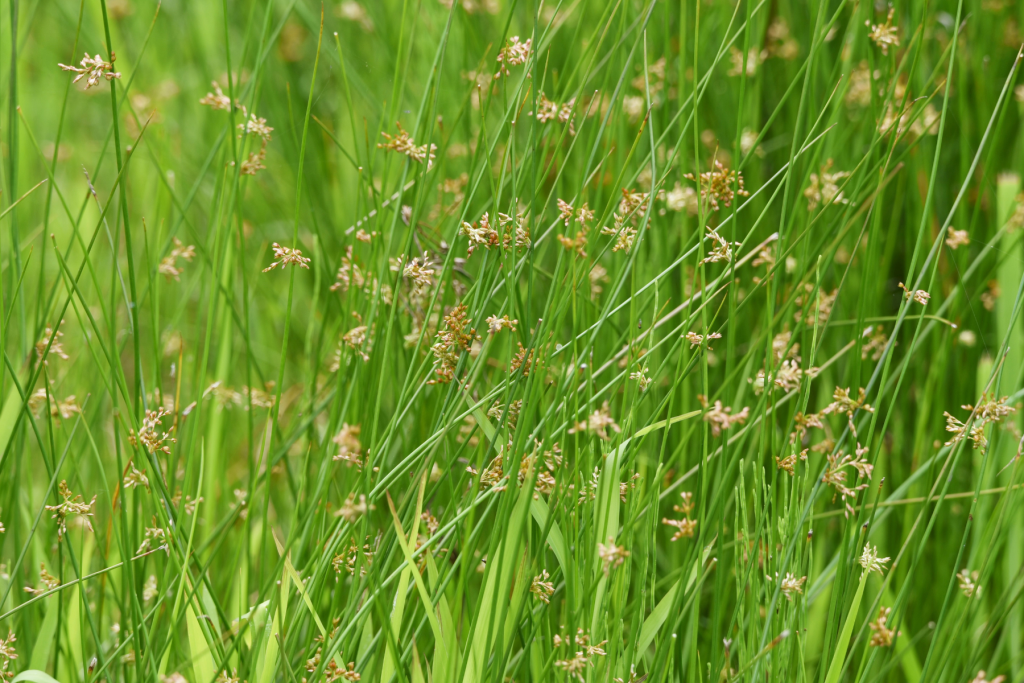
- Soft Rush (Juncus effusus)
Dragonflies seek vertical, open spaces to bask and perch — and soft rush provides just that. This slender, clumping plant grows beautifully along pond edges and bioswales. Dragonflies are attracted to a diversity of submerged, emergent, and floating plants that offer perching and emerging sites.
Soft rush also helps stabilize soil and filter runoff, making it as functional as it is beautiful.
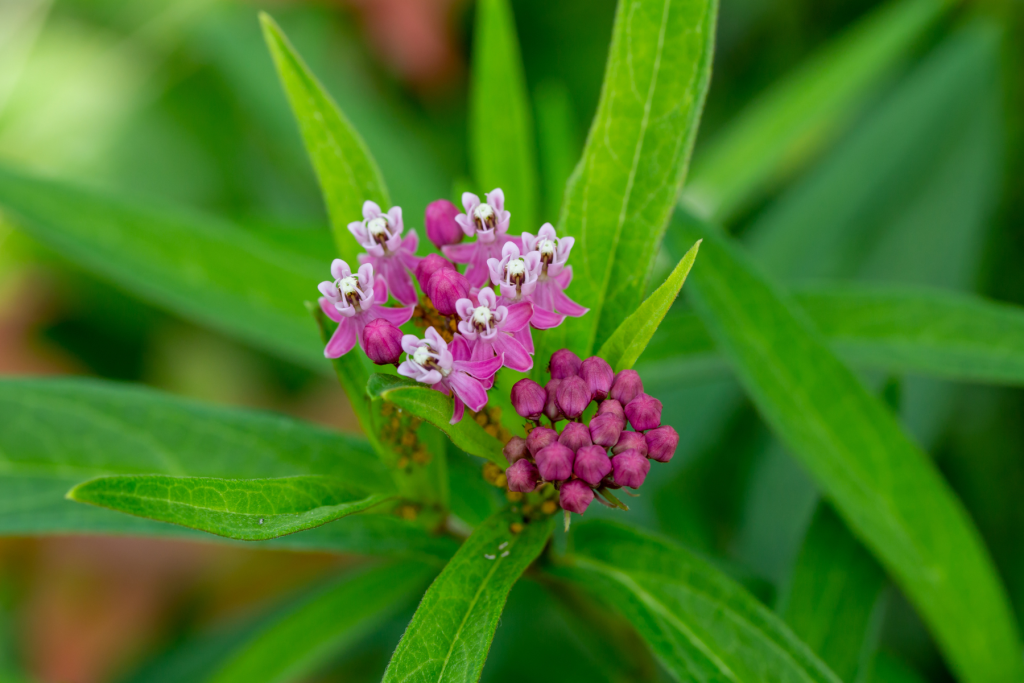
- Swamp Milkweed (Asclepias incarnata)
While dragonflies don’t feed on nectar, they’re drawn to areas alive with insect activity — and swamp milkweed’s fragrant pink blooms attract plenty of pollinators. This moist-soil native supports the food web that dragonflies depend on. As a bonus, it’s also a host plant for monarch butterflies, adding even more ecological value to your garden.
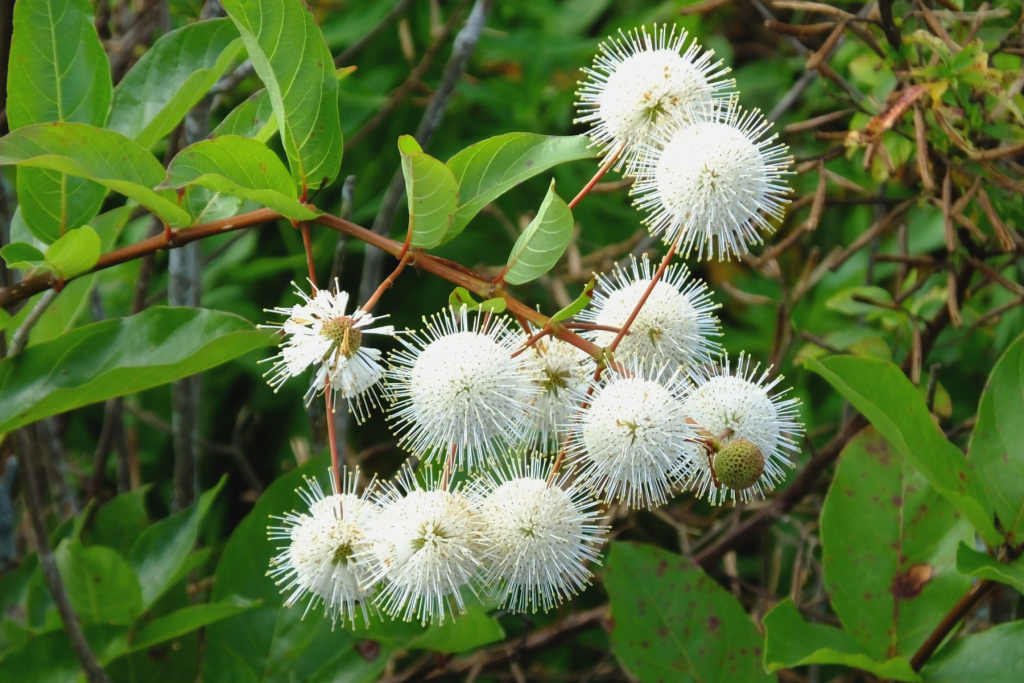
- Buttonbush (Cephalanthus occidentalis)
Buttonbush is a pollinator magnet that thrives in wet soils along ponds and waterways. Its spherical white blooms attract bees, butterflies, and other small insects — prime hunting targets for dragonflies.
Tips for a Dragonfly-Friendly Landscape
- Add a water feature. Even a small pond or rain garden can become a dragonfly nursery.
- Keep areas sunny. Dragonflies are solar-powered and need warm, open spaces to fly and hunt.
- Limit fish in ponds. Fish often eat dragonfly nymphs; wildlife ponds without predatory fish are best.
- Avoid pesticides near water. Dragonflies and their prey are sensitive to chemical drift and runoff.
- Leave perches and stems. Dead plant stalks or upright stems make excellent resting spots for adults.
 3
3