Written by Amina Cabric, 2025 undergraduate summer intern hosted by Tim Jones and Trisha Green of the Florida Department of Environmental Protection’s (FDEP) Big Bend Seagrasses Aquatic Preserve
Best of Both Worlds with BBSAP
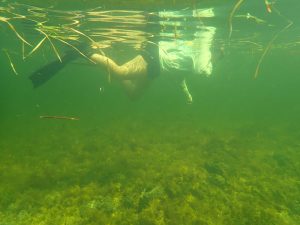
This summer I had the unique opportunity to intern with the Florida Department of Environmental Protection’s Big Bend Seagrasses Aquatic Preserve (BBSAP) based out of Crystal River. As someone deeply passionate about both marine conservation and community outreach this internship gave me the best of both worlds: hands-on field science and the chance to contribute to research that protects one of the largest and most pristine seagrass bed.
Whether exploring the shallow waters off the Homosassa River or surveying the beautiful St Martins Marsh the Big Bend region reveals itself as a vital ecological treasure. It is home to the longest stretch of contiguous seagrass in Florida and provides critical habitat for many marine species. My time with BBSAP helped me understand the importance of long-term monitoring and why preserving this unique area matters.
Diving into Data and Discovery
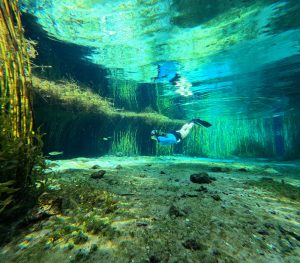
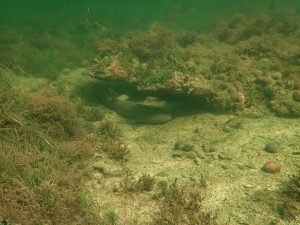
Over the course of the summer, I joined the BBSAP team in conducting seagrass surveys and hard bottom habitat assessments across the Big Bend region. We documented the presence of seagrass species and macroalgae a task that has become increasingly important in areas facing heavy stress from recent hurricanes. These field days were equal parts science and adventure offering a firsthand look at how storms are reshaping Florida’s coastal ecosystems.
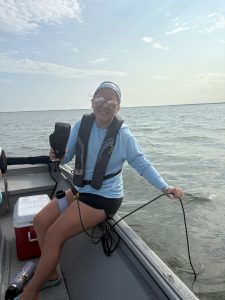
We also deployed and maintained YSI EXO multi parameter sondes which quietly collect water quality data every 15 minutes measuring temperature salinity pH and dissolved oxygen. This high frequency data helps paint a clearer picture of the environment and supports research used by scientist’s, resource managers, and the public. In addition to the sondes, I helped conduct bimonthly water quality assessments collecting hands on field samples.
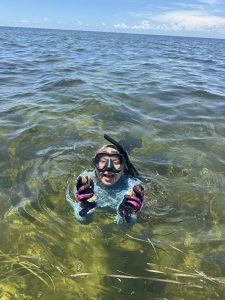
In addition to my time with BBSAP I was fortunate to shadow staff from nearby aquatic preserves including a visit to the Rainbow River. Wading through the crystal-clear waters felt like I was finally living out my mermaid dreams fins not included. Moreover, I led an independent project investigating a recent mass grazing event by sea urchins. By analyzing five months of historical data, I got to see how urchins impacted seagrass cover and the rate of regrowth following the event. This project sharpened my analytical skills and highlighted how even small grazers can drive significant ecological change.
Seagrass, Science, and a Sense of Direction
This internship did not just strengthen my technical skills in coastal monitoring it clarified my career goals. Whether it was prepping gear in the early morning light recording field data knee deep in the Gulf or learning how our efforts feed into statewide conservation policy I felt more certain than ever that I want to work at the intersection of science and sustainability. I am grateful to BBSAP and UF IFAS NCBS for giving me a deeper look into Florida’s natural systems and a place within the team working to protect them.
| Follow the link to learn more about the UF/IFAS NCBS Undergraduate Summer Internship program. Read more intern blogs here. |
Featured image credit: UF/IFAS Photo by Tyler Jones
 1
1