The Florida Keys are known for their idyllic seascapes, warm climate, and fascinating geological history. While we love these aspects of the Keys, many plants may not. If you have gardened here, you know it can be difficult. One increasing horticultural threat is the presence of saltwater in our landscapes.
Understanding Our Environment is Key to Overcoming Challenges:
The Keys are a saltwater-dominated ecosystem with minimal freshwater resources. Our land is composed of porous fossilized coral reefs and ancient sandbars, with 90% of it sitting at 5ft or less in elevation. These factors make the Keys especially susceptible to flooding from storm surges, sea-level rise, and king tides. King tides are usually highest in October, with a smaller King tide in June, and can be up to 2 feet higher than the average high tides. 2017 data from Key West shows maximum king tides of 2.6 to 2.73 feet. It is common for king tides to flood roads and yards in the Keys, sometimes called “sunny day flooding”.
According to the 2017 NOAA Technical Report, sea levels are rising at an unprecedented rate. Projections estimate a 0.3 meter (0.98 ft) rise in sea level from 2000 to 2100 in low-end, or best-case scenarios. Alternatively, worst-case scenario projections estimate a 2.5 meter (8.2 ft) rise in sea level by 2100 than in 2000. Additionally, this rate is inconsistent across coastlines; some areas will feel it more than others, the Keys included. Sea levels in the Gulf are expected to be 16-18 inches higher in 2050 than in 2020, roughly 6 inches higher than the nation’s average. Key West Harbor tide data documented a 0.87-foot rise from 1913 to 2024. While extreme events, such as king tides or storm surges, may seem like the most significant threat, it is important to remember that increased sea levels intensify these events over time.
How Does This Impact Our Horticultural Choices?
Most food crops and landscape ornamentals have little to no salt tolerance. Salty soil or water leads to dehydration, inhibited growth, and plant death. While short-term management solutions such as flushing soil with freshwater and amending soils can be used, these are often costly and time-intensive.
The most reliable approach is to adapt rather than react. You can do so by planting the right plant in the right place. Right Plant, Right Place is a key Florida Friendly Landscaping principle that focuses on achieving healthy, low-maintenance landscapes by ensuring that your plant’s needs fit their environment. In this case, this means planting salt-tolerant plants to save you the hassle and cost of mitigating salt-driven issues in the future.
Salt-tolerant plants have specific adaptations that make them resistant to salt spray or occasional inundation. It is important to note that there are varying types of salt tolerance; some plants tolerate salt spray, but not inundation, and vice versa. They are also often acclimated to infertile, alkaline, sandy soils and high winds. Many Keys native plants are salt-tolerant and aesthetically beautiful, making them ideal for landscaping.
Three Salt-Tolerant Plants for the Florida Keys:
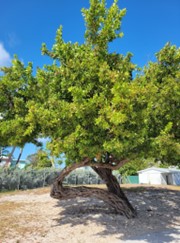
Buttonwood (Conocarpus erectus):
This hardy, low-branching evergreen tree has smooth, oval leaves, button-like, inconspicuous flowers, and deeply ridged bark. It can grow to 40 feet tall or be pruned for use as a hedge or screen.
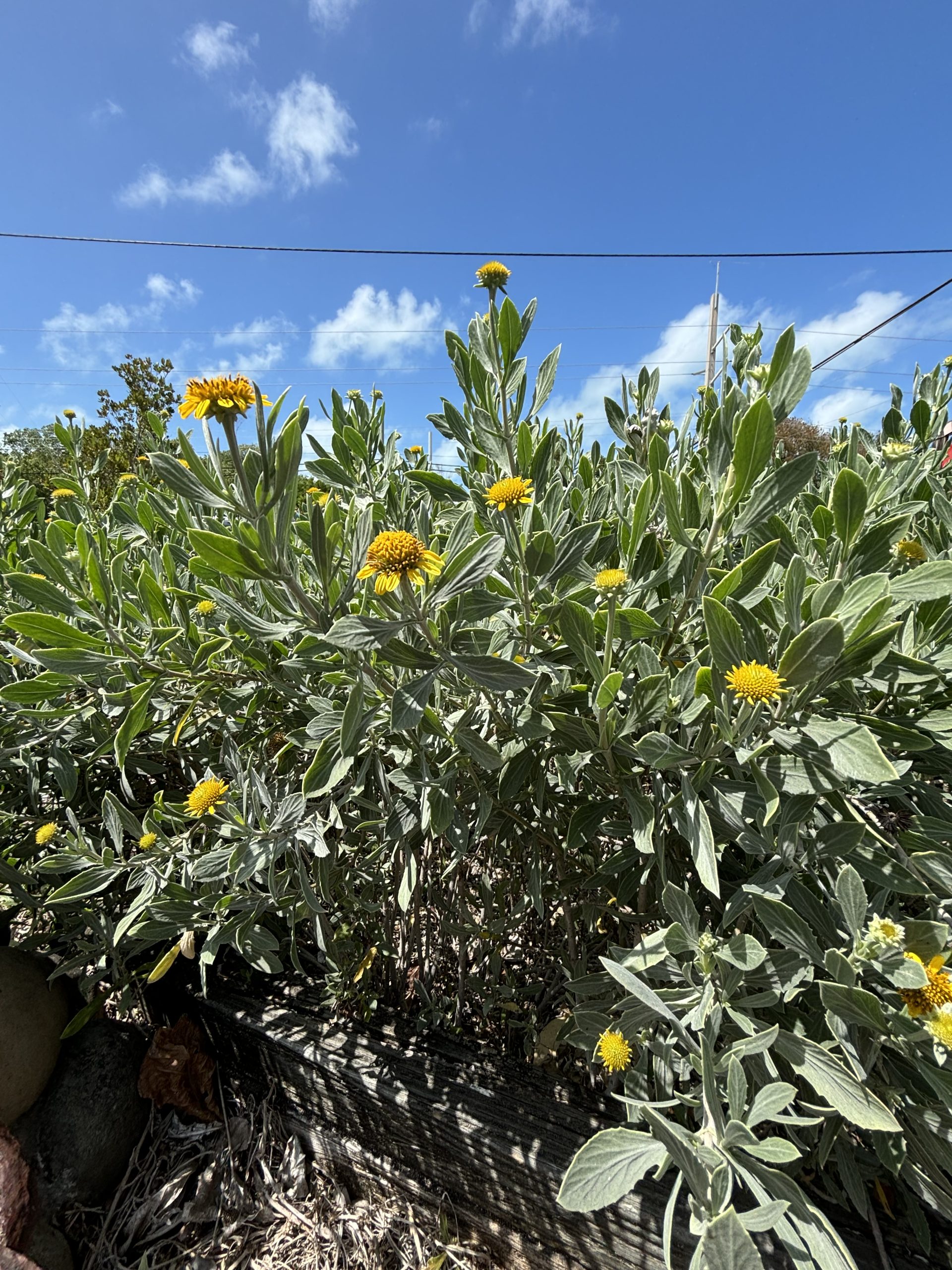
Sea-oxeye daisy (Borrichia arborescens and Borrichia frutescens):
These two species are closely related and share similar growth habits, including showy yellow flowers that attract a wide range of pollinators. However, they can be distinguished by a few key traits. B. frutescens typically grows taller than B. arborescens, and can be easily recognised by its pubescent, silver-colored foliage. In contrast, B. arborescens is easily recognized by its smooth, light green leaves and shorter height.
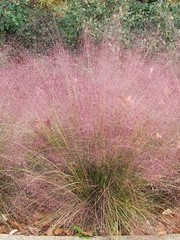
Mulhy grass (Muhlenbergia capillaris):
This tall, clumping grass boasts an impressive display of pink and purple flowers in the fall. This Idyllic landscaping plant is perfect for accents, borders, or mass plantings.
For more information on salt-tolerant landscaping and salt-tolerant edibles, check the following links:
https://gardeningsolutions.ifas.ufl.edu/design/landscaping-for-specific-sites/salt-tolerant-plants/
https://blogs.ifas.ufl.edu/pinellasco/2014/03/28/salt-tolerant-vegetable-gardening/
For more Monroe County Blogs, click here: https://blogs.ifas.ufl.edu/monroeco/
Find all of our UF-IFAS Blogs here https://blogs.ifas.ufl.edu/about/
 0
0