Tomás lives in my truck, is 28 years old, and is just as strong and as sharp as the day we met. Tomás is my favorite pair of loppers—long wood handles made of hickory, a sharp blade, and as durable as they come. My tools don’t get names until they stick around and prove their worth, and Tomás has done just that. Your tools can last decades as well, as long as you stick to a few key rules.
Buy high quality tools
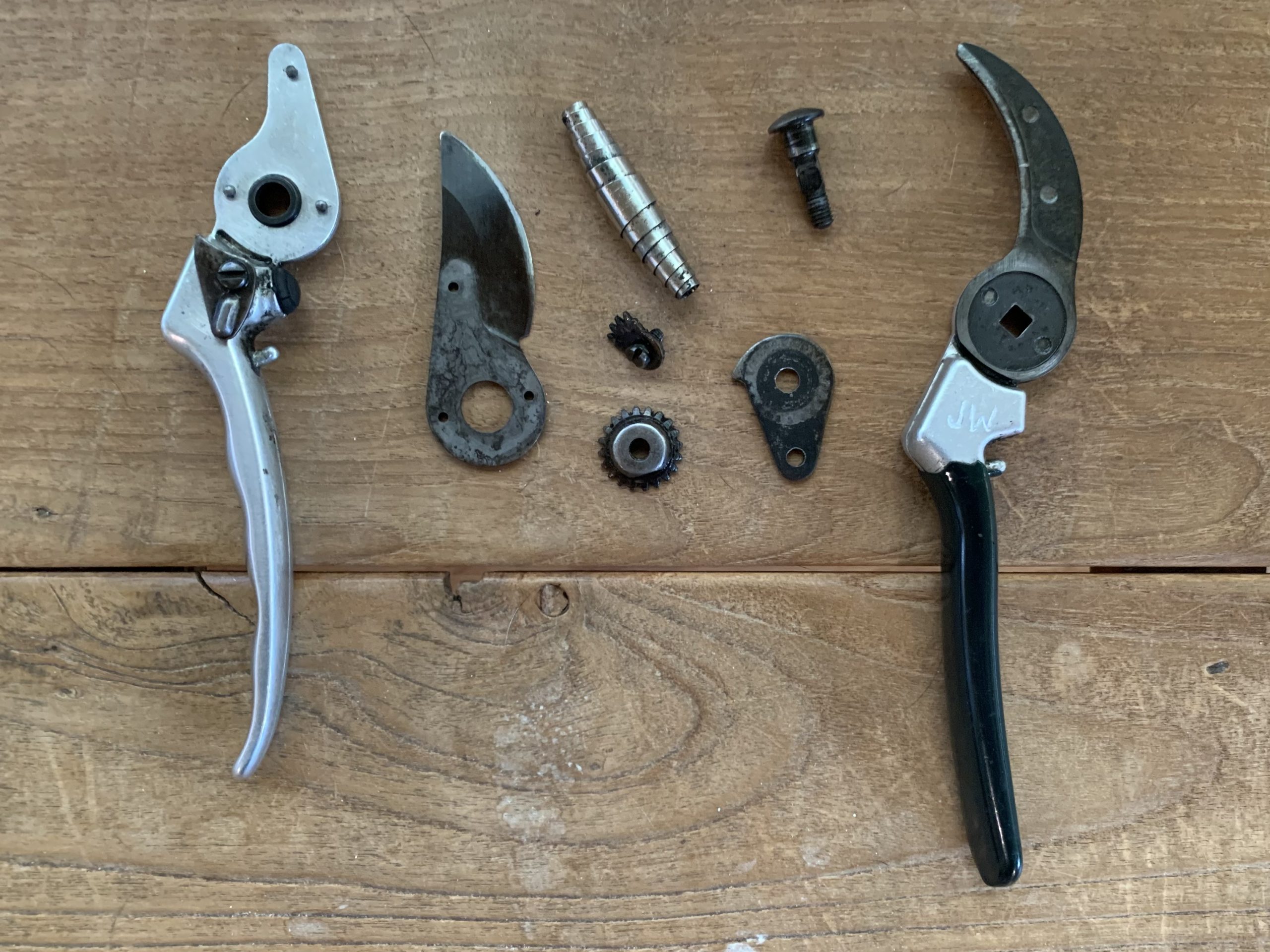
You don’t have to buy the very best tool on the market but get one that is made of durable metal with a strong fiberglass or wood handle. If the tool has moving parts like a hand pruner, make sure the tool can be taken apart, cleaned, and sharpened if applicable. If you take care of it, getting the best tool you can afford will save you money in the long run because it will last much longer than a cheaper tool.
Don’t leave your tools outside
Most yard tools are made of metal and wood that will withstand a few nights outside, but in general, you should keep them in the garage or a shed. This will add years to the life of your tools by keeping them from rusting or getting stolen.
Give your tools a quick cleaning after you use them
There is no need to keep your tools looking immaculate but giving them a quick brush or wipe will keep dirt and grime from building up. Spraying them with WD-40, white lithium, or even rubbing them down with 3-1 oil will help to keep your tools in good working order.
Use the tool for what is designed to do
We have all had the situation where the tool in our hand is not quite the best tool for the job, but rather than fetching the right tool, we adapt the tool we have to what we are doing. This can lead to breakage, damage, or bending of tools, so always use the right tool for the right job.
Keep your tools sharp
Sharpening tools requires some skill. Digging tools can be sharpened with a file. Work to restore the angle that the tool’s blade held originally by gently filing in one direction along the surface of the blade. Sharpen hand pruners and loppers using a well-oiled sharpening stone. Generally, a pruner will have a beveled edge and a flat edge. The flat edge should be passed over the stone with the entire surface of the blade touching the stone. The beveled side should be passed over the stone at an angle of about 23 degrees, which should match the original bevel of the blade. Keep passing each side over the oiled stone until the blade is sharp. Sharpening doesn’t need to be done very often, but it should be done once the blade begins to lose its edge.
If you follow these simple rules when it comes to your tools, they will reward you with years of service.
 2
2