A weed is any plant growing where you don’t want it to grow. An invasive is a weed that grows at a rapid rate, spreads easily, and crowds out desired or native plants in landscapes and natural areas.
Native plants are plants that occur in a geographical area naturally, meaning they didn’t come on a ship or a plane. Natives good, invasives bad. There are also thousands of species of plants that behave themselves that are not natives, but grow at a normal rate and do not seed themselves quickly or aggressively.
The Brazilian pepper tree is the perfect illustration of an invasive plant. It was brought to South Florida in the 1840s and marketed as Florida holly because it has bright red berries that would show up in the winter. “It will make the perfect holiday plant!”. The plant soon escaped cultivation, and was found to grow at an incredible rate. Those beautiful, bright red berries turned out to be coveted by wildlife and germinated easily which allowed the tree to spread itself far and wide. Once the tree was deemed an invasive, it was quickly renamed to the Brazilian pepper tree and Florida holly became nothing but a faint memory.
Brazilian pepper trees are just one of many invasive plants you should be on the lookout for in your garden or grove. The sooner you remove them, the better chance you have of keeping them under control.
A partial list of invasive plants to look out for in your garden or grove:
Trees
Brazilian Pepper, Schinus terebinthifolia—grows extremely fast and produces masses of red berries sought after by animals and birds. Be careful when removing Brazilian pepper, as the plant is related to poison ivy and the sap can cause dermatitis.
Melaleuca, Melaleuca quinquenervia—this tree was brought in to the U.S. from Australia to “soak up the Everglades”. It ended up doing way too good of a job of that and has taken over hundreds of thousands of acres our wetlands.
Bishopwood, Bischofia javanica—this fast-growing, hardwood tree seeds easily in to mulched areas.
Schefflera, Schefflera actinophylla—once used as an ornamental, this tree is now considered a pest.
Papaya, Carica papaya—a coveted tropical fruit, but also a ready invader of natural areas.
Vines
Possum-Grape Vine, Cissus verticillata—this vine must be completely removed from a tree as any part left behind can regrow roots and continue to be a problem.
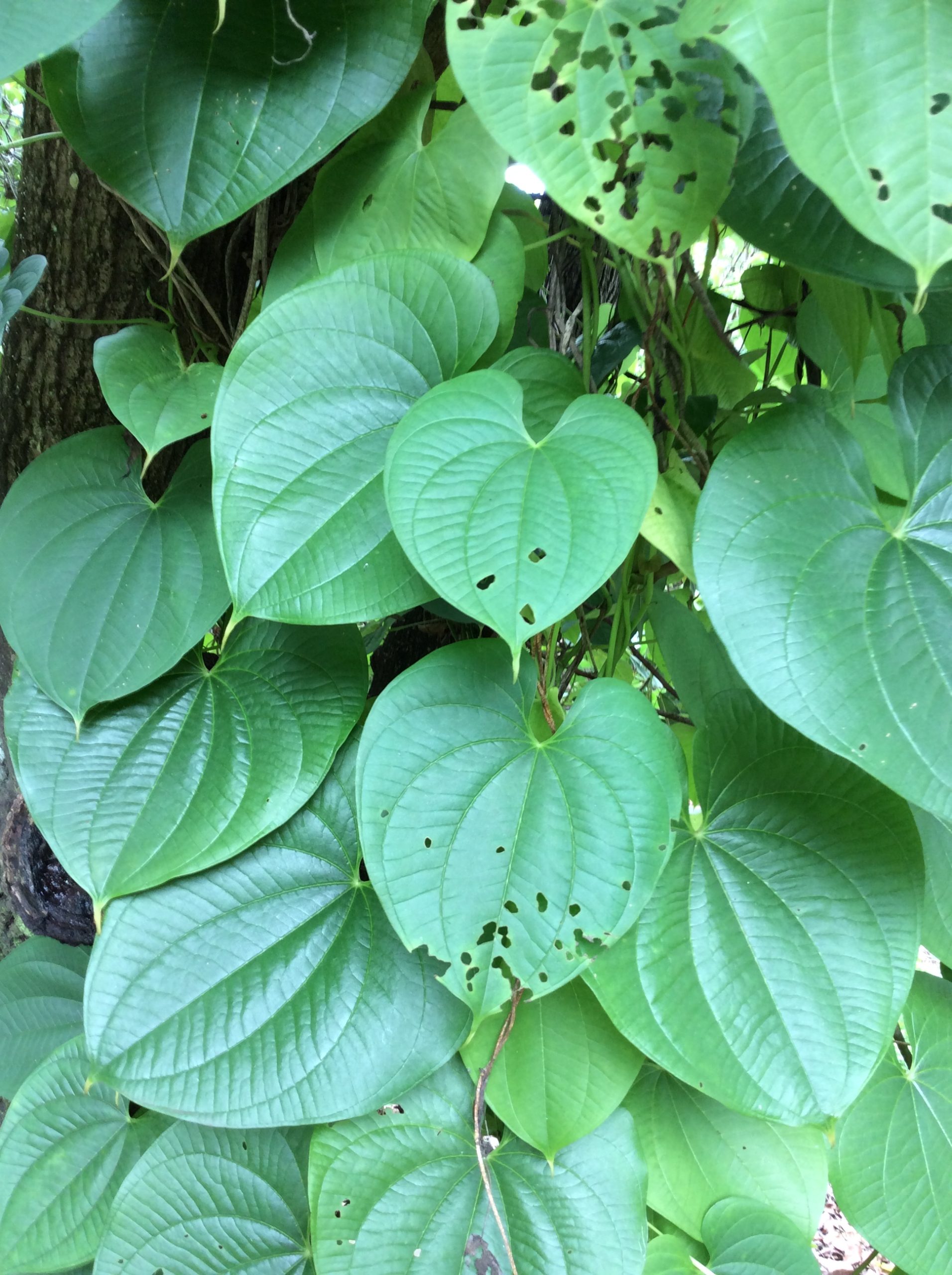
Air Potato, Dioscorea bulbifera—produces aerial tubers that make removing the vine a problem. If you don’t remove the tubers, you will not get rid of the vine.
Brazilian Jasmine, Jasminum fluminense— once this vine roots, it is very difficult to remove as it can easily regrow from parts left behind in the soil.
Rosary Pea, Abrus precatorius—the tiny red seeds are fascinating, but are also poisonous containing the deadly plant toxin, abrin. Birds are not affected by this toxin and easily disperse the seeds. Be careful if this vine is in your yard and warn your children about the danger of the seeds.
Vigilance is they key to keep these species at bay. Once you see one starting to grow, root it out. If you let these invasive plants have their way, they will overpower your garden or grove and be very difficult to remove.
 1
1