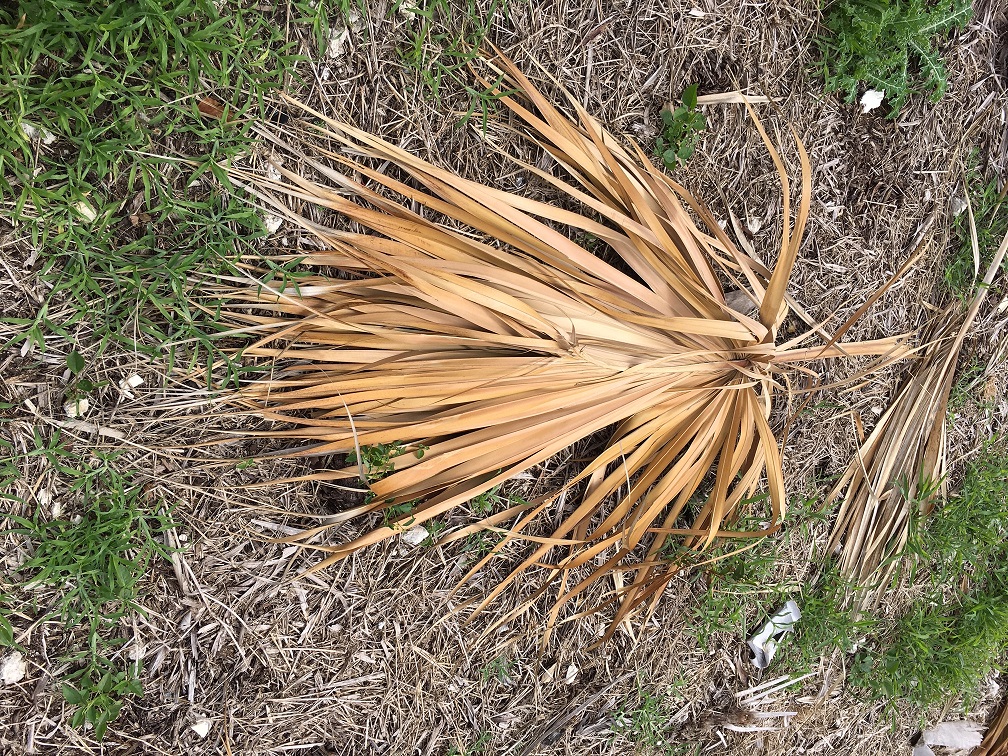
It’s difficult to believe that our state tree, Sabal palmetto, is presenting some difficulties. For me, Sabals are a bullet proof plant, until recently…
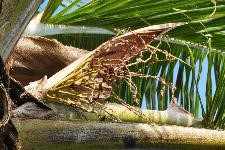
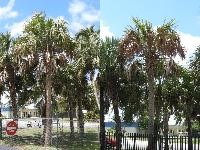
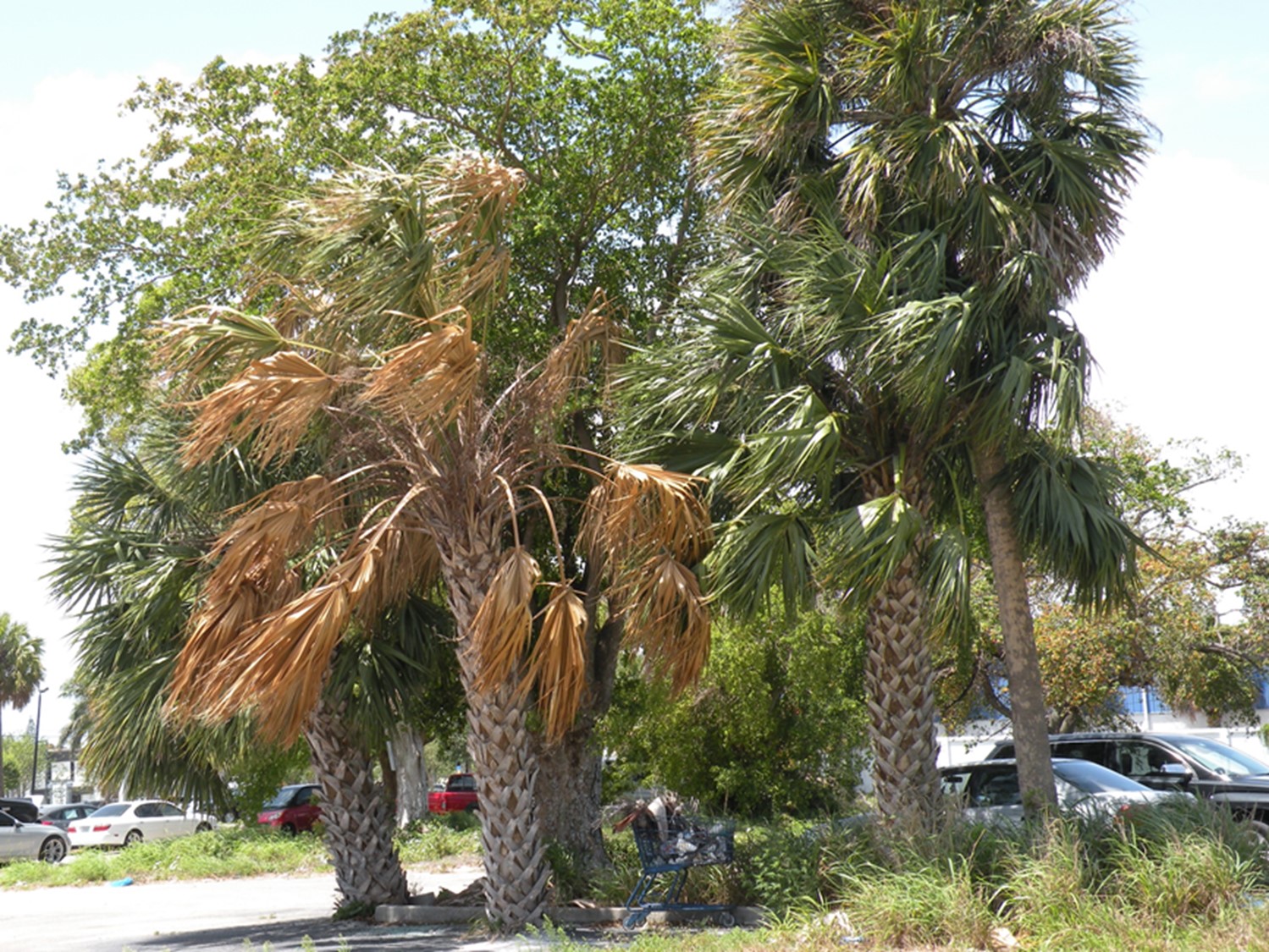
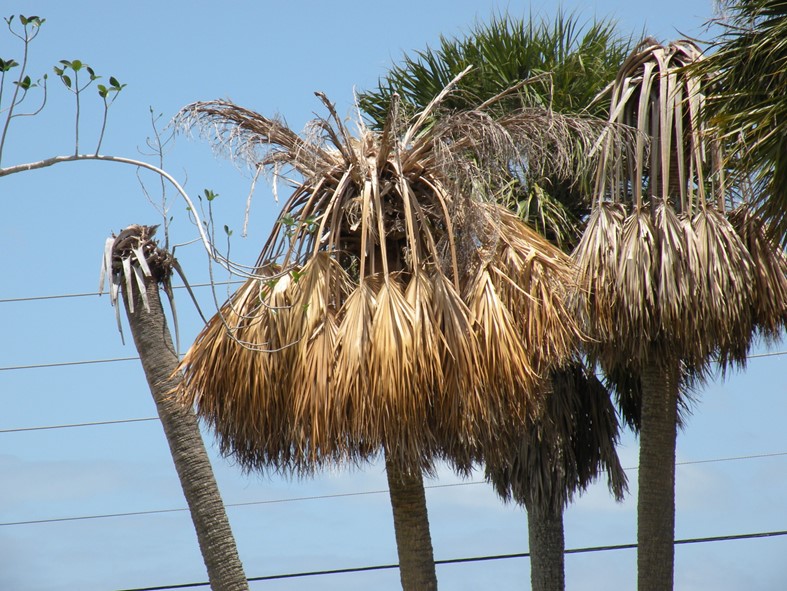
What is the culprit? Lethal bronzing disease (LBD)!
- It used to be called Texas Phoenix Palm Decline (TPPD).
- It was discovered in Florida in 2006 and is caused by a phytoplasma—a type of bacteria that lacks a cell wall and cannot be cultured with artificial media.
- The phytoplasma is similar to, but genetically distinct from the phytoplasma that causes lethal yellowing (LY) disease of palms.
- The LBD phytoplasma is limited to the phloem (sap) of the palm and cannot survive outside a plant or insect; therefore, it cannot be mechanically transmitted (e.g., by pruning tools or infected roots touching new roots).
- Once a palm shows symptoms and tests positive for the LBD phytoplasma, it should be removed immediately.
- Healthy palms near infected palms should be tested to verify that they are free of infection and injected with oxytetracycline HCl (OTC) every three to four months as a preventative for at least two years.
- For proper management early detection is key
- As of today, the list of palm host are:
| Scientific Name | Common Name |
| Adonidia merrillii | Christmas Palm |
| Bismarckia nobilis | Bismarck Palm |
| Butia capitata | Pindo Palm |
| Carpentaria acuminata | Carpentaria Palm |
| Cocos nucifera | Coconut Palm |
| Livistona chinensis | Chinese Fan Palm |
| Phoenix canariensis | Canary Island Date Palm |
| Phoenix dactylifera | Edible Date Palm |
| Phoenix roebelinii | Pygmy Date Palm |
| Phoenix sylvestris | Wild Date Palm |
| Pritchardia pacifica | Fiji Fan Palm |
| Pseudophoenix sargentii | Buccaneer Palm |
| Sabal Mexicana | Mexican Palmetto |
| Sabal palmetto | Cabbage Palm |
| Syagrus romanzoffiana | Queen Palm |
| Trachycarpus fortunei | Chinese Windmill Palm |
Note: the list may grow over time!
For more information about LBD, check the UF/IFAS publication at: https://edis.ifas.ufl.edu/pp163



 1
1