Vegetable production season brings a bounty of food for us and, unfortunately, also for crop pests. Thankfully, many naturally occurring beneficial insects, fungi, nematodes, wildlife, and other organisms (AKA beneficials) find their food forest among the multiplying crop of pests and pathogens. Farmers monitor their crops directly, or they may hire consultants to help them with this task. Scouting benefits growers by identifying the causes of crop damage and the presence of beneficials that are at work suppressing pests. An early start to scouting gives growers time to monitor and establish a solid plan to manage pests before they reach critical levels.
Start Scouting Early in the Season
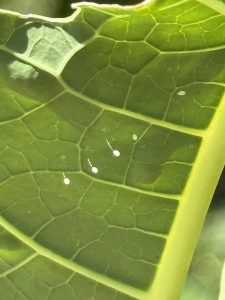
Ideally, the growing season begins with the planting of pest-free seeds and seedlings into prepared beds. In this situation, pest populations will be very low. Planting, running/repairing irrigation, applying fertilizer, and other tasks can be the focus. However, setting aside time for scouting is still important. For example, through their scouting, one grower this season found that whitefly populations were already expanding in their pre-plant seedling trays. They were able to manage the whiteflies before planting the seedlings out into their fields. Scouting efforts also confirmed the presence of other pests that were present but not yet at the stage where their damage was evident or widespread. Because they began scouting early, the grower has the breathing room to monitor the situation while developing a management plan that works for their operation. Think of scouting like your own early warning system.
Scout for Pests and Beneficials
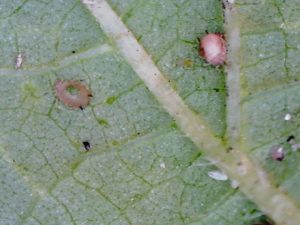
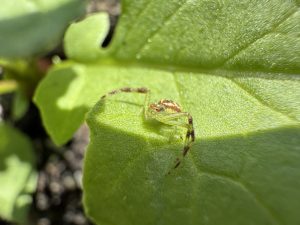
Another benefit of scouting is that growers find not only the damage-causing pests, but also the naturally occurring beneficials. While scouting recently at a local farm, we observed beneficial insects, such as lacewings, ladybugs, parasitoid wasps, and spiders. In some cases, we observed the beneficials directly: their eggs, adults, etc. For tiny parasitoid wasps, we were able to note their presence by observing the aphids they had recently parasitized, the cocoon they had emerged from, etc. In developing their plan to manage pests, the farmer observed that some pests, such as aphids, were already being effectively managed by the beneficials. For other pests where a treatment is needed, the farmer can choose an option that will not negatively impact the beneficials that are already at work. By scouting for both pests and beneficials, farmers get a complete picture of their pest management options.
Resources to ID Pests and Beneficials
Identifying pests and beneficials can be challenging, even for experienced growers. Here in Florida, new invasive pests arrive in fields on a regular basis, so there is always something new to learn. Your local University of Florida or FAMU Extension Agent can be a good resource person to assist. Extension Agents help growers in their county with periodic scouting, pest and beneficial ID, pest management, and more. We are connected with our university’s specialists and other agencies as well, so we help growers find more specialized one-on-one assistance where needed. Reach out to your local UF/IFAS or FAMU Extension Agent.
Extension Agents, growers, and the public can also access other identification resources, including the UF/IFAS Distance Diagnostic and Identification System (DDIS), the UF/IFAS Insect Identification Lab, and UF/IFAS Regional Diagnostic Labs. The faculty and staff at the labs have been invaluable in helping us assist our local growers.
Create your Own Farm Pest Management Manual
Once you have identified pests and beneficials, consider keeping a record of what you found. Think of this as building your own Farm Pest Management Manual, specific to your crops and fields. Again, while more detail can be better, each grower has to find the right balance for them at the time. Among key specifics to note are where (which crop, what part of the crop plant, etc.) and when you found the pest or beneficial, how abundant it was, what life stage it was in, steps you took to manage the pest, and how it worked out. Recordkeeping helps growers make well-informed decisions during the current and future seasons.
Often when we talk about recordkeeping, it is with some sort of paper form in mind, but many other options exist. In a market gardener discussion on Facebook, growers mentioned using things like voice memos, phone photos and notes, and spreadsheets to track production. With a local farmer here, we created a shared photo folder. As pests and beneficials are identified, the photo is labeled with the identification and the affected crop. The photo gallery serves as a recordkeeping tool that they plan to supplement with a spreadsheet. This particular grower uses an app to track other aspects of production, but pest management and scouting are not included.
Another grower here uses a whiteboard to make note of pests active in their greenhouses and fields. The board is visible to the farmer and their crew, so everyone has awareness of the pests and affected crops. The farmer then uses the whiteboard information to update their pest management plan.
The tools you use may change over time. The important thing is to start, if you haven’t already. Start scouting early, make use of available ID resources as needed, and consider keeping a season-to-season record of what you find and do.
To Learn More
“Taking Stock: the Basics of Crop Scouting” in the SARE publication, A Whole-Farm Approach to Managing Pests (pp. 14-15)
“Crop Scouting and Monitoring” and “Recordkeeping” in the UF/IFAS Vegetable Production Handbook, Chapter 4: Integrated Pest Management (pp. 3-4)
Photos were taken by Yvette Goodiel, UF/IFAS Extension Martin County
 1
1