September is National Sickle Cell Awareness Month, established by Congress to spotlight the need for research, better treatments, and support for people living with sickle cell disease (SCD). SCD is a group of inherited disorders that affect hemoglobin, the iron‑containing protein in red blood cells that carries oxygen. Normal, healthy red blood cells are round and flexible, allowing them to pass easily through blood vessels. With SCD, a mutation in the hemoglobin gene causes cells to become rigid and crescent‑shaped (“sickled”). These cells can stick to vessel walls and block blood flow, triggering severe chronic pain, increased risk of infections, and other complications. Additionally, sickled cells are very fragile. Normal red blood cells have a lifespan of 90 to 120 days, but sickled cells last only 10 to 20 days before bursting, a process called hemolysis.
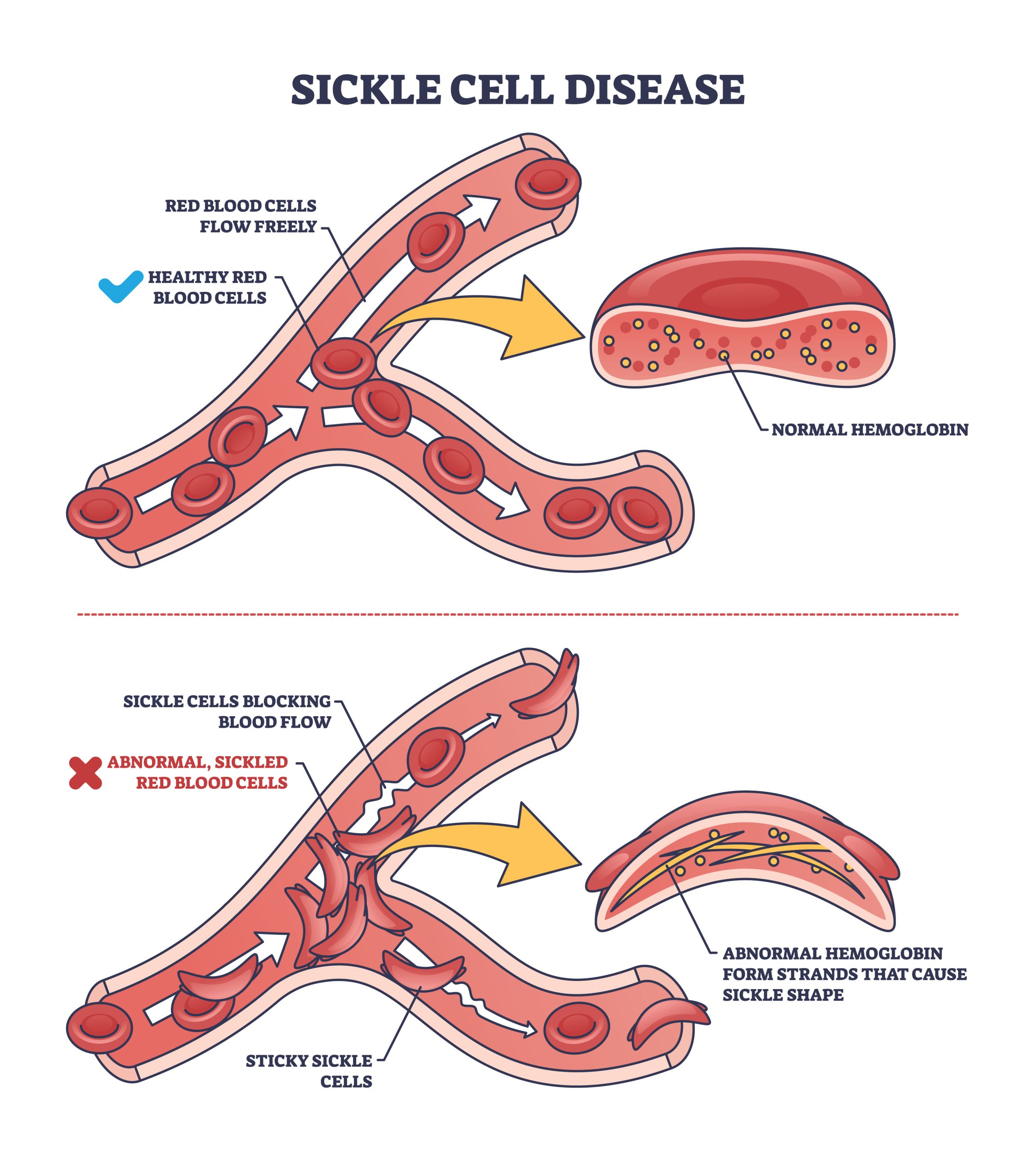
(Click to Enlarge Image)
In the United States, more than 100,000 people live with SCD and an estimated one to three million have the sickle cell trait; furthermore, about 1 in 13 Black/African American babies are born with the sickle cell trait, and roughly 1 in 365 Black/African American babies are born with SCD. While this disease is most common among people of African descent, SCD also affects Hispanics, Southwestern Asians, and South Asians. Millions worldwide live with SCD, and many more carry the sickle cell trait.
Inheritance of Sickle Cell
SCD is inherited. People with one sickle hemoglobin gene and one normal gene (HbAS) have the sickle cell trait (SCT) and typically have no symptoms; they are also called carriers. SCD occurs when a person inherits two abnormal hemoglobin genes: two sickle genes (HbSS, also called sickle cell anemia) or one sickle gene paired with another abnormal hemoglobin variant such as C, D, E, O, or beta-thalassemia. The severity of the disease varies by genotype.
When both parents have SCT, each pregnancy has a 25% chance of SCD, a 50% chance of SCT, and a 25% chance of neither. If only one parent has SCT, each pregnancy has a 50% chance of having the SCT but no chance of SCD. For those with a family history of sickle cell or from a higher‑risk population, consider speaking with a genetic counselor to understand your carrier status and reproductive options.
Sickle Cell Anemia
Sickle cell anemia (SCA) is the most severe type of SCD. However, in the United States, newborn screening detects SCD shortly after birth. Symptoms of SCA usually appear around six to nine months and can include anemia, frequent infections, vision problems, jaundice, severe pain, infant fussiness, swelling of hands and feet, and delayed growth/puberty. Additionally, SCA can cause serious, even life-threatening complications such as acute chest syndrome, pain crisis, detached retinas, priapism (painful erections), splenic sequestration, avascular necrosis, deep vein thrombosis, and stroke.
Sickle Cell and Malaria
Those with SCT have some natural protection from malaria, most likely due to the parasite growth being less efficient inside their red blood cells. However, carriers can still develop asymptomatic infections and contribute to disease transmission. In contrast, people with SCA are vulnerable to the deadly effects of malaria. Regardless of your sickle cell status, consult your healthcare provider about malaria prevention before traveling to malaria‑endemic areas.
Prevention and Treatment
Although SCD is lifelong, comprehensive care improves quality and length of life. Curative options now include stem cell (bone marrow) transplantation and, as of December 2023, two FDA‑approved gene therapies for eligible patients. Disease‑modifying medicines, early childhood vaccinations and antibiotics, blood transfusions, and preventive care can reduce complications and prolong life. Historically, individuals with sickle cell anemia rarely lived past the age of five. Today, advances in modern medicine have extended life expectancy into the fifties, though this remains significantly lower than the average life expectancy. That is why this month is important. Awareness drives action: learn your status, support blood donation and research, and stand with those affected by sickle cell disease.
 0
0