Researchers in the UF/IFAS Horticultural Sciences Department have discovered that two plant enzymes, once thought to only break down fibers, are essential for sustaining the production of β-mannans, important carbohydrate polymers that help shape plant cell walls across many plant species. By clarifying how these fibers are built and regulated inside plant cells, the findings offer new insight into materials used in food, agriculture, and plant-based products. The findings are reported in a priority report titled Golgi-Localized Mannanases Sustain Hemicellulose Biosynthesis, featured on the cover page of New Phytologist, a prominent international journal of plant science.
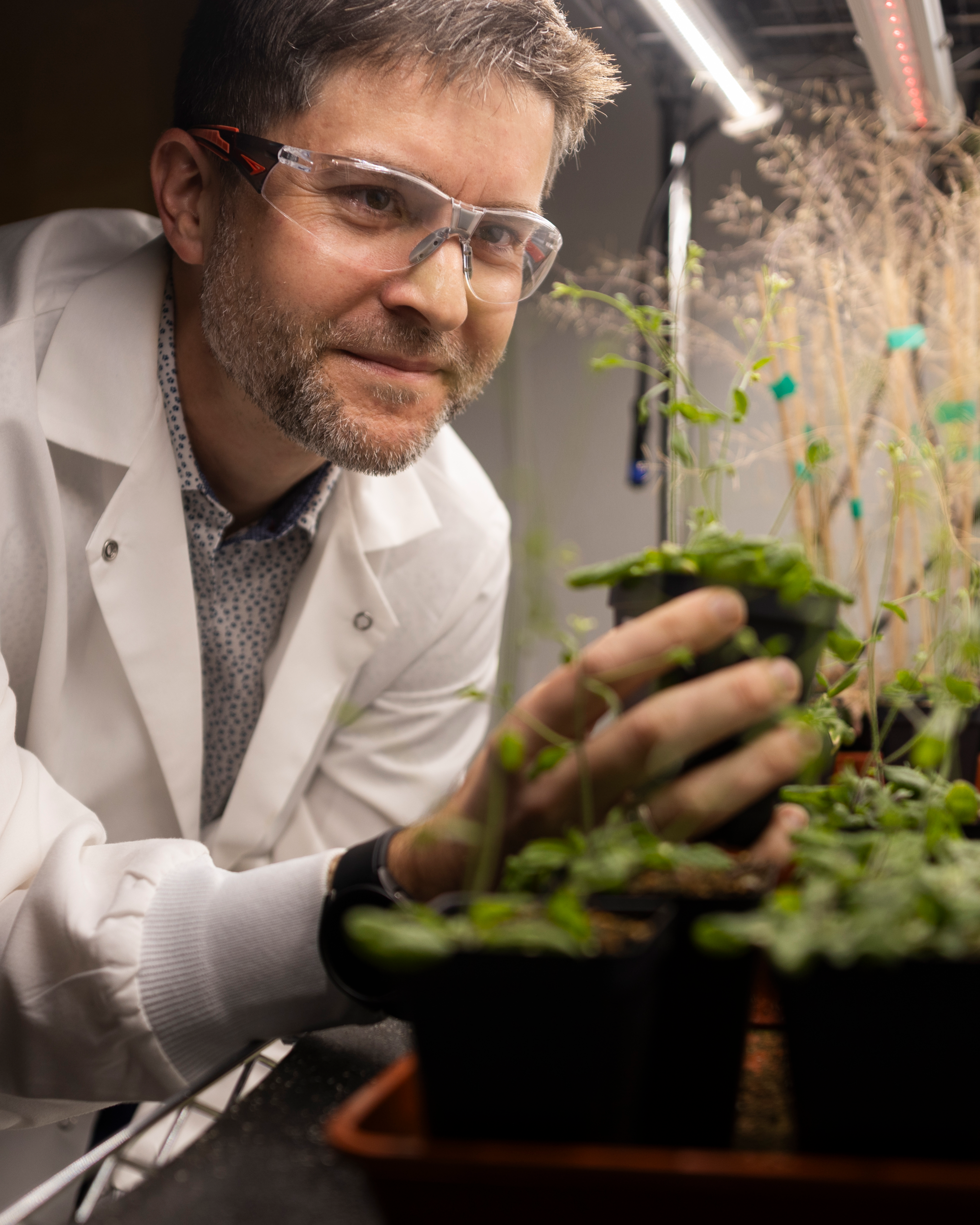
The research was led by Dr. Cătălin Voiniciuc, Associate Professor in the UF/IFAS Horticultural Sciences Department, with Talia Jacobson, a Ph.D. student in the UF Plant Molecular and Cellular Biology program, as first author. Their work provides a novel framework for understanding how plants regulate the production of complex carbohydrates inside their cells. By clarifying how mannans are maintained in a water-soluble form during synthesis, the work helps address long-standing gaps in how these fibers are built and controlled.
Mannans are hemicellulose fibers found in seeds, wood, and many crop species, including legumes such as soybean, softwood trees like pine, and seed crops, where these fibers contribute to both structure and storage. Depending on their structure, mannans can form rigid, crystalline materials (ivory nut or tagua) or water-soluble gels (locust bean gum and guar gum). These properties make them widely used as food stabilizers, dietary fibers, industrial thickeners, and functional ingredients in products ranging from baked goods to cosmetics. The U.S. Food and Drug Administration (FDA) includes glucomannan (abundant in the tuber of the elephant yam, also known as the konjac plant) alongside legume-extracted mannans to its list of plant-based dietary fibers that benefit human health.
Despite their long history of use, scientists have struggled to intentionally modify β-mannan content and structure in plants. Although the sugar-transferring enzymes that assemble these polymers have been known for years, it was unclear how plants prevent β-mannans from becoming insoluble too early during production, a process that can disrupt normal cell function.
The Voiniciuc Lab examined MAN2 and MAN5, two mannanases that were traditionally thought to function only in extracellular fiber breakdown, which is important for seed germination. However, man2 man5 double mutant plants accumulated less mannan, revealing that these hydrolytic enzymes play a critical role in sustaining biosynthesis rather than simply degrading the polymers.
Further experiments using yeast-based synthetic biology systems showed that these unusual enzymes act inside the Golgi apparatus, an organelle where most carbohydrate fibers are assembled before their shipment out of the cell. There, MAN2/5 appear to regulate polymer solubility and content as mannans are elongated, maintaining a delicate balance between growth and stability.
“These fibers are found throughout the plant kingdom, and they’re industrially used for numerous applications,” said Voiniciuc. “To control the structure of the mannans, we are excited about the potential to apply these Golgi-localized hydrolytic enzymes. We may be able to tailor mannan production and thus reduce the costly processing steps that currently occur after harvest.”
By clarifying how β-mannans are regulated during synthesis, the study helps explain why earlier efforts to increase these fibers in plants, including model organisms as well as crops, often produced unsatisfactory results and highlights the need to understand the system as a whole.
“We’ve been trying with the few enzymes that we know are required, but potentially all previous attempts to increase the yield of these polymers have faced limitations because we didn’t have these hydrolytic enzymes,” said Jacobson.
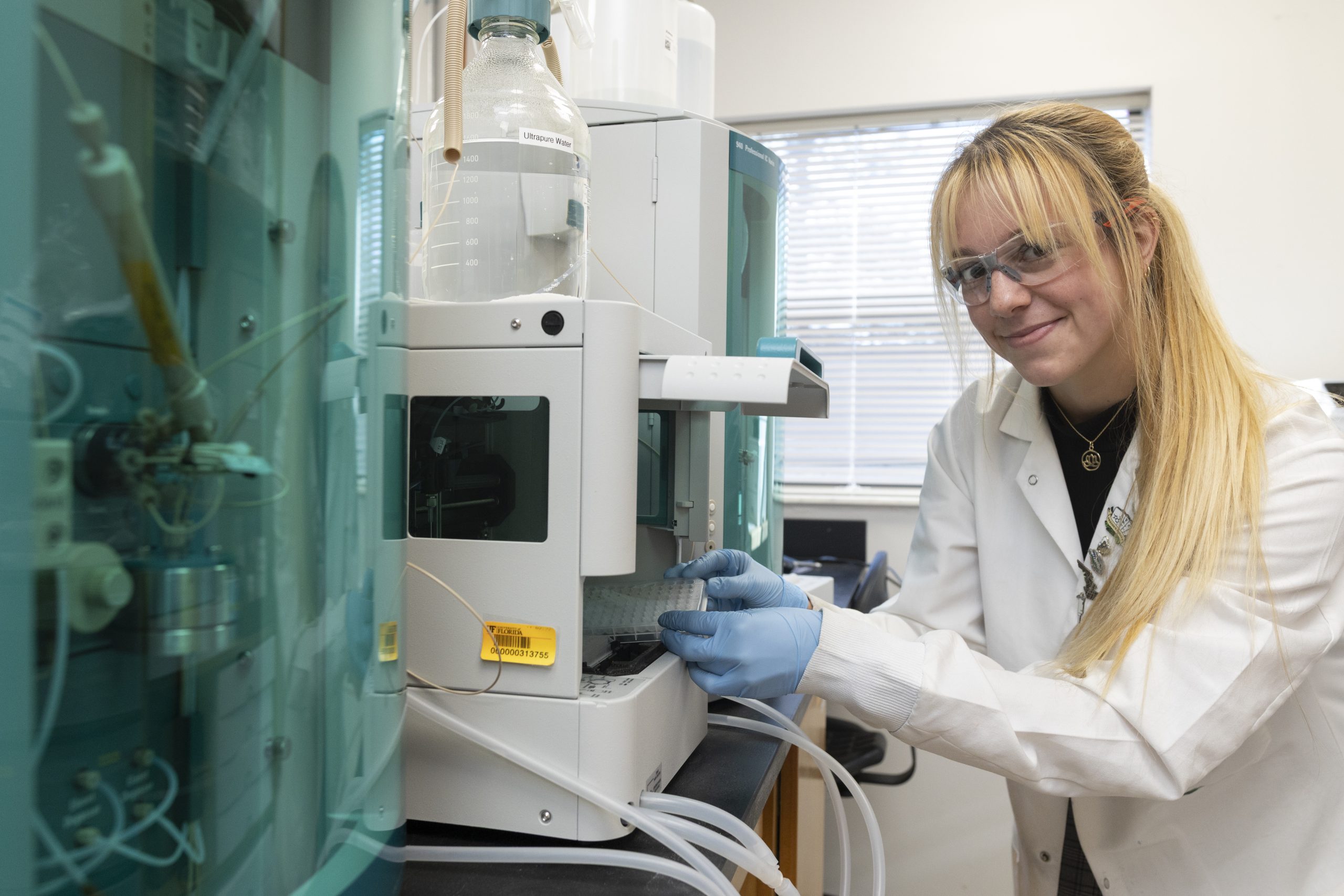
The implications extend beyond basic plant biology. In agriculture, β-mannans influence the nutritional and functional properties of seed crops such as soybean, where these fibers are abundant but difficult for livestock to digest without added enzymes. In forestry and materials science, β-mannans are a major component of softwood biomass, where controlling their structure could improve how plant material is processed into usable products. In the future, targeted changes in MAN expression or activity could be introduced in crops through genome editing to accelerate breeding efforts of agronomic and quality traits related to mannans.
“Right now, most plant hemicelluloses from agriculture and forestry are discarded as waste biomass or simply burned for energy,” Voiniciuc said. “That’s not really valorizing what’s inside those cell walls. If we can accumulate or extract just the right components without very toxic or expensive chemical processing, that opens up many more possibilities for biomanufacturing and the development of bioproducts from raw materials that are abundant in the United States.”
About New Phytologist
New Phytologist is a leading international journal focusing on high quality, original research across the broad spectrum of plant sciences, from intracellular processes through to global environmental change. The journal is owned by the New Phytologist Foundation, a not-for-profit organisation dedicated to the promotion of plant science.
About the Voiniciuc Lab
The Voiniciuc Lab (Designer Glycans), at the UF/IFAS Horticultural Sciences Department, focuses on understanding and engineering plant cell wall carbohydrates. Using synthetic biology, genome editing, and computational approaches, the lab investigates how complex glycans are built and regulated, with implications for agriculture, sustainability, and biotechnology.
 2
2