Dr. Trequan McGee, Assistant Professor or Practice and Extension Horticulture Specialist at North Carolina Agricultural and Technical State University, is an alum of UF whose career path could serve as a strong model for aspiring plant scientists.
In the following interview, he relates some key moments in his education that shaped his career, details of his current role, and his best advice for young scientists.
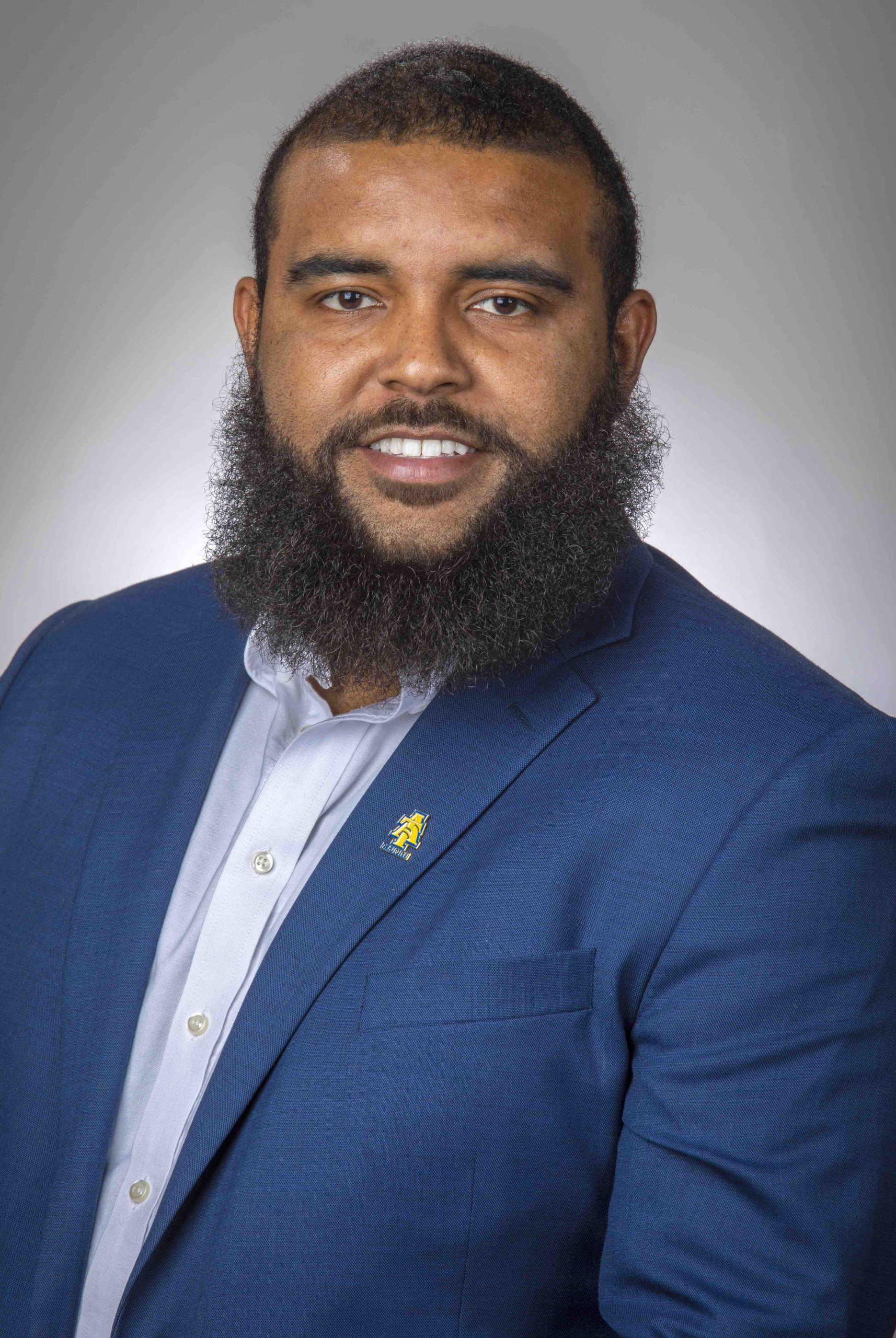
Can you share your journey into horticultural sciences and what led you to your current role?
Early Life
I was involved with plants at a pretty early age, working at home with my grandmother. I grew up in a rural area, so I used to hunt, fish, and spend time in the garden with my great grandmother a lot – those kinds of things. I went to high school and took some horticulture classes there. My ag teacher then advocated for me to go to a land grant university here in North Carolina; I was offered a scholarship and began pursuing horticulture from there. My undergraduate education was mostly focused on urban horticultural production and I spent a lot of time engaging the local community. My interest deepened through extension-based internships.
Experience at UF
I then came to UF for my master’s and Ph.D. programs in Horticultural Sciences. I first studied under Dr. Carlene Chase, working on strawberry production looking at cultural management practices to alleviate heat stress and reduce water consumption during plant establishment, while promoting earlier harvesting. I was able to see the potential impact on water usage in the state and how simple management strategies can cause significant changes in production.
I later joined Dr. Ali Sarkhosh’s lab for my Ph.D., to work on peach production. Florida is a much warmer state than other peach producing states, so the plants have longer growth periods, making pruning especially important to maintain trees for harvesting. We studied pruning techniques to improve efficiency and reduce costs for farmers. We also looked at plant growth regulators that would reduce internode distance, basically compressing the branches of the tree to keep it at a more compact shape, reducing the need for pruning. Another way that we tackled this was by removing some of the root system to restrict above-ground growth.
We also researched rootstock resistance to hurricane stresses like transient flooding. The peach industry is expanding further south, into more storm-prone areas. One of the most impactful of these stresses is flooding. We wanted to be able to recommend flood tolerant rootstocks to the farmer that could minimize the damages of powerful weather events.
Were there any specific experiences, mentors, outside of the ones that you mentioned, or courses that stood out during your time at UF?
I gained a lot of wisdom during my time in the department and consider many people role models/mentors, like Drs. Gerardo Nunez, Rebecca Darnell, José Chaparro, Danielle Treadwell, and Bruce Schaffer to name a few. They taught me a lot about the agricultural industry in Florida and the impacts of some of what we do for the growers. That was very inspirational, as far as choosing a career.
During my undergrad experience, we focused a lot on production-related basics but not physiology. So the physiology courses that we taught by Dr. Rebecca Darnell were among my favorites. These courses showed me the depth and impact of horticulture physiology. In the physiology courses we examined how flooding influences metabolic processes, and how plant growth hormones are regulated and influence crop growth. These things were directly aligned with my research and helped to expand my understanding of plant processes.
Can you describe your current role? How does it support improved cultural and production practices for growers in North Carolina?
My current role is the Assistant Professor of Practice and Extension Horticulture Specialist. I’m responsible for developing educational products and curriculum to train extension agents around the state of North Carolina about horticultural production, whether that be a cultural aspect, nutrient management, maybe even growing the environment, as in growing under high tunnel conditions for example. I develop those tools and train our extension agents, then they go out and train our farmers. We do follow up evaluations that require revisiting those farms to see how they’re adopting the production practices that we suggest. That then is put back into subsequent educational products.
That’s how I’m connected with the farmers and agriculture industry in the day to day, really, through developing those materials. Also, farmers sometimes give me or an extension agent a call, asking about issues they’re not familiar with, which can lead to recommendations or even new experiments to find solutions.
What does a typical day look like for you?
My appointment is roughly 80% extension and 20% research. As I mentioned, I spend a lot of time planning different educational events and working on curriculum development. Every day looks a little different. I might have my “event coordinator” hat on for an event or for classes with agents or farmers. Other days, I will use more time responding to issues that farmers have, by phone or email. I’m trying to identify what the goals of the program are, what we want to teach farmers, and how to deliver that information, making it as easily digestible as possible. I also serve on college and department level committees and adviser student clubs so really the typical day can vary a lot and I enjoy the diversity of responsibilities associated with my role.
How does your extension work help bridge the gap between academic research and on-the-ground agricultural practices?
My work helps to bridge that gap by making academic information approachable for farmers, and I help to filter what is most important to them. Without extension, all agricultural research would need to be reviewed by farmers directly, to skim for the information that’s most useful to them.
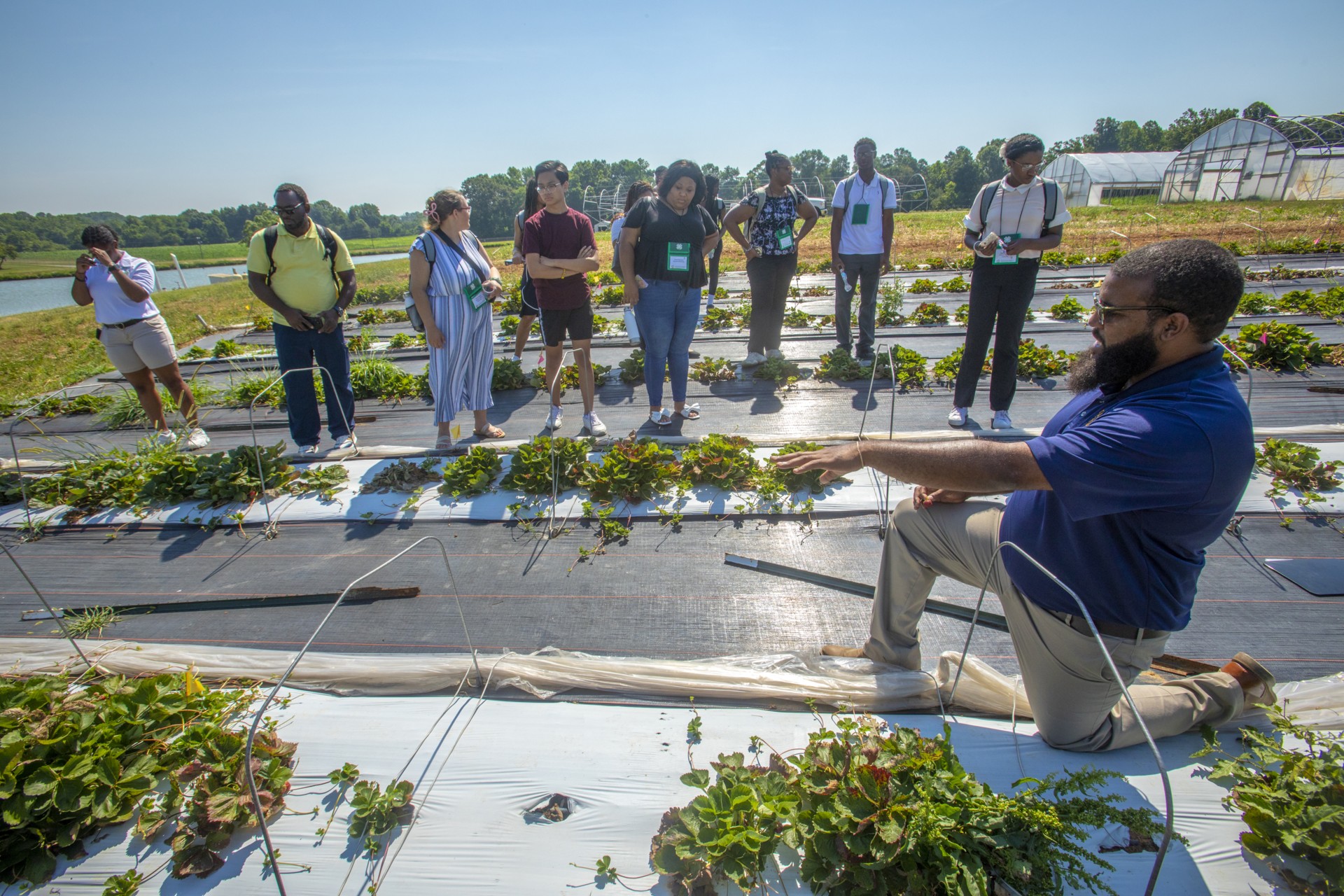
So, I scan recent updates, attend conferences, and learn about current research. I am always considering, “how does this research directly apply to our farmers?” Sometimes, this is just rephrasing an academic publication into something more easily read by farmers. This can also be more involved. For example, on our campus, we have a group that is researching ginger. They understand how, for instance, different production practices influence metabolites inside the plant, and how that might affect flavor and yield. Right now the research is being shared via conferences and peer-reviewed journal articles. I work closely with them to convert their findings into a performance based curriculum that will teach farmers how to propagate, sprout, grow, harvest, and store ginger. I also coordinate a ginger field day that showcases our research projects to keep farmers informed on what is in the pipeline.
Do you collaborate with other institutions or extension groups? Are these regional, national, or international collaborations?
I like to collaborate at all levels. I work well with the other land grant university in our state, North Carolina State. Some UF alumni and I stay informed about each other’s doings, looking for overlap in our studies and chances to work together. I also have partners in the surrounding states like South Carolina, Tennessee, Virginia, Georgia, and Florida to collaborate with on grant proposals and training. This lets us follow broader trends, like the extent of a plant disease outbreak, and to share experiences and management strategies.
Do you have any advice for current students considering a career in industry or academia?
I would say to follow your gut, trust your heart, and do what makes you happy. Getting a Ph.D. at UF made a lot of industry folks interested, because they know the quality of the program there. Salaries and benefits were competitive for industry roles, but they usually came with non-disclosure and non-compete agreements that can really hinder your scientific impact.
For me, my happiness boiled down to impact. With the private sector, what a person does may have potential to benefit the scientific community, but the primary driver is to make a profit and what better way to make a profit then by safe guarding information only you are privileged to. As a scientist your main tool is your intellect and intellectual property agreements basically restrict your intellectual freedom, which minimizes or eliminates the broader, industry-level impact of your work. At a university, most of the work done is publicly available, meaning it has a better chance to be distributed and adopted for the greater good. However, the pay and benefits are not as competitive and the local and federal government pay huge roles in the funding and climate of your work. I suggest current students consider these things when deciding where they may want to work.
Do you have any other comments or advice?
I would say, keep an open mind. A Ph.D. program can be intimidating and overwhelming, but being a scientist just means that you have a passion to learn. I don’t think you should ever get too worried about failing, because we have to fail. We have to find out what doesn’t work and what works. That process is science.
Something I noticed in people during my grad school journey was that they put a lot of their happiness into how their research was going. Not literally in the progress of the research, but in how closely it matched their intended outcomes. I don’t think, as a scientist, someone can go into a project and be stuck to projected results. It is important to be understanding of “failure” in this sense, because scientific advancement always comes with a lot of failure. It can be a valuable teacher. So, if you have a passion and thirst for knowledge, I say go for it, because It’s great to be a Florida Gator!
Interview conducted by Eva Sailly, Communications Specialist, UF/IFAS Horticultural Sciences Department
 5
5