Introduction
I am fascinated by the origins of our food. It’s a little absurd to imagine our distant progenitors, searching for food by trying every random plant and mushroom. It’s harder still to imagine the investment across generations needed to make plants like corn and wheat productive enough to become a staple, or to learn and pass on the origins of techniques like irrigation and fertilizing. My Michigander childhood was full of weekend camping trips and summer afternoon fishing with my dad and sister, and he taught us a bit of local foraging, a small nod to this history.
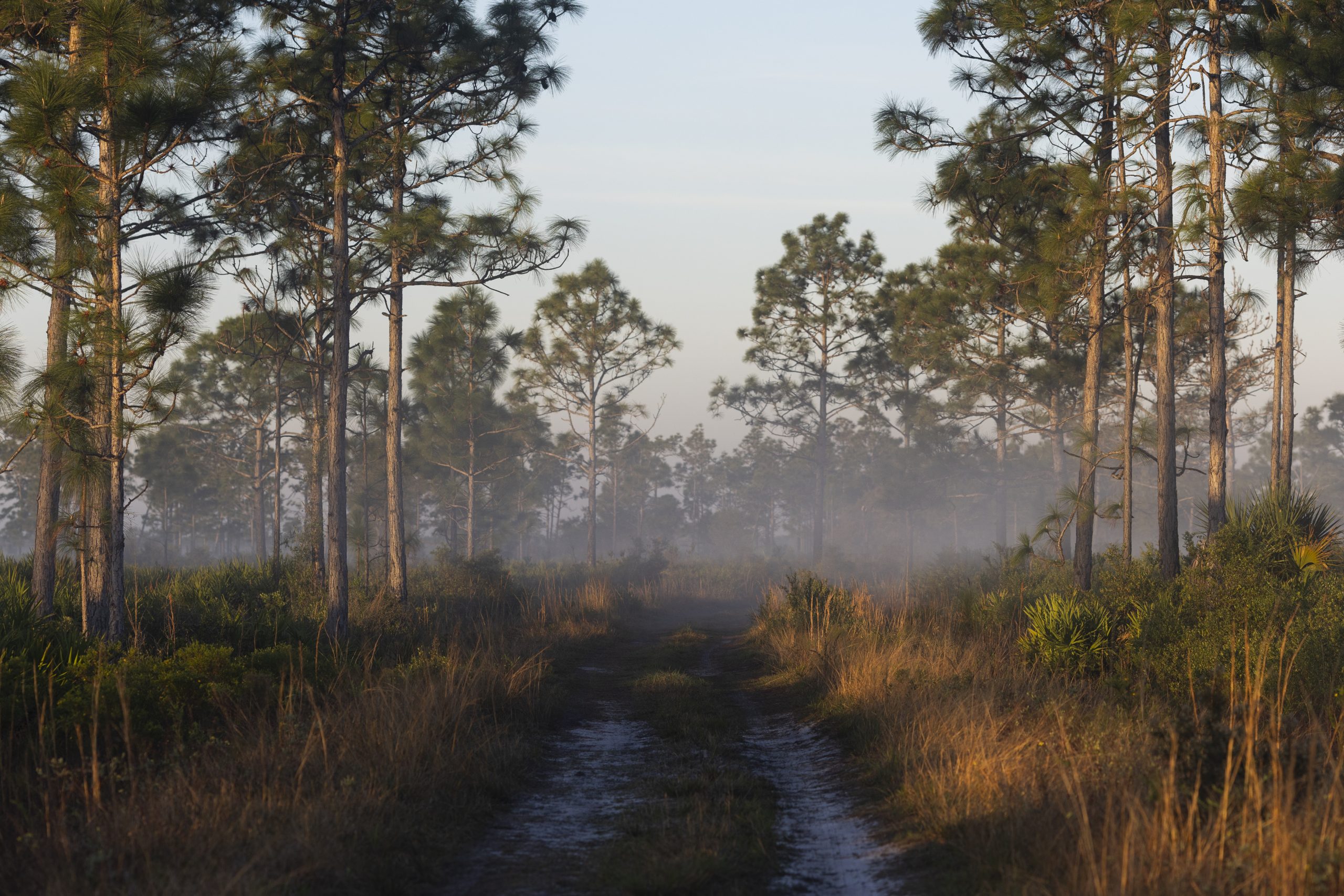
Driving through Florida sometimes makes me nostalgic. The sandy scrubland around Gainesville is somewhat like my dad’s favorite camping region near Grayling, MI, where fire-adapted pine dominates and low shrubs quickly fill the undergrowth after burning. My partner and I recently took our dog to Longleaf Flatwood Preserve, and the scorched bark and vibrant new greenery was enough to get me digging in the undergrowth. Just like when I was a kid, it was easy to find berries and mushrooms that were so close to what I remembered. We took some photos home to research, and to read up on what else we might find. I was impressed by the variety of forage-worthy plants in Florida, many of which are closely related to modern cultivars or taken directly from wild sources for gardens.
ELDERBERRY
Elderberries are native to nearly all the Eastern continental United States. You can find wild plants in edge habitats, along waterways and roadsides, in open forests and old fields. They grow quickly and spread well from suckers, or root offshoots. Plants can grow into large bushes, as much as 12 feet tall and 10 feet wide. They make beautiful, large, dense clusters of small, white flowers that develop into tart, earthy, lightly sweet, and dark berries, somewhat comparable to blueberry or blackberry in taste. In most of the United States, the plants are deciduous; they may retain their leaves and continue to flower year-round in Southern Florida. In North and Central Florida, berries ripen between July and September.
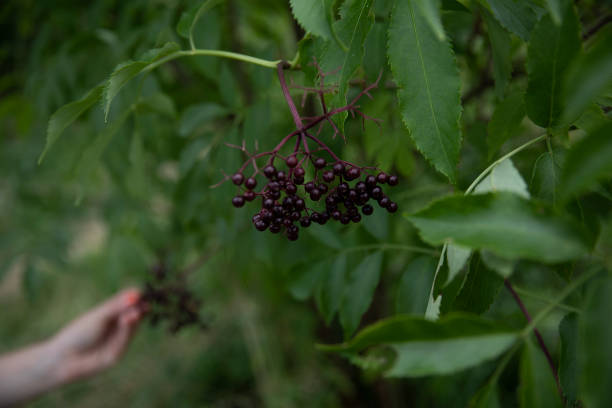
Large-scale cultivation is much more common in Europe than in the US, although public interest has increased for elderberries here, along with other produce with high nutritive values. There are several sources for American elderberry, including home selections, cultivars from a few breeding programs, and some recent commercially produced strains, including ornamentals. Cultivation from cuttings is easy, as hardwood stems root well and quickly. Many prefer this method of propagation, as these cuttings are clones and copy the exact traits of the original plant, where seedlings may inherit unknown traits from cross pollination.
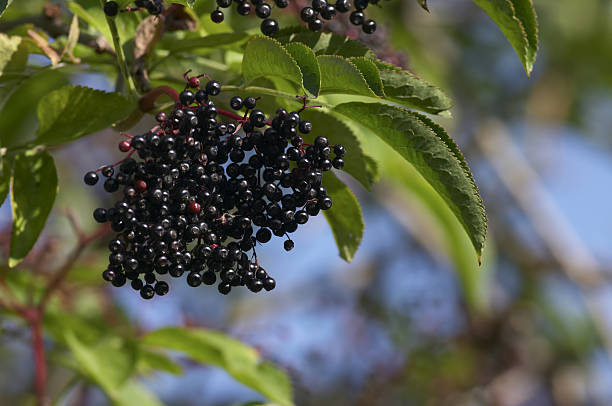
I admittedly have little experience with elderberries in the wild. There are some superficially similar plants that are toxic, so careful identification is especially important for novices. My dad took us around most of the Lower Peninsula on foraging trips but focused on other fruits. I have had them in “trendy” cocktails and desserts, but nothing from wild sources. My partner is even less experienced with them. Since their fruiting season is beginning now, I plan to make them a part of my next state park hiking trip.
BLUEBERRY
There are 8 Florida-native blueberry species. Collectively, these have a very wide growing season, from May to August, across North and Central Florida. Their range is most limited by chill hour requirements for proper fruiting. They also have some limitations in location, needing slightly acidic soil. These native plants also prefer sandy, well-drained soil and full sun, but will tolerate light shade as well. Near campus, the most common types are fire adapted, growing in dense colonies in the undergrowth of pine scrublands.
When we visited the Reserve, we found the area stuffed full of shiny blueberry shrubs. The plants in the park were quite small, with most being less than 2’ tall and with almost no spread. We didn’t see many flowers, but there were tiny green fruits on many plants. When we found ripe berries, they shared the powdery film of commercial fruits but were very small in comparison. We also noted that the berries were not as densely packed together on the stems as we’ve seen from cultivated varieties. However, they were sweet and intensely flavorful, more so on average than commercial fruits.
Shiny blueberries (Vaccinium myrsinites) share many traits with what we picked growing up. They both have low bush growth and small berries and grow in sandy soil with sparse undergrowth otherwise. Texturally, they are quite different, will a strong mealy quality in the Michigan fruits I remember, and a crunchier seed in Forida’s. This may be a recency bias, but both wild and cultivated Florida blueberries seem to have better aromatics and flavors.
BEAUTYBERRY
Where elderberries and blueberries extend from Michigan to Florida and beyond, beautyberry is limited to the Southeastern US. This mint-related shrub grows up to 8’ tall and 8’ wide, with long, arching branches. The branches have regular sets of fuzzy, veiny leaves which sit opposite each other. The plant flowers from where the leaves connect to the stem, in white, tan, or pink coloration. Like many plants in the mint family, this plant propagates relatively easily from cuttings, survives well in a range of soil types, and produces aromatic compounds. Traditional uses for this plant include rubbing the leaves on a person’s skin or under animal harnesses to repel insects. These aromatic compounds are being studied to confirm this use.
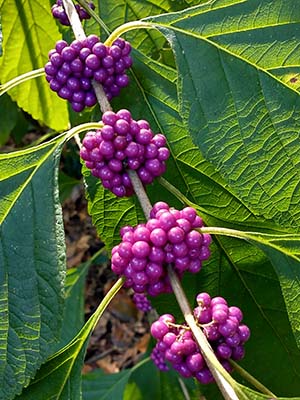
The name shows their best characteristic, bright, lustrous, purple berries in clusters directly around the base of their leaves. These berries are edible, but bland and astringent; animals do not seek them early in their season when other options are available. This means the beautiful fruit is visible in the landscape much longer than others, making them good ornamentals. While many do not like the berries raw, they supposedly make excellent jams and wines.
Almost every walking trail, state park, and city greenspace with untouched undergrowth has these plants. My partner and I see new green berries every time we go out, a couple of weeks from ripe. Even so, we are planning a weekend just to visit local parks and pick what we can. We’re excited to connect a little more directly with nature in our new home.
Conclusion
My dad wasn’t clear about what he wanted me to learn on our random weekend trips across Michigan. Picking blueberries while camping or blackberries while fishing weren’t treated as major events or life lessons. But now, I see them as lessons in taking advantage of what is available locally and being smart about timing and planning. They were also about finding joy and adventure close to home and the self-motivation to pursue them. Re-finding foraging has let me relive some part of those trips. Learning about native Florida plants has given me a chance to share that with my partner in a new context. I can also see how close to modern agriculture these native sources are, and how we still heavily rely on the history of foraging for today’s food needs.
 4
4