Introduction:
My name is Melanie Cabrera, and I’m in the Plant Breeding Ph.D. program here at UF. I’m originally from Cuba, but I moved to the South Florida area about 10 years ago.
I call myself a collector of hobbies. I have way too many interests and not enough time; I’m always curious about how things work. I’ve been really into gardening. I’ve grown all kinds of hot peppers and have been experimenting with making hot sauces and chili oils. I also love baking and cooking—especially inviting friends over to feed them.
Recently, I bought a giant bag of whole wheat and a grinder and started exploring baking with whole wheat flour because it’s more nutritious than bleached flour. I’ve made bread, pizza, pasta, and even Belgian waffles. Next to the farm where we grow broccoli, there’s a local dairy farm that sells raw milk. I started bringing some home, learning how to pasteurize it, make butter and yogurt, and use the whey for pancakes or bread—it’s fun. I think having hobbies outside of work is essential for my mental health and helps me stay balanced and passionate.
Academics and Research Focus:
When I entered UF as a freshman in 2019, I didn’t even start in plant science. I was a pre-med student because I liked science and did medical-related research at the Institute of Aging and volunteered in the ER. I was really involved in the pre-med world, but I quickly realized that my passion for science wasn’t a passion for medicine.
I’d say my biggest fascination with plant sciences is understanding how plants are truly at the center of everything—they’re vital for life on Earth. If you think about it, we are so interconnected with plants: from the air we breathe to the food we eat, the clothes we wear, the ecosystems we live in, and even animals—everything depends on plants. That interconnectedness is really fascinating to me.
I switched majors, connected with an advisor, and started doing research in the Plant Molecular Biology Lab. Eventually, I connected with professors and even had a mentor through Corteva via a program that connects students with industry professionals. They suggested I connect with Charlie Messina, who had just moved from there to UF. We immediately started working on an undergrad project in broccoli.
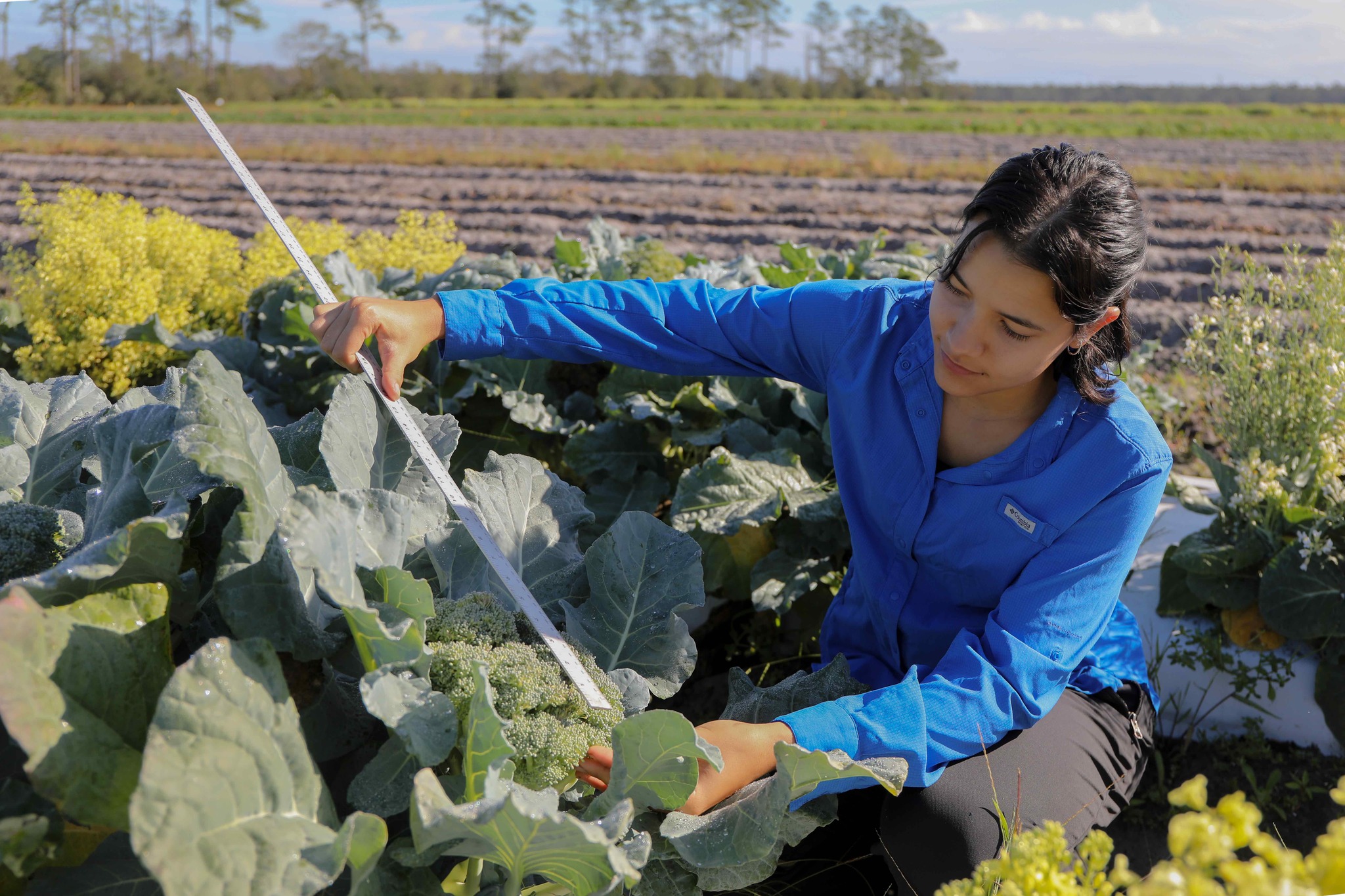
I graduated in the spring of 2023 and transitioned to the Ph.D. program that fall. I saw the project’s potential to benefit both farmers and consumers and became passionate about it. The focus of my research is broccoli breeding for high-temperature environments—so, tropical and subtropical areas. That would include places like Florida and certain parts of Southeast Asia, and Central and South America.
Experience in the UF/IFAS Plant Breeding Program:
I think what makes the plant breeding program at UF really special is the collaboration across various research centers and departments throughout Florida. The faculty works on different crops and different aspects of plant breeding, and this diversity fosters interdisciplinary collaboration, which can spark more innovative ideas. The fact that research centers are geographically distributed throughout Florida is also critical because different crops have specific environmental needs.
This setup allows us to stay connected to our stakeholders—farmers. Being physically closer means we can visit farms, build relationships, and truly understand their needs. My research, for instance, is conducted at the Hastings Extension Center, because the area has many commercial broccoli growers. I think UF has generally built strong relationships with farmers, especially through extension offices. There’s a lot of outreach and dialogue—asking what their problems are, what new issues they see. That keeps our research practical and applied, which I think is really special.
Student Leadership and Involvement:
My biggest involvement outside of my curricular activities is the Plant Science Council. I am currently the treasurer, and I’ve been involved since I was an undergrad. It’s a fully student-led organization that brings together undergraduate, graduate, and postdoc students from various disciplines within the plant sciences. We have students from plant pathology, plant cellular and molecular biology, plant breeding, environmental horticulture, agronomy—really anything related to plants. It’s a really special organization because outside of your classes, there are a lot of professional and soft skills you need to develop. I think the Plant Science Council is the best place to unify all these disciplines and bridge those gaps. It helps teach us those essential skills in a collaborative environment.
The Plant Science Council puts on a variety of events each year; a lot of the time, they are career focused. We recently held an open panel discussion with speakers from a range of sectors—extension, academia, private industry, and government agencies like the USDA. We also host workshops, like the undergraduate “How to Get into Grad School.” These always have the students’ interests at their core.
The biggest event we host is the Plant Science Symposium, every year around January. It’s a fully student-led symposium, and it’s really impressive how much it has grown. This year’s theme was “Grand Challenges,” which I think is a really crucial topic. It focused on pressing and relevant issues in plant science. One of our goals was to learn how to communicate the work we do to a broader, lay audience, helping the public understand and trust our research.

Career Goals and Future Plans:
My personal goals align with my earlier idea that plants are central to everything. I want to keep exploring how we can improve plants to benefit people while conserving the environment. It’s a tough balance—feeding a growing population, dealing with climate change, conserving resources—but it’s important. lant breeding gives us tools to do that: creating plants that sequester carbon, use less water, or are heat-resilient—like my broccoli project. I see myself working on these complex, long-term issues. I don’t have a strong preference between academia and industry yet—I think both can contribute meaningfully. But, I do like that academia includes teaching and extension, which I find really valuable.
Interview conducted by Eva Sailly, Communications Specialist, UF/IFAS Horticultural Sciences Department
 2
2