Jay – Technological advances in agriculture have boosted cotton yields in Florida over the years, yet producers are still relying on nitrogen application recommendations that date back to the 1980s.
Dr. Hardeep Singh, a UF/IFAS agronomist and cropping systems specialist with the UF/IFAS West Florida Research and Education Center, is working to update nitrogen recommendations for cotton production in Florida. Since 2022, he has led a multi-year research project to update nitrogen guidelines for Florida cotton growers—aiming to reduce both input costs and the environmental risks associated with nitrogen leaching. Dr. Singh says:
In the 1990s, the cotton yield was about 650 pounds per acre. But right now, the average yield for cotton is 950 pounds per acre. That’s due to the different genotypes coming up and different management practices. So, there is a need to update those nitrogen recommendations.”
Research Across Key Cotton-Producing Regions
The study is taking place at two major UF/IFAS research facilities: the West Florida Research and Education Center in Jay – Santa Rosa County and the North Florida Research and Education Center in Quincy -Jackson County. Together, these counties account for nearly two-thirds of the state’s cotton production.
They also represent two different production systems. Cotton production in Santa Rosa County is rain fed and grown on loamy soils, while Jackson County’s cotton fields are mostly irrigated and have lighter, sandier soils.
This contrast allows researchers to evaluate how different nitrogen rates perform under varying soil textures and water conditions. With guidance from an advisory board of farmers, Extension agents, crop consultants, and specialists, the team is testing six nitrogen rates, ranging from 0 to 225 pounds per acre.
Measuring Growth, Yield, and Fiber Quality
At one site, lysimeters—devices that capture water percolating through the soil—are used to measure nitrate leaching.
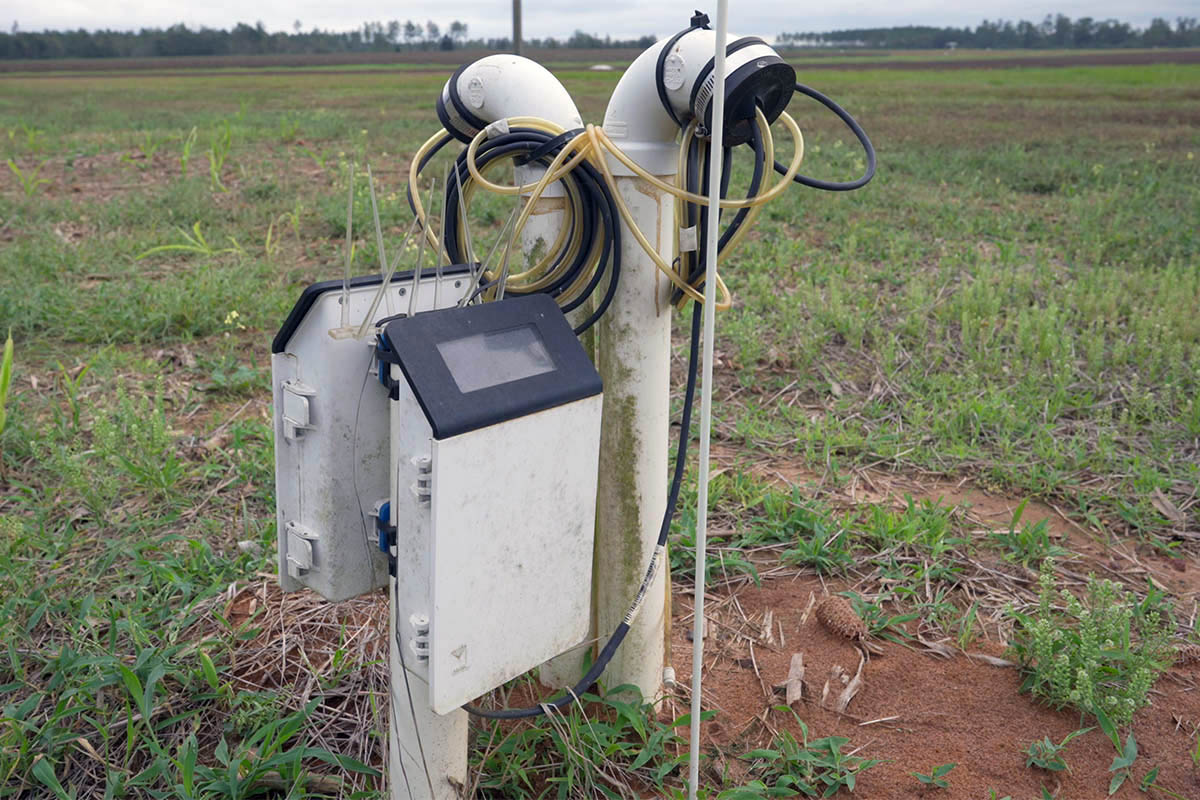
Singh says, “We take the small sample out of it, and we send it to the Analytical Research Laboratory at UF and analyze it for the nitrate concentration. That gives us an idea of how much nitrate is being leached out from each nitrogen rate.”
Throughout the season, the team collects biomass samples to assess plant health and nutrient stress. Once mature, cotton from the middle four rows of each plot is harvested, ginned, and analyzed for fiber quality. Nitrogen impacts fiber quality, which is an important factor in determining cotton prices.
A Path Toward More Sustainable Cotton Production
The long-term goal is to refine nitrogen recommendations that are both economically viable and environmentally responsible. Singh emphasizes the importance of the “4Rs” of nutrient stewardship: right rate, right time, right placement, and right source. For now, Singh and his team are focused on determining the optimal nitrogen rate. Future work will explore timing and other best management practices.
Production: IFAS Communications Video
Camera: Luke Humphlett & Al Williamson
Production Assistance: Al Williamson
Editor and Blog author: Kat Antunes
 2
2