May is “Gifts From the Garden Month” and to explore that theme, the flowers featured this week are from unusual and aesthetic edibles! Edible landscaping is a top trend right now, and a traditional vegetable garden isn’t the only way to grow things to eat in your yard. Fruit trees and fruiting bushes are a creative way to mix in edible plants with the rest of your ornamentals.
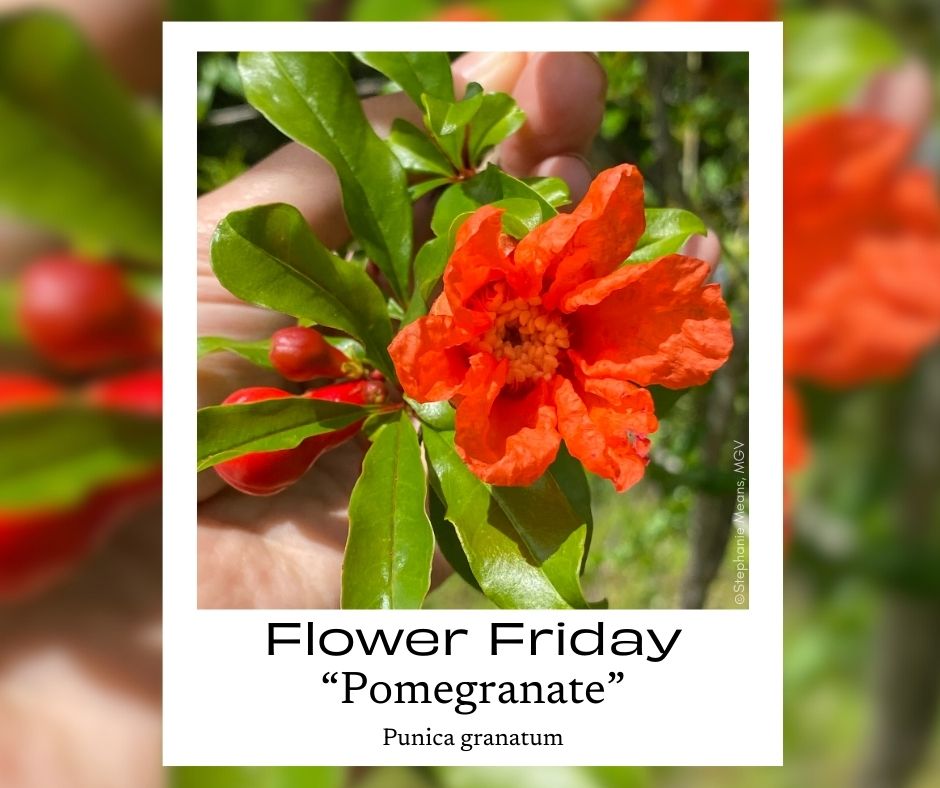
The pomegranate is a naturally bushy, multi-stemmed plant native to the Middle East.
It tends to maintain its bushiness because of suckers routinely arising from the base. These deciduous plants grow to heights of 10-12 feet and are often trained to a single trunk. The attractive flaming orange-red flowers typically appear in spring. However, flowering may occur over several months with some flowers still being produced into late summer/early fall.
Pomegranate is more cold hardy than citrus, but pomegranate cultivars vary in frost tolerance. While pomegranates come from areas of the world that have drier summers than we have in Florida, these trees have been grown as a dooryard plants here for decades.
The otherworldly flowers of the passion vine truly captivate
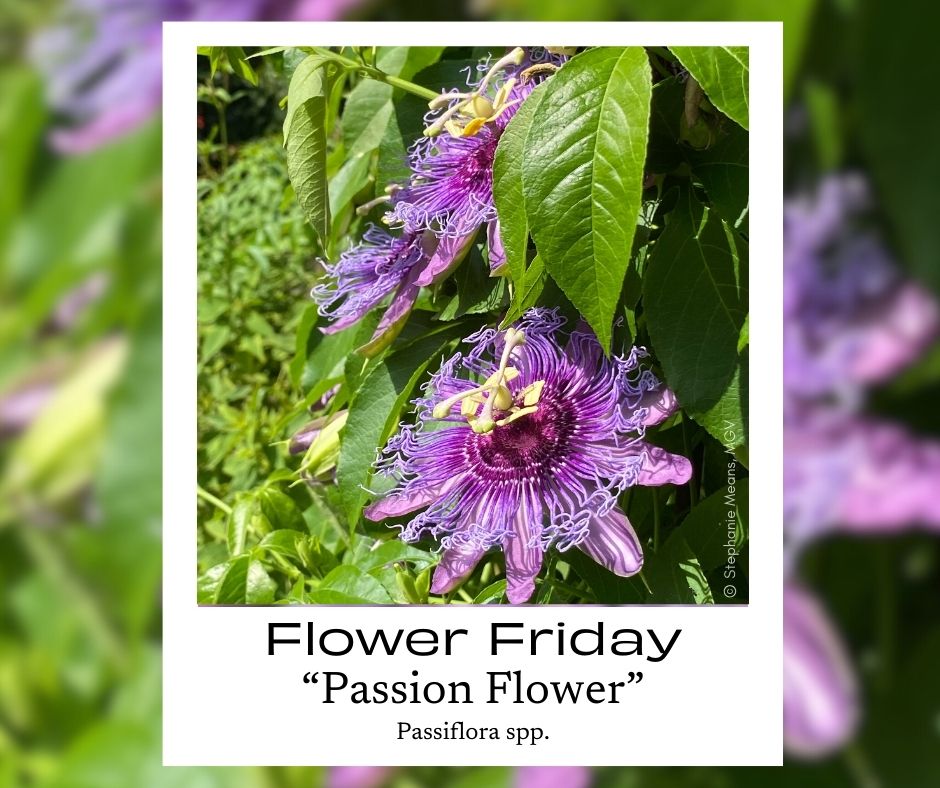
attention of passersby.
The intricate blooms look a bit like something out of a Dr. Seuss book, don’t they? Of the over 500 species worldwide, several different types of passiflora can be grown in Florida. Options range from native Passiflora incarnata (aka purple passion flower or maypop) and P. suberosa (corkystem) to UF/IFAS listed invasive P. edulis (tropical) and P. foetida.
Surprisingly it is not honey bees but carpenter bees that most effectively pollinate the delicate passion flowers. The flowers will only produce fruit if pollinated, but it’s important to note not all species produce edible fruits. P. incarnata is the most cold-hardy species native to the Southeast US and it bears yellow to green fruit that are bland to slightly sweet. Tropical passionfruit (P. edulis) is widely cultivated in south Florida for its juice. Many desirable edible hybrids and cultivars also exist.
An important consideration when planting Passiflora species in the home garden is the fact that these vines are the larval host plants to multiple butterfly species including the gulf fritillary, variegated fritillary and zebra longwing. In early summer you may notice hungry, hungry caterpillars munching away on your vines. They can completely defoliate vines if left uncontrolled. For this reason it is often recommended to locate the plants in a back or side yard where they will be out of view, if curbside aesthetics are of utmost importance to you.
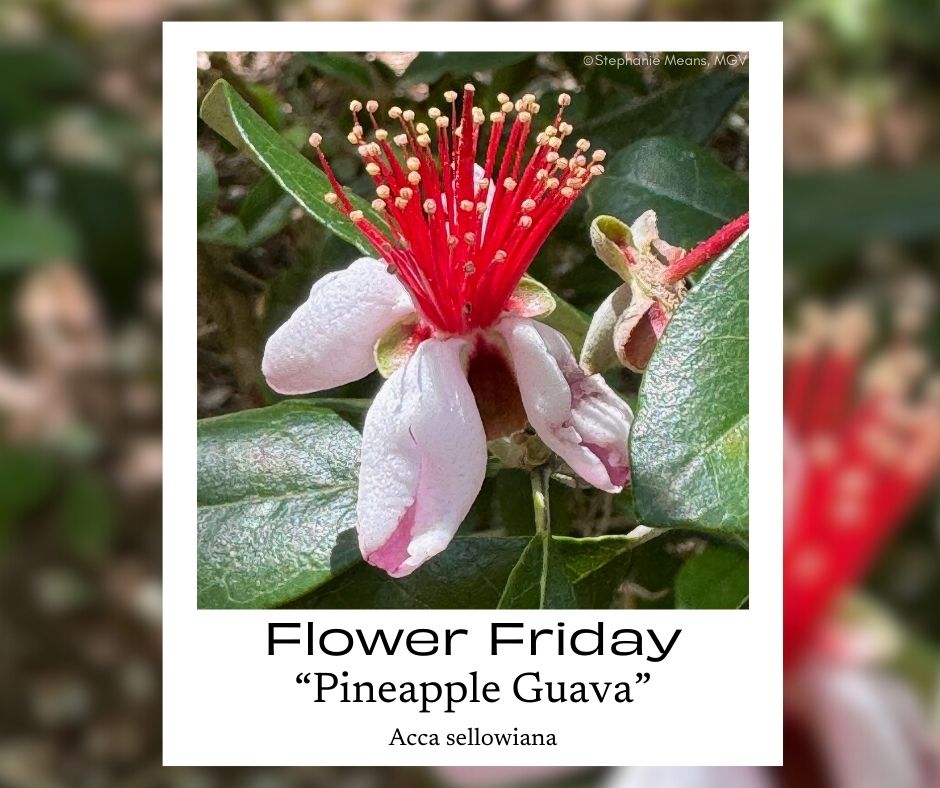
If gardening were an Olympic sport, pineapple guava might be a contender for best all-around shrub. It is the definition of an aesthetic edible.
This stellar evergreen can be grown throughout Florida and is a favorite for its attractive silvery foliage, unusual (edible!) flowers, and edible fruits. The pint sized flowers are reminiscent of exploding fireworks and might even tickle your taste buds better than the resulting fruit! Gardeners who want to enjoy fruit may wish to purchase one of the named self-fruiting varieties like ‘Coolidge’. They have shown to perform well here in Florida.
These hearty shrubs are very easy to grow. They can be pruned into a hedge or shaped into a small tree. They thrive in all-day, blazing hot sunshine but will tolerate a little shade if they receive at least six hours of direct sun. Well-drained soil is a must, and they will struggle if their location holds too much moisture. Also commonly known as feijoa, pineapple guava is suited for coastal area gardens because it tolerates salt spray.
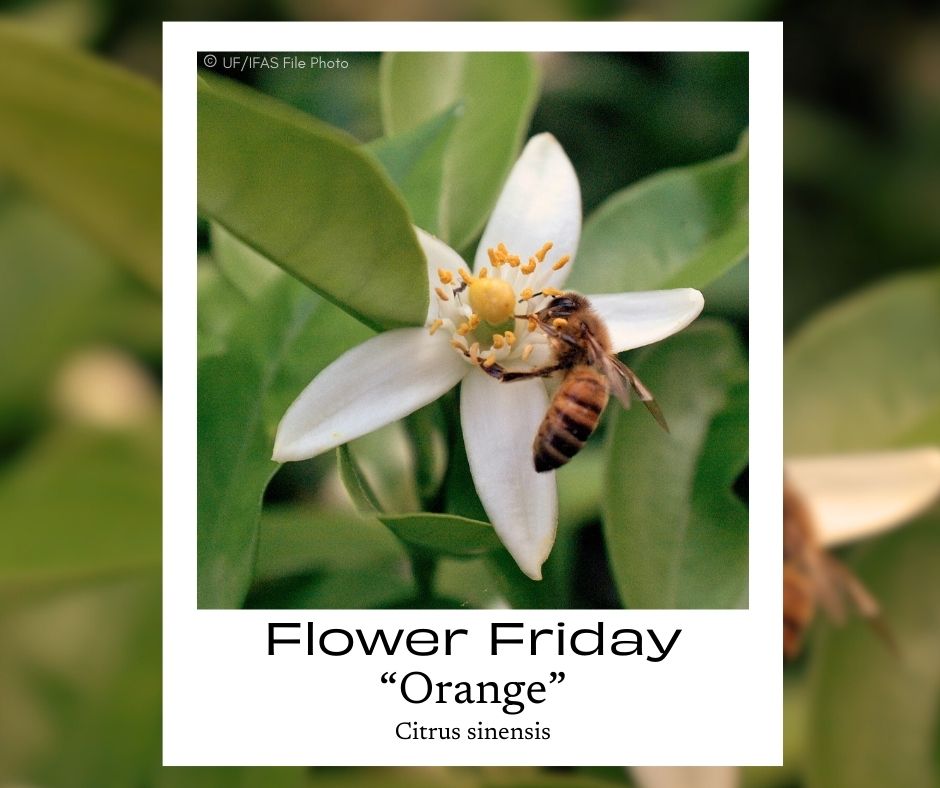
The orange blossom stands as one of the most iconic flowers in Florida.
It was designated as the state flower in 1909. This designation has led many residents to mistakenly believe that oranges are indigenous to the region. However, the fruit actually originated in China and was brought to Florida by Spanish explorers in the 16th century. The state’s favorable climate and sandy soils facilitated the successful cultivation of citrus. This resulted in seedlings that eventually naturalized in the wild.
Citrus farming has been important to Florida’s economy for hundreds of years. The industry was at its peak here in 1990’s but swiftly declined over the last few decades. The discovery of a bacterial disease known as citrus greening in Florida in 2005 has resulted in a two-thirds reduction in production. This incurable disease leads to the inevitable demise of infected trees. It’s transmitted by a tiny insect called the Asian citrus psyllid. The combination of weakened trees and devastating hurricanes in central Florida over the past decade has decimated once-thriving groves.
While many Floridian gardeners aspire to cultivate a flourishing citrus tree in their backyards, the challenges posed by greening have made such endeavors increasingly difficult. If you’d like to try your hand at homegrown citrus you’ll find a wealth of information here.
For tips on designing a Florida-Friendly edible landscape see: https://edis.ifas.ufl.edu/publication/EP594. Join us on “Flower Fridays” throughout the year when we celebrate all things blooming in Florida!
Written by Stephanie Means, Duval County Master Gardener Volunteer and Florida-Friendly Landscaping™ Program Assistant UF/IFAS Duval County
 2
2